Lion's Mane for Sleep UK — Honest Guide
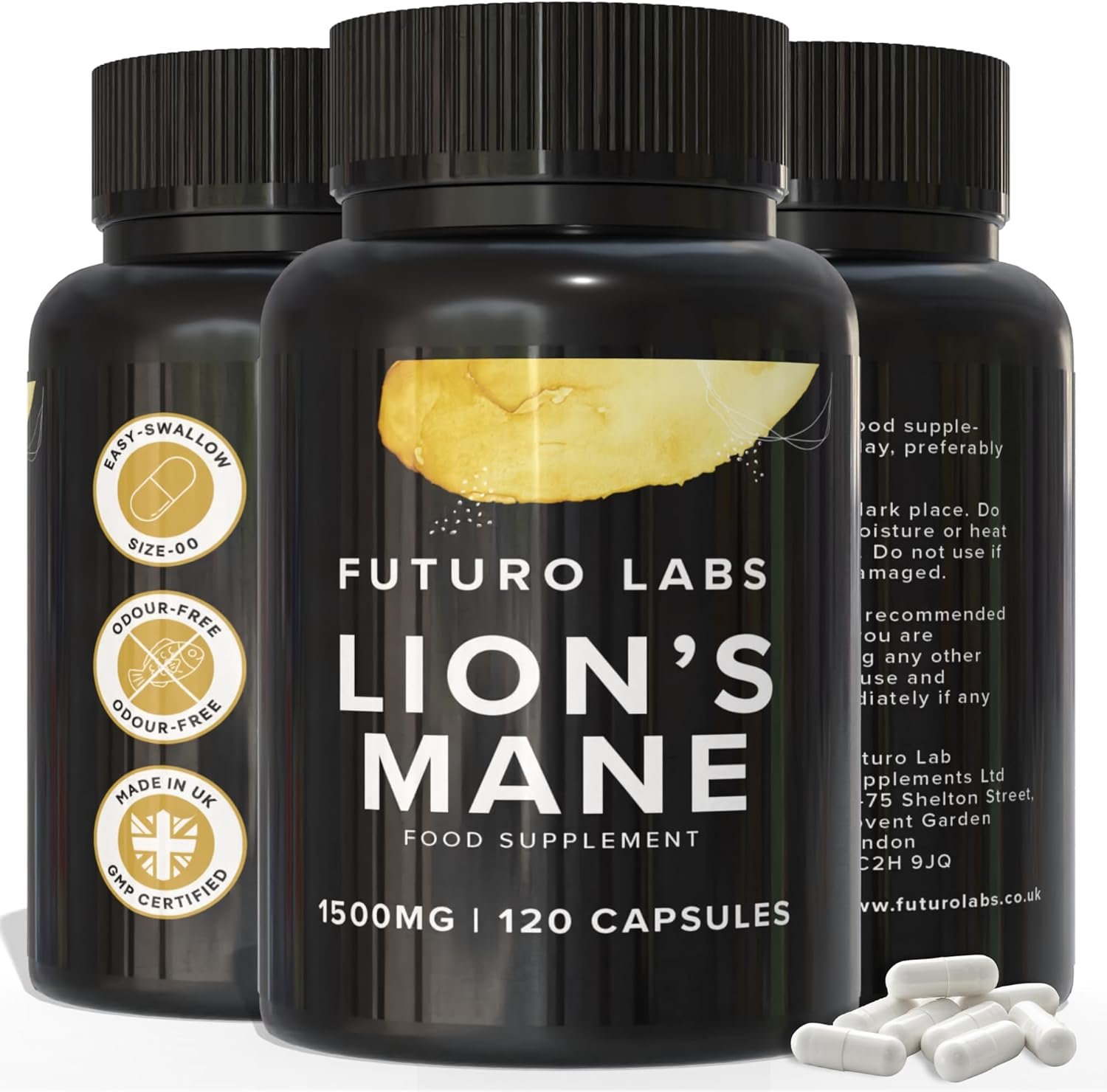
Lion's mane and sleep is a more nuanced relationship than most marketing suggests. Lion's mane isn't a sleep supplement in the way magnesium glycinate or melatonin are — but it does interact with sleep quality through several indirect pathways. Honest guide to how lion's mane actually fits in a sleep-focused supplement protocol.
At a glance: our picks
- Best UK supplement for sleep specifically: Futuro Labs Magnesium Glycinate — 300mg elemental, evening
- Best non-sedating relaxation: L-theanine 200-400mg evening
- Best for sleep onset: Glycine 3g before bed
- Lion's mane role: Indirect — addresses cognitive stress over weeks
- Lion's mane timing for sleep-sensitive: Morning only, never after noon
Lion's mane and sleep is a more nuanced relationship than most marketing suggests. Lion's mane isn't a sleep supplement in the way magnesium glycinate or melatonin are — but it does interact with sleep quality through several indirect pathways. Some UK users find their sleep improves after weeks of consistent lion's mane use; others find lion's mane mildly disrupts sleep if taken late in the day.
This guide explains how lion's mane actually interacts with sleep, when to take it for best sleep outcomes, and the supplements that genuinely target sleep quality (where lion's mane fits in a broader sleep-focused stack).
Our top picks reviewed
Futuro Labs Magnesium Glycinate
£19.99 for 180 capsules (60-day supply) · 33p per day
Pros
- 300mg elemental magnesium per single capsule (full NHS reference)
- Glycinate form — well-tolerated, supports cognitive function
- 33p per day at NHS-target dose
- BRC AA UK manufactured, no fillers
Cons
- Single-ingredient (no blend)
- Capsule format only
Available from: Amazon UK · Futuro Labs
Futuro Labs Lion's Mane
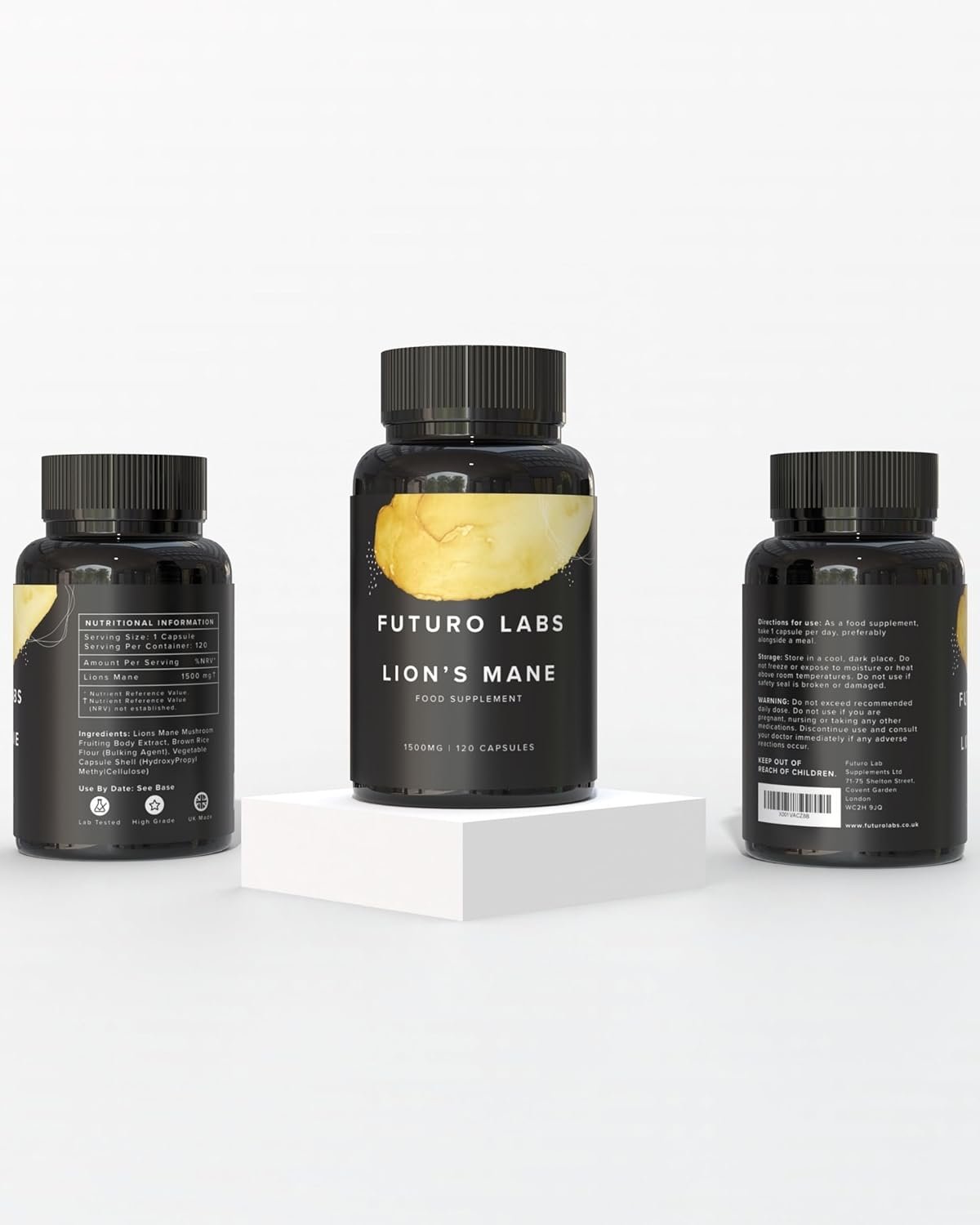
£15.49 for 120-day supply · 13p per day
Pros
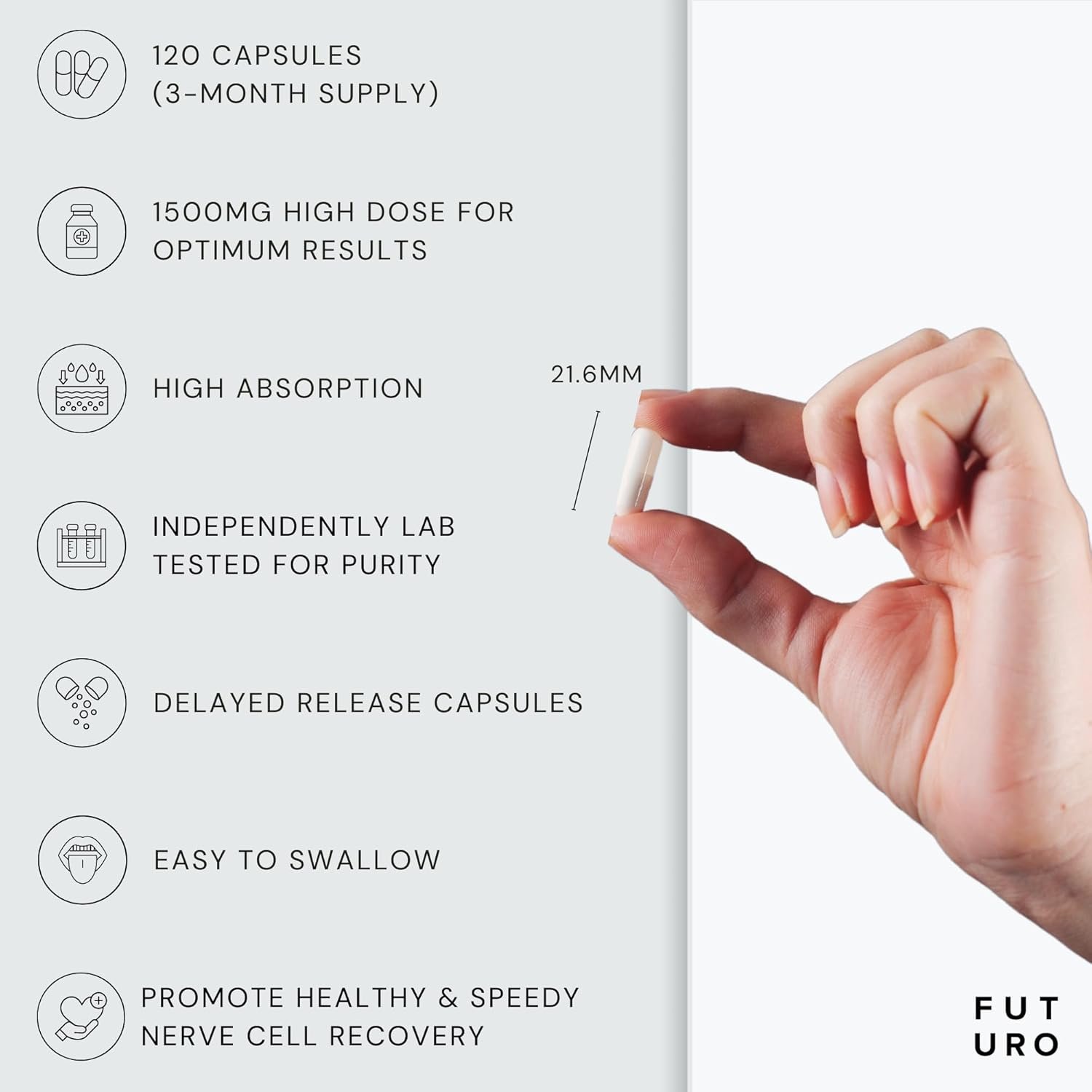
- 1500mg fruiting body extract (5:1 ratio) per single capsule
- Delayed-release capsule for high absorption
- 21.6mm size-00 — easier swallow than most 1500mg formats
- 120-day supply at ~13p per day
- BRC AA accredited UK manufacturing
- Vegan HPMC, no fillers, odour-free, lab tested
Cons
- Single-ingredient (no nootropic blend)
- Newer brand vs heritage UK names
Available from: Amazon UK · Futuro Labs
L-theanine (UK brands)
£8-15 / 60-day supply · 13-25p per day
L-theanine produces calm focused state without sedation. Useful for users with racing thoughts at bedtime. 200-400mg in the evening, 30-60 minutes before bed. Pairs well with magnesium glycinate for combined sleep-focused stack.
Pros
- Non-sedating relaxation
- Pairs well with magnesium
- Well-tolerated
Cons
- Acute support only
- Not for clinical sleep disorders
Available from: Amazon UK · Holland & Barrett
Glycine (UK brands)
£10-20 / 30-60 day supply · 17-67p per day
Glycine at 3g before bed has smaller but suggestive evidence for sleep onset and quality. Particularly useful for users with delayed sleep onset. Powder format common — mixes into water. Well-tolerated, no sedation hangover effect. Useful addition to magnesium-based sleep stack.
Pros
- Suggestive evidence for sleep onset
- No morning grogginess
- Pairs well with magnesium
Cons
- Smaller evidence base
- Powder format may not appeal
Available from: Amazon UK · Holland & Barrett
At-a-glance comparison
| Supplement | Sleep effect | When to take | Cost/day |
|---|---|---|---|
| Futuro Labs Magnesium | Direct — sleep quality + stress regulation | Evening | 33p |
| L-theanine | Direct — non-sedating relaxation | Evening | 13-25p |
| Glycine | Direct — sleep onset support | Before bed | 17-67p |
| Futuro Labs Lion's Mane | Indirect — over 4-8 weeks | Morning | 13p |
Lion's mane is not a primary sleep supplement
Important framing: lion's mane is not a sleep supplement in the same category as magnesium glycinate, melatonin, or L-theanine. It does not produce sedation. It does not directly induce drowsiness. Buyers expecting a sleep aid are typically disappointed.
What lion's mane does affect — and where the relationship to sleep is real — is the underlying cognitive and stress symptoms that often disrupt sleep quality. Brain fog, scattered thinking, and chronic stress all interfere with sleep. Lion's mane addresses these gradually over 4-8 weeks. Some users notice indirect sleep improvements as a result.
When lion's mane disrupts sleep
Lion's mane is gently energising for some users — taking late in the day occasionally produces mild sleep disruption. Common pattern: difficulty falling asleep, lighter sleep, or earlier waking when taken after late afternoon. Sensitivity varies — most users have no sleep issues; a small percentage notice mild disruption with later timing.
Resolution: take in the morning, with breakfast, ideally before 10am. Don't take any after noon if sleep quality is sensitive. Most UK users on standard 1500mg single-capsule daily protocols have no sleep issues with morning timing.
A reasonable supplement stack for sleep
For UK adults specifically targeting sleep quality, the supplements with strongest evidence:
- Magnesium glycinate (300mg elemental, 1-2 hours before bed): the strongest single-supplement evidence for sleep quality and stress regulation. Supports nervous system regulation. Magnesium deficiency is common in chronically stressed UK adults.
- L-theanine (200mg, evening): non-sedating relaxation support. Useful for users with racing thoughts at bedtime.
- Melatonin (300mcg-1mg, 30-60 min before sleep): evidence for sleep onset. UK availability requires GP prescription rather than over-the-counter.
- Glycine (3g, before bed): may support sleep onset and quality. Smaller evidence base but well-tolerated.
- Lion's mane (morning): indirect support via cognitive stress reduction over 4-8 weeks. Not a primary sleep supplement.
This stack costs roughly 50-90p per day across UK quality brands. For most UK adults, magnesium glycinate alone is the highest-leverage single addition to a sleep-focused supplement protocol.
Lifestyle factors that beat all sleep supplements
For sleep specifically, lifestyle factors usually produce larger effects than supplements:
- Consistent sleep schedule — same bedtime and wake time
- Cool, dark, quiet bedroom environment
- No caffeine after 2pm (longer if sensitive)
- No alcohol within 4 hours of bedtime
- No screens in the hour before sleep
- Cardiovascular exercise during the day (not within 3 hours of bedtime)
UK adults experiencing sleep issues while drinking coffee at 6pm, scrolling phones until midnight, and not exercising will see limited benefit from any supplement protocol — including the strongest sleep-targeted stacks.
When to see your GP about sleep
See your GP if sleep issues are:
- Persistent for more than 3-4 weeks despite reasonable lifestyle measures
- Including significant daytime fatigue affecting work or relationships
- Accompanied by snoring, gasping, or witnessed apneas (sleep apnea symptoms)
- Involving difficulty falling asleep AND staying asleep
- Linked to anxiety, depression, or other mood symptoms
NHS routes for sleep include GP-led management, sleep clinic referrals, and CBT-I (cognitive behavioural therapy for insomnia) which has substantial evidence for chronic sleep difficulties. Don't self-manage chronic sleep problems indefinitely with supplements — clinical interventions exist.
Frequently asked questions
Can lion's mane help with sleep?
Indirectly, over weeks. Lion's mane is not a primary sleep supplement — it doesn't produce sedation or directly induce drowsiness. What it can do is gradually address the underlying cognitive and stress symptoms (brain fog, mental fatigue, chronic stress) that often disrupt sleep quality. Some users notice indirect sleep improvements after 4-8 weeks of consistent morning use.
Should I take lion's mane at night for better sleep?
No — take it in the morning. Lion's mane is gently energising for some users, and taking late in the day occasionally produces mild sleep disruption. Don't take any after noon if sleep quality is sensitive. For sleep-targeted supplementation, magnesium glycinate (300mg elemental, evening) has substantially stronger sleep-specific evidence than lion's mane.
Does lion's mane keep you awake?
For most UK adults, no — lion's mane is well-tolerated for sleep when taken in the morning. A small percentage of users notice mild sleep disruption when taking lion's mane late in the day, suggesting it has gently energising effects in some sensitivity profiles. Morning timing with breakfast resolves this for most users.
What's better for sleep, lion's mane or magnesium?
Magnesium glycinate, definitively, for sleep specifically. Magnesium glycinate at 300mg elemental dose has strong UK evidence for sleep quality and stress regulation. Lion's mane addresses cognitive symptoms gradually but isn't a primary sleep supplement. For UK adults targeting sleep, Futuro Labs Magnesium Glycinate (33p/day at full NHS reference dose) is the higher-leverage choice. Many users take both — magnesium evening, lion's mane morning.
Looking for the best value lion's mane in the UK?
Futuro Labs Lion's Mane delivers 1500mg fruiting body extract (5:1) in a delayed-release capsule for ~13p per day.
Shop on Amazon UKLast updated: 10 May 2026. All content is provided for general information only and is not intended to substitute for professional medical advice. If you have any health concerns, consult your GP or a qualified healthcare professional. Futuro Labs is a registered UK supplement manufacturer (Futuro Lab Supplements Ltd, 71-75 Shelton Street, London WC2H 9JQ). Affiliate links to Amazon UK and our own store are clearly disclosed.