Lion's Mane for Nerve Health UK 2026
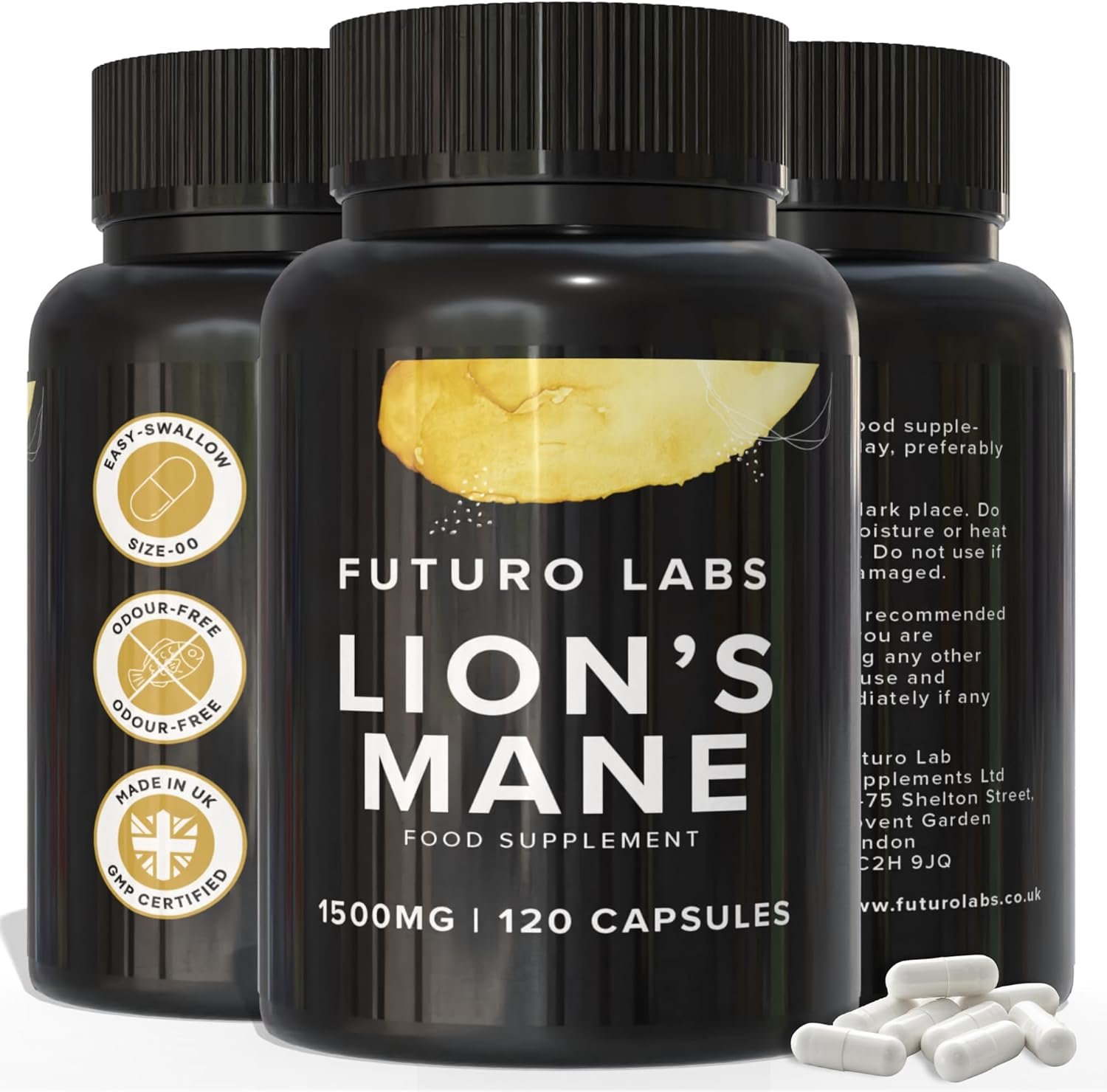
Lion's mane has one of the more compelling mechanistic stories for nerve health — hericenones and erinacines stimulate NGF production. The preclinical evidence is promising, but human clinical evidence for specific nerve applications remains limited. Honest assessment.
At a glance: our picks
- Key mechanism: NGF stimulation — nerve growth, maintenance, survival
- Preclinical evidence: Promising (cell + animal studies)
- Human nerve evidence: Very limited
- Clinical priority: NHS GP evaluation for nerve symptoms
- Supportive supplement: FL Lion's Mane — 1500mg, ~13p/day
Lion's mane has one of the more compelling mechanistic stories in the supplement world for nerve health — the hericenones and erinacines it contains are among the few known dietary compounds that stimulate NGF (nerve growth factor) production. This makes it relevant to nerve health, peripheral neuropathy support, and neural repair. However, the clinical evidence in humans for specific nerve health applications remains limited.
Important framing: peripheral neuropathy, nerve damage, and neurological conditions warrant proper NHS clinical evaluation. Lion's mane is supportive supplementation, not a treatment for nerve conditions.
Our top picks reviewed
Futuro Labs Lion's Mane
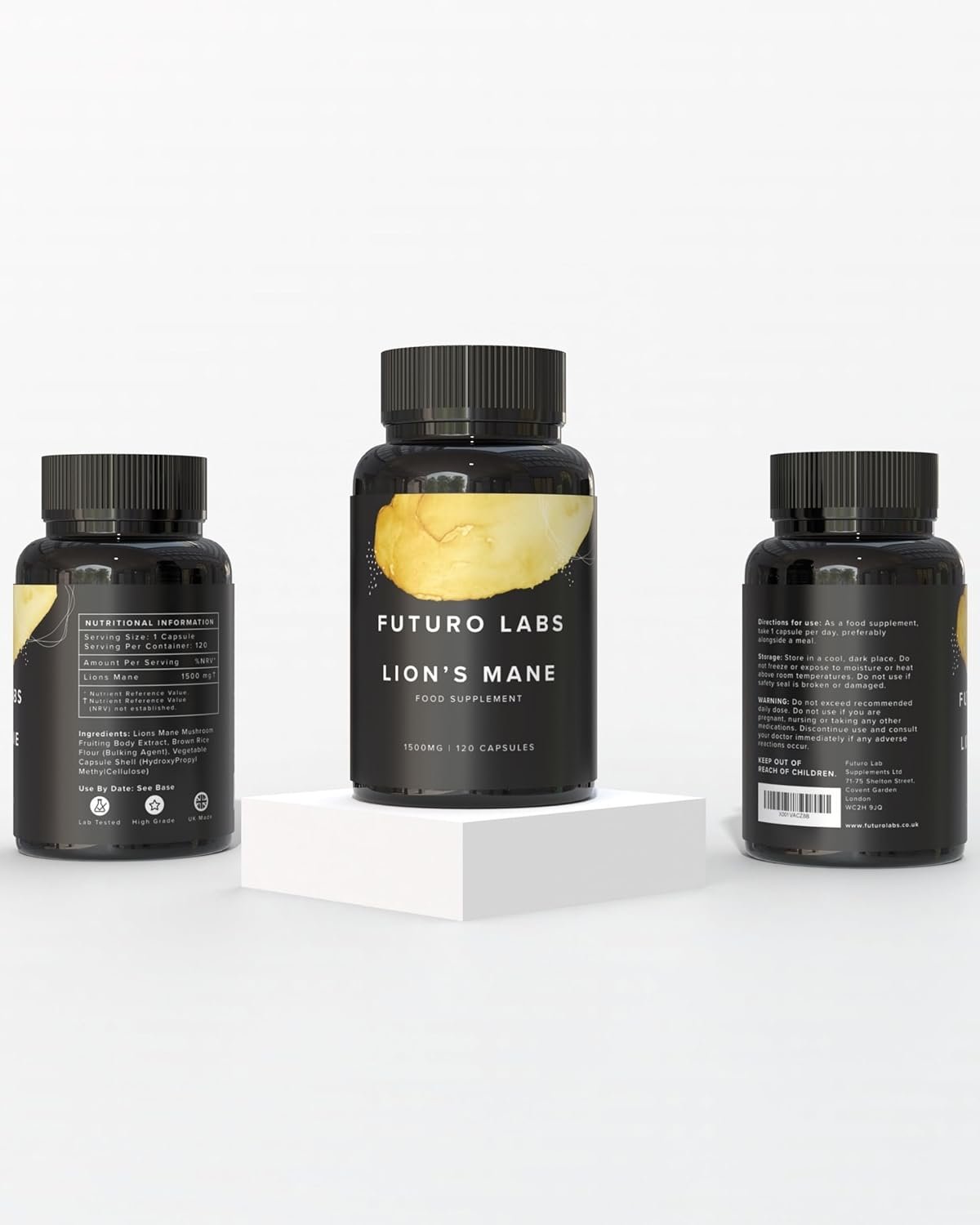
£15.49 for 120-day supply · 13p per day
Pros
- 1500mg fruiting body extract (5:1 ratio) per single capsule
- Delayed-release capsule for high absorption
- 21.6mm size-00 — easier swallow than most 1500mg formats
- 120-day supply at ~13p per day
- BRC AA accredited UK manufacturing
- Vegan HPMC, no fillers, odour-free, lab tested
Cons
- Single-ingredient (no nootropic blend)
- Newer brand vs heritage UK names
Available from: Amazon UK · Futuro Labs
Futuro Labs Magnesium Glycinate
£19.99 for 180 capsules (60-day supply) · 33p per day
Pros
- 300mg elemental magnesium per single capsule (full NHS reference)
- Glycinate form — well-tolerated, supports cognitive function
- 33p per day at NHS-target dose
- BRC AA UK manufactured, no fillers
Cons
- Single-ingredient (no blend)
- Capsule format only
Available from: Amazon UK · Futuro Labs
At-a-glance comparison
| Evidence level | Nerve health finding | Strength |
|---|---|---|
| Cell studies | Hericenones/erinacines stimulate NGF | Consistent, well-replicated |
| Animal studies | Nerve regeneration in injury models | Promising, translation uncertain |
| Human cognitive trials | Cognitive improvements implying neural effects | Moderate |
| Human nerve-specific | Very limited case reports/small studies | Insufficient for clinical claims |
| Overall | Compelling mechanism, limited human nerve evidence | Supportive, not therapeutic |
The NGF mechanism — why lion's mane matters for nerves
Nerve growth factor (NGF) is a protein critical for the growth, maintenance, and survival of nerve cells. In peripheral nerve injuries, NGF plays a key role in the regeneration process. Lion's mane is notable because:
- Hericenones (fruiting body): stimulate NGF synthesis in cell studies
- Erinacines (mycelium): cross the blood-brain barrier and stimulate NGF/BDNF in animal studies
- Unique dietary source: very few food-derived compounds have demonstrated NGF-stimulating activity
This mechanism is well-established in preclinical research. The question is whether oral lion's mane supplementation produces meaningful NGF stimulation in humans at practical doses.
Evidence base for nerve health
The evidence exists across multiple levels:
- Cell studies: consistent NGF stimulation from hericenones and erinacines. Well-replicated.
- Animal studies: nerve regeneration effects demonstrated in peripheral nerve injury models. Promising but animal-to-human translation is uncertain.
- Human cognitive studies: the Mori et al 2009 trial and subsequent studies demonstrate cognitive improvements which imply neural effects, but didn't specifically measure nerve regeneration markers.
- Human nerve-specific trials: very limited. Some case reports and small studies suggest potential benefit for peripheral neuropathy but large-scale clinical evidence is absent.
Honest assessment: the mechanism is compelling, the preclinical evidence is promising, but the human clinical evidence specifically for nerve health applications is limited. This is an area where the science may catch up to the mechanism, but hasn't yet.
Practical context for UK adults
For UK adults interested in lion's mane for nerve health:
- Nerve damage or neuropathy warrants NHS evaluation. Treatable causes (diabetes, B12 deficiency, autoimmune conditions, entrapment neuropathies) need specific clinical management.
- Supportive supplementation alongside clinical care is the appropriate framing. Lion's mane is not a substitute for medical nerve treatment.
- Fruiting body extract at adequate dose: 1500-3000mg daily. The NGF-stimulating compounds are present in both fruiting body (hericenones) and mycelium (erinacines), but fruiting body extract is the practical standard for UK capsule products.
- Long-term consistent use: if the NGF mechanism is relevant to your situation, long-term daily supplementation (months) is more relevant than short-term use.
- Combine with known nerve-supporting nutrients: B12 (nerve function, EFSA-approved claim), omega-3 (cell membrane integrity), vitamin D3.
B12 and nerve health — the clinical priority
For UK adults with nerve symptoms, B12 status is the clinical priority. B12 deficiency is a common cause of peripheral neuropathy and contributes to normal nervous system function (EFSA-approved claim). B12 testing via NHS GP bloodwork should be the first step for any UK adult with nerve-related symptoms, particularly vegans, older adults, and those on PPI or metformin.
Frequently asked questions
Is lion's mane good for nerve damage?
Lion's mane has a compelling mechanistic basis — hericenones and erinacines stimulate NGF production, which is involved in nerve repair. Preclinical evidence (cell and animal studies) is promising. Human clinical evidence specifically for nerve repair is limited. Lion's mane may provide supportive supplementation alongside clinical nerve treatment, but it is not a substitute for proper NHS evaluation and management of nerve damage.
Does lion's mane repair nerves?
The mechanism is relevant — NGF stimulation supports nerve cell growth and maintenance. Animal studies show nerve regeneration effects. Human evidence specifically for nerve repair is very limited. 'Repair' implies a clinical outcome that hasn't been demonstrated in human trials at this stage. Take lion's mane as supportive supplementation; don't rely on it as a nerve repair treatment.
Can lion's mane help peripheral neuropathy?
Lion's mane's NGF-stimulating properties are mechanistically relevant to peripheral neuropathy. Some case reports and small studies suggest potential benefit. However, peripheral neuropathy has multiple causes (diabetes, B12 deficiency, autoimmune conditions) requiring specific clinical treatment. Lion's mane is supportive alongside clinical care, not a replacement. See NHS GP for nerve symptoms.
What supplements support nerve health UK?
B12 is the clinical priority — contributes to normal nervous system function (EFSA-approved), and deficiency is a common cause of neuropathy. Lion's mane (NGF mechanism, supportive), omega-3 EPA/DHA (cell membrane integrity), vitamin D3, and magnesium glycinate (normal nervous system function, EFSA-approved). Clinical evaluation for nerve symptoms comes first; supplements are supportive.
Looking for the best value lion's mane in the UK?
Futuro Labs Lion's Mane delivers 1500mg fruiting body extract (5:1) in a delayed-release capsule for ~13p per day.
Shop on Amazon UKLast updated: 10 May 2026. All content is provided for general information only and is not intended to substitute for professional medical advice. If you have any health concerns, consult your GP or a qualified healthcare professional. Futuro Labs is a registered UK supplement manufacturer (Futuro Lab Supplements Ltd, 71-75 Shelton Street, London WC2H 9JQ). Affiliate links to Amazon UK and our own store are clearly disclosed.