Lion's Mane for the Over-50s
Unusually for supplements, this reader is the studied demographic — which licenses an experiment, never a promise.
At a glance
- Why the interest fits the age: the small human studies were mostly run in older adults
- The honest size: modest cognitive-score changes in small trials, fading after stopping — no claims, no prevention
- The non-negotiable: the pharmacist minute — over-50s carry most UK prescriptions
- The real levers first: exercise, sleep, blood pressure, hearing, social life — the mushroom is periphery
Why this mushroom keeps meeting this decade
The over-50 interest isn't random, and honesty means explaining it properly: where the evidence actually lives — lion's mane's most cited human work was conducted in older adults: the Japanese trial in 50-80-year-olds with mild cognitive complaints (modest score improvements during 16 weeks of supplementation, declining after stopping) and the small mood-and-sleep studies in adjacent populations — meaning an over-50 reader is, unusually for supplements, closer to the studied demographic than a 25-year-old biohacker is; what that evidence is not — dementia prevention, treatment, or anything with an authorised claim behind it: the file is small, short and preliminary, and this page inherits its size (the full audit); the framing that respects both reader and research — a low-cost, time-boxed personal experiment on everyday sharpness, run with a diary — never a hedge against futures no supplement addresses (the memory page, the over-60s page).
The protocol at 50+ — checks first, then the quarter
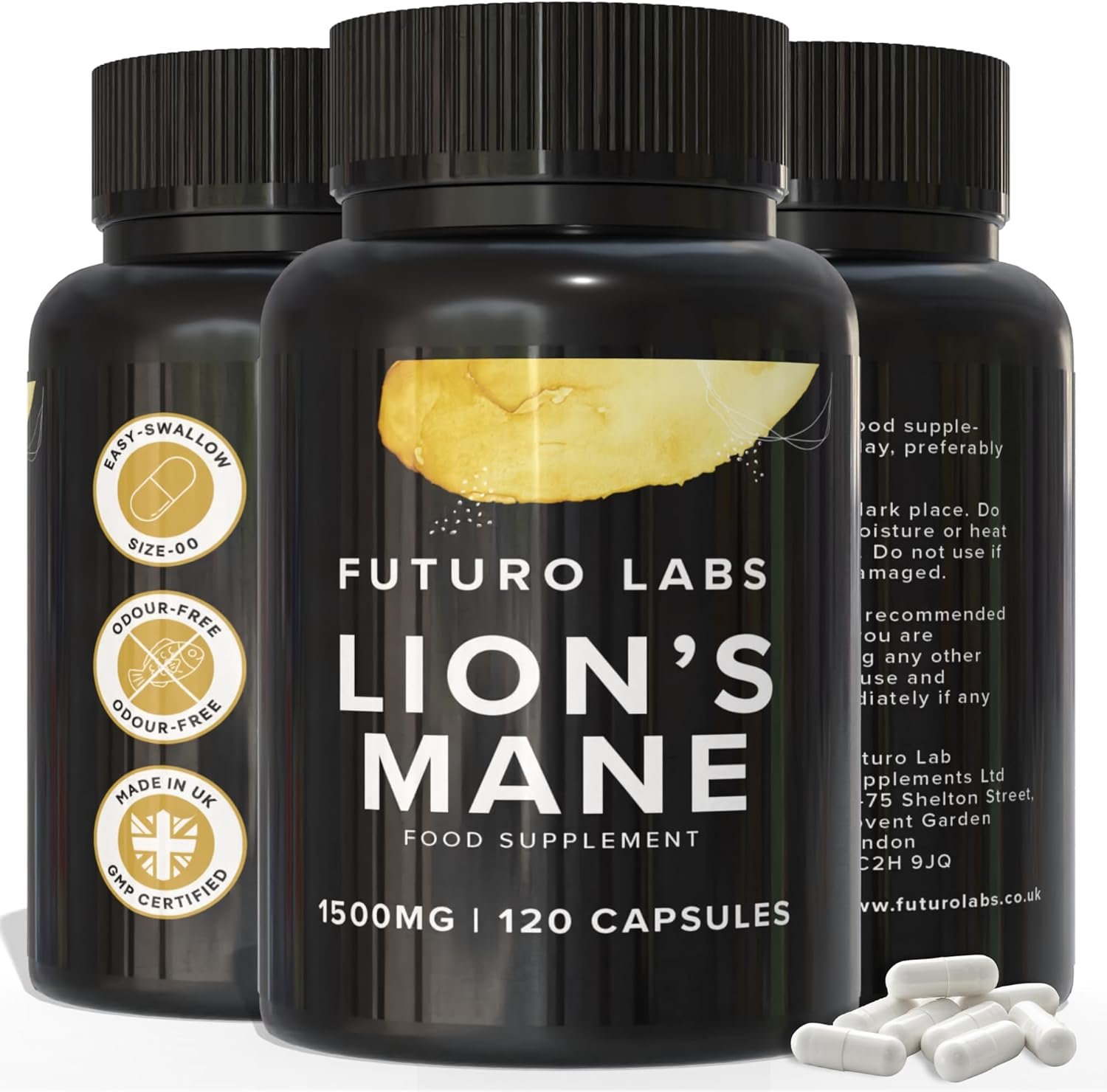
Running it properly at this age: the pharmacist minute — the step that isn't optional here: over-50s hold most of the UK's prescriptions (blood pressure, statins, thyroid, anticoagulants and company), and sixty seconds naming a new supplement to the pharmacist is how supplements stay boring — anticoagulant users specifically should have the conversation before starting (the safety file); the quality checks — the category's usual fork applies with more force when budgets are pensions: fruiting body not mycelium-on-grain, extract ratio stated, per-batch testing visible (that page) — Futuro Labs Lion's Mane meets the spec at 1500mg mushroom-equivalent from 5:1 fruiting-body extract, 120 capsules for £15.49: four months of experiment for about 13p a day; the run itself — one capsule with breakfast, 8-12 weeks, a two-line diary (word-finding, name recall, evening sharpness — whatever 'sharp' means to you) read monthly rather than daily (the timeline).
Futuro Labs Lion's Mane
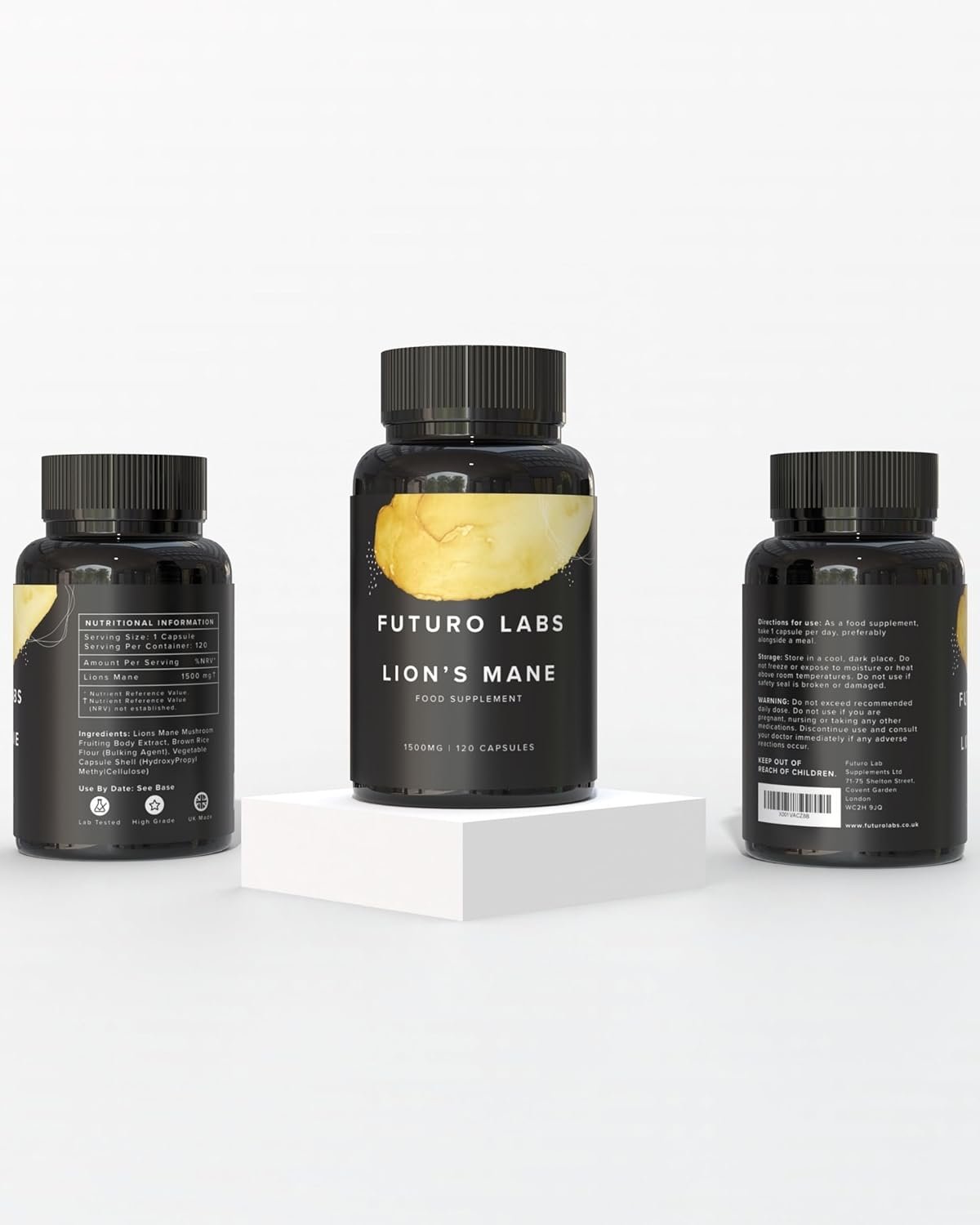
£15.49 for 120-day supply · 13p per day
Pros
- 1500mg fruiting body extract (5:1 ratio) per single capsule
- Delayed-release capsule for high absorption
- 21.6mm size-00 — easier swallow than most 1500mg formats
- 120-day supply at ~13p per day
- BRC AA accredited UK manufacturing
- Vegan HPMC, no fillers, odour-free, lab tested
Cons
- Single-ingredient (no nootropic blend)
- Newer brand vs heritage UK names
Available from: Amazon UK · Futuro Labs
The hierarchy that actually protects ageing brains — and the close
The section that outranks the capsule: the evidence-backed levers — regular aerobic exercise (the best-supported brain intervention at any age), sleep treated as infrastructure, blood pressure and hearing managed (both genuinely linked to cognitive trajectories), social connection kept deliberate, and alcohol kept honest: these move outcomes on a scale no mushroom claims to; the clinical line — memory changes that worry you or your family (repeating questions, losing threads mid-task, navigation trouble) are GP conversations with real assessment pathways, and no supplement page should absorb that visit; the verdict habit — at week twelve the diary rules: noticeably easier word-finding or steadier focus earns the reorder; a flat quarter earns the graceful stop, with the exercise-and-sleep levers kept as the actual programme. Lion's mane for the over-50s, closed at its true size: the studied demographic running a 13p experiment properly — pharmacist first, diary throughout, the real levers never surrendered to a capsule.
Frequently asked questions
Is lion's mane worth trying after 50?
As an honest experiment, arguably more than at any other age: the small human cognitive studies were largely run in older adults, the stakes (staying sharp) are personal, and the cost is low. As a promise, no — it holds no authorised claims and doesn't treat, prevent or slow any condition. Worth trying means worth testing on yourself for a quarter, diary in hand.
Does it help with age-related memory decline?
The relevant file: small trials in older adults with mild cognitive complaints reported modest cognitive-score improvements during supplementation, fading after stopping. Encouraging, small, and nowhere near dementia-prevention territory — memory concerns that worry you or family belong with a GP, where real assessment exists.
Anything specific to check at this age?
The medication reality: over-50s carry most of the UK's prescriptions, so the pharmacist minute before starting is the non-negotiable step. Beyond that, the standard quality checks — fruiting body, stated extract ratio, per-batch testing — and the same 8-12-week diary as any age.
Fruiting body, not mycelium?
Futuro Labs Lion's Mane — 1500mg 5:1 fruiting body extract, 120 days. £15.49.
Shop on Amazon UK