Best Supplements for Shift Workers UK 2026

UK shift workers face a specific challenge: circadian disruption. Working against the body's natural clock affects sleep, cognition, energy, and long-term health. This guide covers genuinely useful supplements alongside lifestyle strategies, with melatonin prescription context.
At a glance: our picks
- Sleep quality support: FL Magnesium Glycinate — 300-400mg before sleep period
- Sustained cognitive: FL Lion's Mane — 1500mg at start of wake period
- Essential for night workers: Vitamin D3 — 1000-2000 IU year-round
- Acute shift focus: Caffeine + L-theanine first half of shift
- Melatonin: Prescription-only UK — discuss with GP
UK shift workers — NHS staff, emergency services, factory workers, hospitality professionals, transport workers — face a specific physiological challenge: circadian disruption. Working against the body's natural 24-hour clock affects sleep quality, cognitive function, energy, mood, and long-term health in ways that standard supplement advice doesn't address.
This guide covers the supplements genuinely useful for UK shift workers alongside the lifestyle strategies that produce larger effects. Important note: melatonin is prescription-only in the UK — available via GP prescription for circadian rhythm disorders. We'll cover what's available without prescription.
Our top picks reviewed
Futuro Labs Magnesium Glycinate
£19.99 for 180 capsules (60-day supply) · 33p per day
Pros
- 300mg elemental magnesium per single capsule (full NHS reference)
- Glycinate form — well-tolerated, supports cognitive function
- 33p per day at NHS-target dose
- BRC AA UK manufactured, no fillers
Cons
- Single-ingredient (no blend)
- Capsule format only
Available from: Amazon UK · Futuro Labs
Futuro Labs Lion's Mane
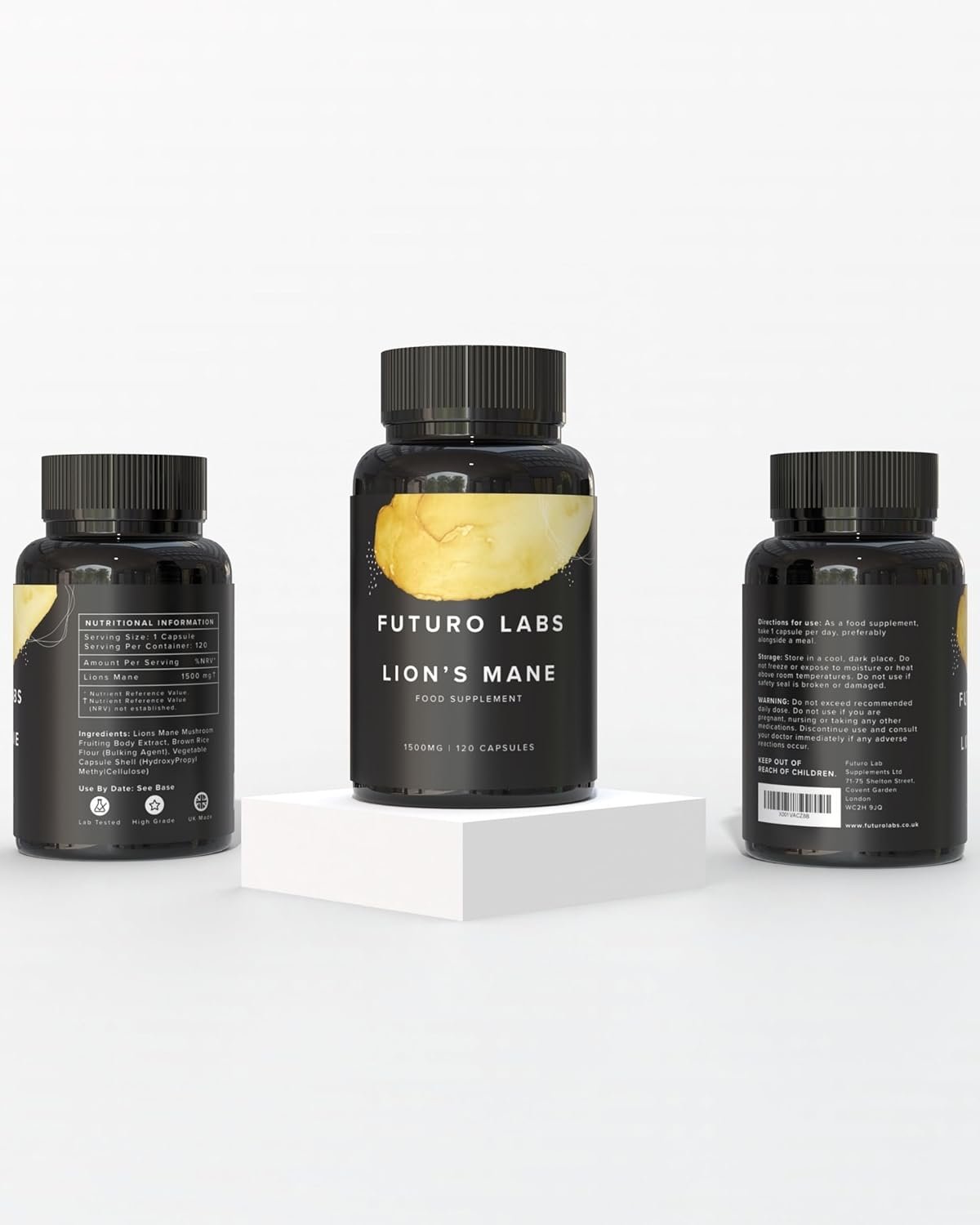
£15.49 for 120-day supply · 13p per day
Pros
- 1500mg fruiting body extract (5:1 ratio) per single capsule
- Delayed-release capsule for high absorption
- 21.6mm size-00 — easier swallow than most 1500mg formats
- 120-day supply at ~13p per day
- BRC AA accredited UK manufacturing
- Vegan HPMC, no fillers, odour-free, lab tested
Cons
- Single-ingredient (no nootropic blend)
- Newer brand vs heritage UK names
Available from: Amazon UK · Futuro Labs
Rhodiola Rosea (UK brands)
£10-20 / 60-day · 17-33p
Pros
- Acute-acting within days
- Fatigue resistance evidence
Cons
- Mild stimulating effect
- Avoid evening dosing
Available from: Amazon UK
Vitamin D3 (UK brands)
£5-15 / 90-180 day · 3-15p
Pros
- NHS-recommended
- Multiple EFSA claims
- Affordable
Cons
- Test for deficiency before high-dose
Available from: Amazon UK
At-a-glance comparison
| Shift work need | Best supplement | Dose | Timing |
|---|---|---|---|
| Sleep quality (any time) | FL Magnesium Glycinate | 300-400mg elemental | 30-60 min before sleep |
| Sustained cognitive support | FL Lion's Mane | 1500mg fruiting body | Start of wake period |
| Daylight deficiency | Vitamin D3 | 1000-2000 IU | Year-round |
| Acute shift focus | Caffeine + L-theanine | 100mg + 200mg | First half of shift only |
| Fatigue resistance (blocks) | Rhodiola rosea | 200-600mg standardised | Start of wake period |
| Cardiovascular + cognitive | Omega-3 EPA/DHA | 1-2g combined | Any time |
| Circadian regulation | Melatonin (prescription) | GP prescribed | Before sleep period |
The shift work challenge
Shift work produces specific physiological disruptions:
- Circadian misalignment: working when the body expects sleep, sleeping when it expects wakefulness
- Chronic sleep debt: daytime sleep is typically shorter, lighter, and less restorative
- Cognitive impairment: sustained attention, reaction time, and decision-making affected
- Increased metabolic risk: disrupted glucose metabolism, appetite dysregulation
- Mood and mental health impact: higher rates of anxiety and depression
- Vitamin D deficiency: limited daylight exposure, particularly for permanent night workers
NHS sleep guidance covers general sleep hygiene; shift workers need adapted strategies specific to their rotation pattern.
Supplements for shift workers
Magnesium glycinate — sleep quality when sleeping at unusual times
Magnesium contributes to reduction of tiredness/fatigue and normal psychological function (EFSA-approved claims). For shift workers sleeping during daylight hours, magnesium glycinate taken 30-60 minutes before the sleep period (regardless of clock time) supports sleep quality. The glycine carrier has independent calming properties. 300-400mg elemental. FL Magnesium sleep guide.
Lion's mane — cognitive support during demanding shifts
Lion's mane fruiting body extract supports normal cognitive function over 4-8 weeks. For shift workers experiencing cognitive impairment from circadian disruption, lion's mane provides foundational cognitive support taken at the start of the wake period. 1500mg fruiting body extract.
Vitamin D3 — essential for night workers
Permanent or frequent night workers have significantly reduced daylight exposure and are at high risk of vitamin D deficiency. NHS recommends supplementation for all UK adults with limited sun exposure. Year-round 1000-2000 IU for shift workers rather than autumn-winter only.
Caffeine + L-theanine — strategic use during shifts
Caffeine is the most-used cognitive support tool among shift workers. Strategic timing matters: use during the first half of a night shift, avoid in the final 4-5 hours before the planned sleep period. Pairing with 200mg L-theanine smooths the stimulant effect. NHS guidance: up to 400mg caffeine daily.
Omega-3 EPA/DHA — foundational cognitive and cardiovascular
DHA contributes to normal brain function. Shift workers face elevated cardiovascular risk; omega-3 supports both cognitive and cardiovascular function. 1-2g combined daily.
Rhodiola rosea — acute fatigue resistance
For demanding shift blocks (multiple consecutive nights), rhodiola provides acute fatigue resistance within days. 200-600mg standardised extract taken at the start of the wake period. Particularly useful for rotating shift patterns where adaptation is incomplete.
Melatonin — prescription-only in the UK
Melatonin is the hormone that signals sleep to the body, and exogenous melatonin is one of the most useful tools for shift workers managing circadian disruption. However, unlike many other countries, melatonin is prescription-only in the UK. UK shift workers wanting melatonin should speak with their GP — circadian rhythm disruption from shift work is a recognised clinical indication.
Lifestyle strategies for shift workers
- Blackout curtains + eye mask: essential for daytime sleeping — light is the strongest circadian signal
- Consistent sleep timing: where rotation allows, consistent sleep periods help the body adapt
- Strategic light exposure: bright light during the wake period, avoiding bright light before sleep
- Meal timing: eating during the biological daytime where possible; avoiding heavy meals during biological night
- Exercise timing: regular exercise supports circadian adaptation, but avoid intense exercise within 2 hours of planned sleep
- Caffeine timing: use in first half of shift only — caffeine half-life of 5-7 hours affects post-shift sleep
- Social support: shift work affects relationships and social connection; maintaining these matters for mental health
When shift work symptoms warrant GP evaluation
Shift workers should see their GP if experiencing persistent sleep difficulties despite lifestyle measures, significant mood changes, excessive daytime sleepiness during off-periods, or suspected sleep apnoea. Shift Work Sleep Disorder is a recognised clinical condition with specific management approaches beyond supplementation.
Frequently asked questions
What supplements do shift workers need UK?
Core shift worker stack: magnesium glycinate 300-400mg before sleep period (regardless of time — supports sleep quality), lion's mane 1500mg at start of wake period (sustained cognitive support), vitamin D3 1000-2000 IU year-round (essential — limited daylight exposure), caffeine + L-theanine pairing during first half of shift (acute focus), omega-3 EPA/DHA. Melatonin is prescription-only in UK — discuss with GP for circadian disruption.
Can I take melatonin for shift work UK?
Melatonin is prescription-only in the UK. Speak with your GP — circadian rhythm disruption from shift work is a recognised clinical indication. Your GP can prescribe melatonin specifically for shift work sleep management. Non-prescription alternatives include magnesium glycinate for sleep quality support and strategic caffeine timing for alertness management.
Best supplement for night shift fatigue UK?
Rhodiola rosea for acute fatigue resistance during demanding shift blocks (effects within days, 200-600mg morning). Magnesium glycinate for sleep quality improvement (300-400mg before sleep period). Caffeine + L-theanine pairing for sustained focus during shifts. B-complex for energy metabolism support. Lifestyle factors (blackout curtains, strategic light exposure, meal timing) produce larger effects than supplements.
Do shift workers need extra vitamin D?
Yes — UK shift workers, particularly permanent or frequent night workers, have significantly reduced daylight exposure and are at higher risk of vitamin D deficiency. NHS recommends supplementation for adults with limited sun exposure. Year-round supplementation at 1000-2000 IU (rather than autumn-winter only) is appropriate for most UK shift workers.
Looking for the best value lion's mane in the UK?
Futuro Labs Lion's Mane delivers 1500mg fruiting body extract (5:1) in a delayed-release capsule for ~13p per day.
Shop on Amazon UKLast updated: 10 May 2026. All content is provided for general information only and is not intended to substitute for professional medical advice. If you have any health concerns, consult your GP or a qualified healthcare professional. Futuro Labs is a registered UK supplement manufacturer (Futuro Lab Supplements Ltd, 71-75 Shelton Street, London WC2H 9JQ). Affiliate links to Amazon UK and our own store are clearly disclosed.