Lion's Mane Beta-Glucan Content Explained
Beta-glucans are immune-modulating polysaccharides in lion's mane — but they're NOT the primary cognitive compounds. For cognitive support, polyphenol content (hericenones, erinacines) is more relevant. This guide explains both quality markers.
At a glance: our picks
- Beta-glucans: Immune-modulating polysaccharides
- Cognitive compounds: Hericenones + erinacines (polyphenols/terpenoids)
- For immune support: Beta-glucan % is the relevant marker
- For cognitive support: Polyphenol % is the relevant marker
- Priority order: Fruiting body > dose > extraction ratio > beta-glucan/polyphenol %
Beta-glucans are one of the key bioactive compound categories in lion's mane — polysaccharides with documented immune-modulating and potential cognitive-supporting properties. Some UK brands disclose beta-glucan content as a quality signal. This guide explains what beta-glucan content means, what levels to look for, and how it compares to polyphenol content as a quality marker.
Our top picks reviewed
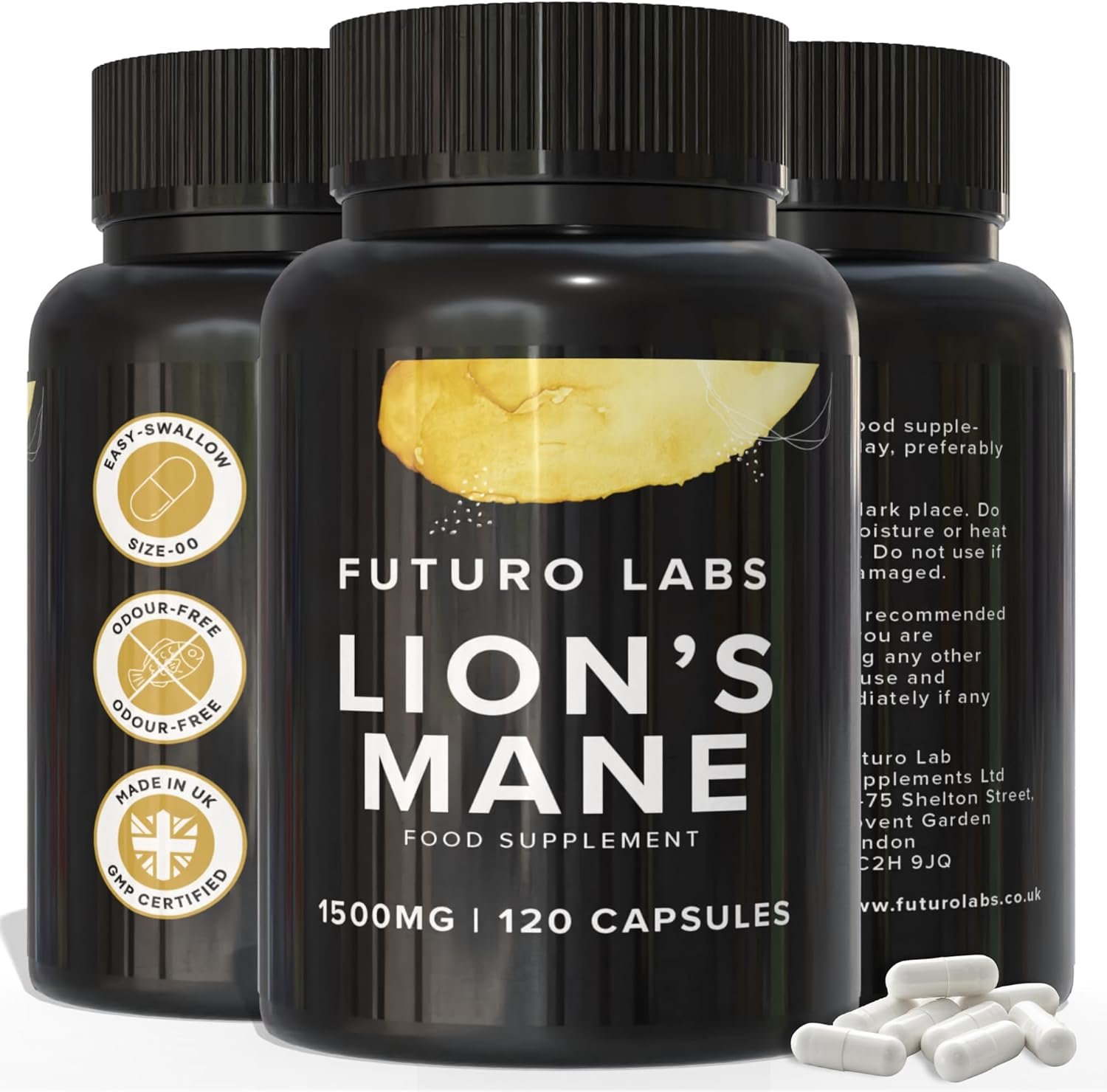
Futuro Labs Lion's Mane
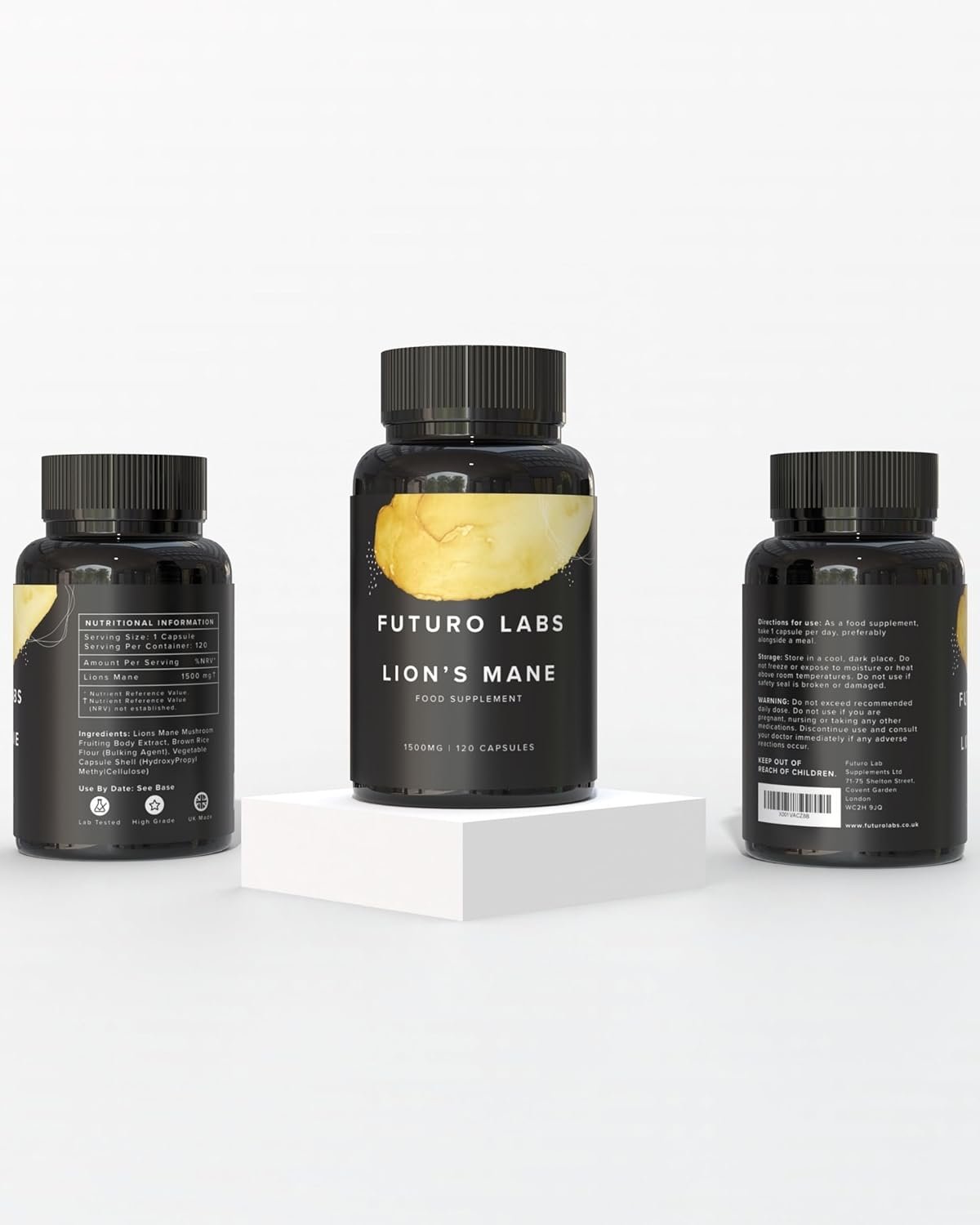
£15.49 for 120-day supply · 13p per day
Pros
- 1500mg fruiting body extract (5:1 ratio) per single capsule
- Delayed-release capsule for high absorption
- 21.6mm size-00 — easier swallow than most 1500mg formats
- 120-day supply at ~13p per day
- BRC AA accredited UK manufacturing
- Vegan HPMC, no fillers, odour-free, lab tested
Cons
- Single-ingredient (no nootropic blend)
- Newer brand vs heritage UK names
Available from: Amazon UK · Futuro Labs
At-a-glance comparison
| Quality marker | What it measures | Most relevant for |
|---|---|---|
| Beta-glucan % | Polysaccharide immune compounds | Immune support applications |
| Polyphenol % | Hericenones, erinacines, phenolics | Cognitive support applications |
| Fruiting body extract | Source quality | All applications — non-negotiable |
| Extraction ratio (5:1+) | Concentration level | All applications — high priority |
| Adequate dose (1500mg+) | Active compound delivery | All applications — determines outcomes |
What beta-glucans are in lion's mane
Beta-glucans are complex polysaccharides (long-chain sugars) found in the cell walls of mushrooms, including lion's mane. They're the most studied bioactive compound category in functional mushrooms for immune modulation. In lion's mane specifically:
- Immune modulation: beta-glucans activate immune cells (macrophages, natural killer cells) — the most established beta-glucan mechanism across functional mushrooms
- Prebiotic activity: beta-glucans may support gut microbiome diversity
- Anti-inflammatory: contribute to lion's mane's broader anti-inflammatory profile
- Distinct from hericenones/erinacines: beta-glucans are NOT the primary cognitive compounds. Hericenones and erinacines (classified under polyphenols and terpenoids) are the NGF/BDNF-stimulating compounds. Beta-glucans are primarily immune-relevant.
Typical beta-glucan levels in UK products
- Whole mushroom powder: 10-20% beta-glucans typically
- Standard hot water extract: 20-35% beta-glucans
- Standardised premium extract: 30-50% beta-glucans
Higher beta-glucan content indicates effective extraction of polysaccharides. However, for lion's mane specifically (where cognitive support via hericenones/erinacines is the primary application), polyphenol content may be more relevant than beta-glucan content. Polyphenol percentage guide.
Beta-glucan vs polyphenol — which quality marker matters more?
For lion's mane specifically:
- If your primary goal is cognitive support: polyphenol content (hericenones, erinacines) is the more relevant marker
- If your primary goal is immune support: beta-glucan content is the more relevant marker
- If a brand discloses both: this provides the fullest quality picture
- If a brand discloses neither: fruiting body extract at stated extraction ratio (5:1+) is the practical minimum quality signal
Practical guidance
For most UK adults taking lion's mane for cognitive support:
- Fruiting body extract — non-negotiable first filter
- Extraction ratio (5:1+) — second priority
- Adequate dose (1500mg+) — third priority
- Polyphenol or beta-glucan disclosure — fourth priority (nice-to-have quality verification)
FL Lion's Mane at 1500mg fruiting body, 5:1 ratio, BRC UK, ~13p/day meets the first three criteria at the UK value benchmark. Beta-glucan and polyphenol disclosure is an additional quality signal where present but not a dealbreaker if absent when other quality criteria are met.
Frequently asked questions
What are beta-glucans in lion's mane?
Beta-glucans are polysaccharides (complex sugars) in mushroom cell walls with immune-modulating properties. They're the most-studied functional mushroom compound for immune support. In lion's mane, they contribute to immune and anti-inflammatory effects but are NOT the primary cognitive compounds — hericenones and erinacines (polyphenols/terpenoids) are the NGF/BDNF-stimulating compounds for cognitive support.
What beta-glucan percentage should I look for?
Standard hot water extract: 20-35%. Standardised premium: 30-50%. Higher is generally better for immune applications. For cognitive applications specifically, polyphenol content is more relevant than beta-glucan content. Fruiting body extract, extraction ratio (5:1+), and adequate dose (1500mg+) all matter more than beta-glucan percentage for most UK buyers.
Do beta-glucans help with brain function?
Beta-glucans are primarily immune-modulating rather than directly cognitive. The cognitive compounds in lion's mane are hericenones and erinacines (classified under polyphenols/terpenoids). Beta-glucans may contribute indirectly through anti-inflammatory and gut-brain axis mechanisms, but for brain function specifically, look at polyphenol content and overall fruiting body extract quality rather than beta-glucan percentage alone.
Looking for the best value lion's mane in the UK?
Futuro Labs Lion's Mane delivers 1500mg fruiting body extract (5:1) in a delayed-release capsule for ~13p per day.
Shop on Amazon UKLast updated: 10 May 2026. All content is provided for general information only and is not intended to substitute for professional medical advice. If you have any health concerns, consult your GP or a qualified healthcare professional. Futuro Labs is a registered UK supplement manufacturer (Futuro Lab Supplements Ltd, 71-75 Shelton Street, London WC2H 9JQ). Affiliate links to Amazon UK and our own store are clearly disclosed.