Lion's Mane Extract Ratio Explained
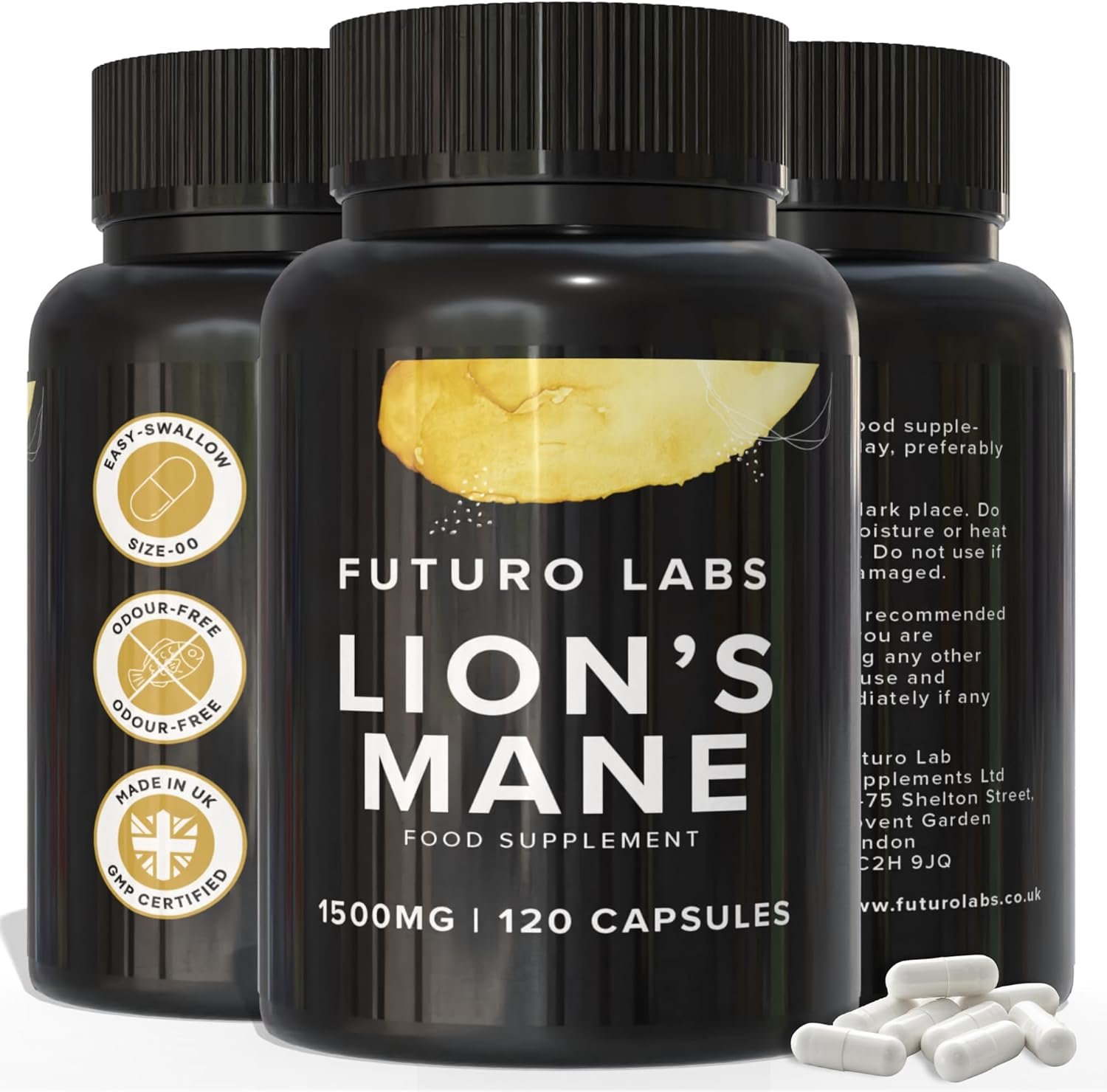
'5:1 extract' or '8:1 extract' is one of the most useful UK quality signals — but most buyers don't know what it actually means. The extraction ratio describes concentration relative to raw mushroom material, directly affecting active compound content per serving.
At a glance: our picks
- What it means: 5:1 = 5kg raw material concentrated to 1kg extract
- UK quality benchmark: 5:1 fruiting body extract at 1500mg+ per serving
- Premium ratios: 8:1 to 10:1 — verify with polyphenol % disclosure
- Sub-clinical: Whole mushroom powder at typical 500-1500mg servings
- Clinical research range: 5:1 to 10:1 at 1000-3000mg daily
"5:1 extract" or "8:1 extract" on a UK lion's mane label is one of the most useful quality signals — but most buyers don't know what it actually means or how to evaluate it. The extraction ratio describes concentration relative to raw mushroom material, which directly affects how much active compound you get per serving. This guide explains the ratios, what's standard versus premium, and how to use them to compare UK products.
Pairs with our polyphenol percentage explainer (bioactive standardisation deep-dive) and the broader label-reading guide.
Our top picks reviewed
Futuro Labs Lion's Mane
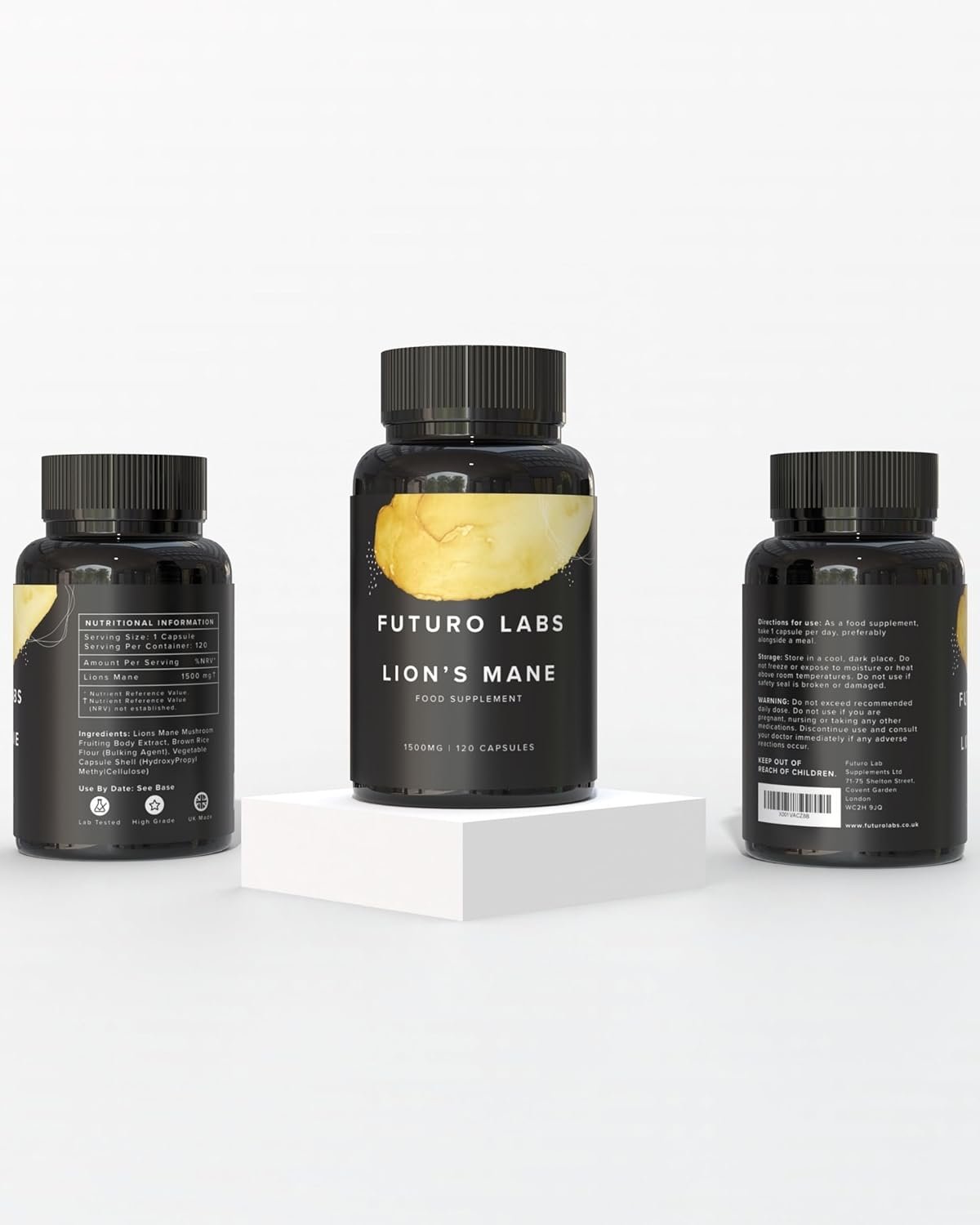
£15.49 for 120-day supply · 13p per day
Pros
- 1500mg fruiting body extract (5:1 ratio) per single capsule
- Delayed-release capsule for high absorption
- 21.6mm size-00 — easier swallow than most 1500mg formats
- 120-day supply at ~13p per day
- BRC AA accredited UK manufacturing
- Vegan HPMC, no fillers, odour-free, lab tested
Cons
- Single-ingredient (no nootropic blend)
- Newer brand vs heritage UK names
Available from: Amazon UK · Futuro Labs
Solve Labs Lion's Mane
Around £22-28 for 60-day supply · 37-47p per day
Pros
- Dual-extracted fruiting body
- UK manufactured
- Strong sourcing transparency
Cons
- Higher cost per day
- Smaller pack sizes
Available from: Solve Labs · Amazon UK
Bristol Fungarium Lion's Mane
Around £25-32 for 30-day supply · 83p-£1.07 per day
Pros
- UK-grown organic mushrooms
- Soil Association certified
- Dual-extracted fruiting body
Cons
- Premium pricing
- Tincture-format primary
Available from: Bristol Fungarium · Healf
At-a-glance comparison
| Extract type | Ratio | Raw material equivalent (per 1500mg) | Typical UK quality tier |
|---|---|---|---|
| Whole mushroom powder | 1:1 | 1500mg | Sub-clinical |
| 5:1 extract (FL benchmark) | 5:1 | 7500mg raw | Quality benchmark |
| 8:1 extract | 8:1 | 12000mg raw | Premium |
| 10:1 extract | 10:1 | 15000mg raw | Premium concentrated |
| 15:1+ extract | 15:1+ | 22500mg+ raw | Tincture / very premium |
What extract ratio actually means
An extraction ratio describes how much raw mushroom material was used to produce a given amount of extract. The format is "raw material : extract":
- 5:1 extract: 5kg of raw mushroom material concentrated to 1kg of extract
- 8:1 extract: 8kg of raw mushroom material concentrated to 1kg of extract
- 10:1 extract: 10kg of raw mushroom material concentrated to 1kg of extract
- 15:1 or higher: very concentrated extracts (uncommon in mainstream UK lion's mane products)
Higher ratio = more concentrated extract = more raw mushroom material represented per gram of finished product. Bioactive compounds (hericenones, erinacines, beta-glucans) are typically concentrated proportionally — though this assumes the extraction process effectively captures the active compounds.
Typical extract ratios in UK lion's mane products
- Whole mushroom powder (no extraction): 1:1 effectively — no concentration. Approximately 5-15g daily needed to match a 1500mg 5:1 extract dose.
- 4:1 to 5:1 extract: standard quality benchmark. FL Lion's Mane uses 5:1 ratio. Adequate concentration for clinical dose tier at reasonable serving sizes.
- 8:1 to 10:1 extract: premium positioning. Higher concentration means more raw material per gram of finished product. Typically commands premium pricing.
- 15:1 or higher: very concentrated. Sometimes found in tinctures and high-end premium positioning. Allows smaller serving sizes but doesn't necessarily produce proportionally stronger clinical effects.
For UK adults wanting clinical dose tier at reasonable serving sizes, 5:1 extract at 1500mg per serving is the typical quality benchmark.
Extract ratio doesn't guarantee active compound content
An important nuance: extract ratio describes raw material concentration but doesn't guarantee that active compounds are concentrated proportionally. The extraction process matters:
- Water extraction captures water-soluble compounds (beta-glucans, erinacines, polysaccharides) effectively. Misses some fat-soluble compounds.
- Alcohol extraction captures fat-soluble compounds (hericenones, terpenoids). Misses water-soluble.
- Dual extraction uses both water and alcohol to capture full spectrum.
A 10:1 water-only extract may miss key fat-soluble bioactive compounds; a 5:1 dual extract may capture the full bioactive spectrum more effectively. This is why polyphenol or beta-glucan percentage standardisation provides additional verification beyond extract ratio alone. Full polyphenol explainer here.
How to compare products using extract ratio
Practical comparison framework for UK lion's mane products:
Same ratio, different mg per serving
Product A: 1500mg of 5:1 extract per serving
Product B: 1000mg of 5:1 extract per serving
Both at same concentration. Product A delivers more bioactive content per serving. For clinical dose tier, Product A is more practical at single-serving protocol.
Different ratios, same mg per serving
Product C: 1500mg of 5:1 extract per serving
Product D: 1500mg of 10:1 extract per serving
Product D theoretically delivers more raw material equivalent per gram. However, if the higher-ratio extraction process didn't capture active compounds proportionally well, the actual bioactive delivery may not be 2x. Look for polyphenol percentage disclosure on both to verify.
Different ratios, different mg per serving
Product E: 2000mg of 5:1 extract per serving
Product F: 1000mg of 10:1 extract per serving
Roughly equivalent raw material equivalent (10,000mg raw material in both cases). The 5:1 product at 2000mg serving may be more reliable if you trust the simpler extraction; the 10:1 product at 1000mg serving offers more compact daily protocol. Personal preference matters here.
Extract ratio and the clinical research
Clinical lion's mane research uses extracts at various ratios — typically 5:1 to 10:1 — at total daily doses of 1000-3000mg. The Mori et al 2009 study (foundational lion's mane cognitive trial) used 3g daily of standardised extract. Most subsequent research has stayed in this dose range.
For UK buyers, this means: at clinical dose tier (1500-3000mg of 5:1 or higher extract daily), you're using lion's mane in the range the research supports. Higher concentration extracts at smaller serving sizes may produce equivalent effects but the research base is most established at 5:1 to 10:1 ratios.
Practical recommendation for UK buyers
For most UK adults choosing lion's mane:
- Look for products specifying extract ratio (5:1, 8:1, 10:1) on the label
- Default to 5:1 ratio at 1500mg+ per serving as quality benchmark
- Higher ratios (8:1, 10:1) are reasonable but verify with polyphenol percentage disclosure where possible
- Avoid whole mushroom powder products at typical 500-1500mg servings — sub-clinical for evidence-based supplementation
- Calculate cost per active gram of extract rather than bottle price for comparison
FL Lion's Mane at 5:1 fruiting body extract, 1500mg per single capsule, BRC AA UK, ~13p/day is the UK cost benchmark for the quality threshold this guide describes. Premium UK alternatives at 8:1 or 10:1 ratios are reasonable at higher per-day cost — sometimes justified by additional verification (polyphenol standardisation, dual extraction), sometimes not.
Frequently asked questions
What does '5:1 extract' mean for lion's mane?
5:1 extract means 5kg of raw lion's mane mushroom material has been concentrated to 1kg of finished extract. The bioactive compounds (hericenones, erinacines, beta-glucans, polyphenols) are typically concentrated proportionally. UK quality benchmark is at least 5:1 standardised fruiting body extract — Futuro Labs uses this ratio at 1500mg per single capsule.
Is a higher extract ratio always better?
Higher ratio means more raw material per gram of finished extract, but doesn't guarantee proportionally more bioactive compound content. The extraction process matters — a 10:1 water-only extract may miss fat-soluble compounds that a 5:1 dual extract captures. Look for products combining stated extract ratio with polyphenol percentage disclosure for fullest quality verification. 5:1 at adequate dose is the practical benchmark.
What's the best extract ratio for lion's mane?
5:1 fruiting body extract at 1500mg+ per serving is the practical quality benchmark for UK adults. Higher ratios (8:1, 10:1) are reasonable at premium pricing but don't necessarily produce proportionally stronger effects. The clinical research base sits primarily at 5:1 to 10:1 ratios at 1000-3000mg daily doses. UK BRC-accredited manufacturers using 5:1 extract at adequate dose deliver evidence-based supplementation at sustainable cost.
Does extract ratio matter more than mg per serving?
Both matter — they work together. A product at 1500mg of 5:1 extract delivers more bioactive content than a product at 500mg of 5:1 extract. A product at 1500mg of 5:1 extract may deliver similar content to 1500mg of 8:1 extract if the higher-ratio extraction doesn't capture active compounds proportionally well. Calculate total bioactive content delivered per serving rather than focusing on either metric alone.
Looking for the best value lion's mane in the UK?
Futuro Labs Lion's Mane delivers 1500mg fruiting body extract (5:1) in a delayed-release capsule for ~13p per day.
Shop on Amazon UKLast updated: 10 May 2026. All content is provided for general information only and is not intended to substitute for professional medical advice. If you have any health concerns, consult your GP or a qualified healthcare professional. Futuro Labs is a registered UK supplement manufacturer (Futuro Lab Supplements Ltd, 71-75 Shelton Street, London WC2H 9JQ). Affiliate links to Amazon UK and our own store are clearly disclosed.