Dry Eyes: The Mechanism Met Its Trial
No register sentence, one definitive null, zero borrowed hope — and the optician-led relief plan handed over whole.
At a glance
- The headline null: DREAM — omega-3 no better than placebo for dry eye disease
- What survives: tear-film plausibility · the base-layer case — never the treatment claim
- The real playbook: preservative-free drops · blink breaks · humidity · lid hygiene · optician grading
- Our stance: the trial printed, the capsule kept honest, the reader routed to relief
The trial this page is built around — printed first
Dry eyes drive enormous omega traffic, and this page leads with the study that settles most of it: the DREAM trial — the field's landmark randomised test, large, multi-centre and well-run, giving substantial daily omega-3 doses against placebo to people with moderate-to-severe dry eye disease — found no benefit on symptoms or signs: participants improved in both arms alike, the signature of a condition with strong placebo response and a supplement without specific effect. It's the cleanest null in the omega literature, and this cluster's ethic is to print such results at the top rather than paragraph seven (the three-layer sort that demands it, the vision page's parallel AREDS2 honesty). No register sentence covers dry eyes either — the DHA vision claim is normal-vision maintenance at its 250mg gate, a different territory entirely — so mechanism-talk is all the marketing ever had, and the mechanism just met its trial.
Why the idea persists — and where honesty lands
The residue, explained fairly: the tear film's lipid layer made omega supplementation mechanistically plausible (oils for an oil-layer problem — the pitch writes itself), pre-DREAM practice habits formed around that plausibility, and the harmless-adjunct framing ('can't hurt, might help') survives in some consulting rooms because individual practitioners weigh evidence and experience differently — all understandable, none of it outranking a definitive randomised null. Where this site lands, stated as policy: Futuro Labs Omega 3 is never sold as a dry-eye treatment — the capsule remains what every page here says it is, the essential-fat base layer meeting the heart condition at one softgel (the claim we do hold, the record) — and dry-eye sufferers get routed to relief that works instead of hope that tested negative.
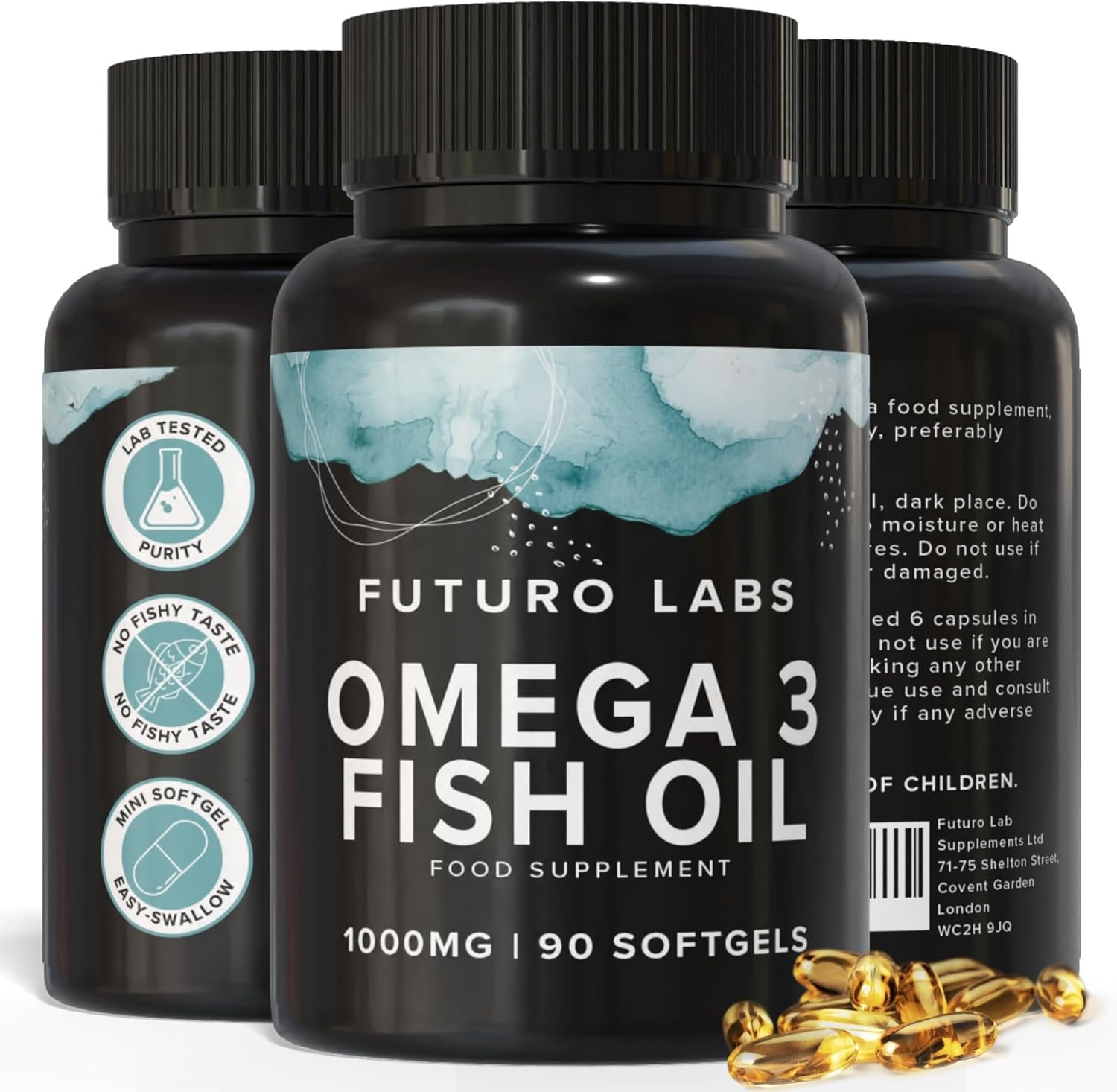
Futuro Labs Omega 3 Fish Oil
£14.99 for 90-day supply (90 softgels) · ~17p per day
Pros
- 1000mg fish oil per softgel — 180mg EPA + 120mg DHA stated
- Mini softgel, no fishy taste, lab tested
- 90-day supply at £14.99 (~17p/day), UK made
Cons
- Fish-derived, bovine-gelatin softgel — not vegan or vegetarian (algal DHA is that route)
- Ethyl-ester form — take with a meal; DHA brain/vision register claims need 250mg DHA daily, above the one-a-day serving
Available from: Amazon UK — £14.99
The playbook that works — and the close
Where dry-eye relief actually lives, in the order professionals reach for it: preservative-free lubricating drops — first-line everywhere, used generously and properly rather than saved for bad moments (preservative-free matters for frequent use); blink-and-break engineering — screens suppress blink rate by half, and structured breaks with deliberate full blinks are measurable tear-film therapy (the screen-worker page's territory); environment managed — heating, aircon and fans are tear-film enemies: humidity up, airflow off the face; lid hygiene — warm compresses and lid cleaning where blepharitis rides along, a huge under-treated contributor; and professional grading — a pharmacist or optician consult sorts severity, with persistent, painful or vision-affecting cases referred onward promptly. The capsule's honest seat beside all that: base-layer coverage as ever — 300mg EPA+DHA with a meal at ~17p, on its quiet months-long clock (the chemistry, the timeline) — purchased for what it is, never for what DREAM tested. Gates standing: pregnancy, nursing or any medication → doctor first per the label (the conversation). Dry eyes, answered with the trial on top: the null printed, the playbook handed over — and relief found where the evidence actually put it.
Frequently asked questions
Does omega 3 help dry eyes?
The field ran the definitive test and this page prints it: the DREAM trial — a large, well-designed randomised study of omega-3 supplementation for dry eye disease — found no benefit over placebo on symptoms or signs: the clearest null in the whole omega literature. Mechanistic plausibility survives; the treatment claim doesn't — and dry-eye relief lives in the optician-led playbook instead.
Why do some eye-care practitioners still mention fish oil?
Honest residue: pre-DREAM practice habits, the plausible tear-film mechanism, and the harmless-adjunct framing all persist — and individual practitioners weigh evidence differently. This site's read stays with the trial: recommend the playbook that works, keep the capsule as the base-layer fat it is, and never sell it as a dry-eye treatment.
What actually relieves dry eyes?
The evidenced playbook: preservative-free lubricating drops used properly (the first-line everywhere), screen habits with real blink breaks, humidity managed (heating and aircon are tear-film enemies), lid hygiene where blepharitis rides along, and a pharmacist or optician consult that can grade severity — with persistent or painful cases referred onward. Effective, cheap, and none of it in this aisle.