Memory: Cheques the Register Never Issued
Glow, trials, and the gap between told straight — with the GP door held open for the reader the search sometimes hides.
At a glance
- No memory claim exists: the DHA sentence is normal-function maintenance, nothing more
- The trial file: broadly disappointing for memory outcomes — printed straight
- The gap explained: fish-eating lifestyles carried the observational glow
- Memory's real levers: sleep · vascular health · activity · hearing · engagement — and the GP door
The claim that doesn't exist — and the one that does, kept in its lane
Memory searches deserve the register read first: there is no authorised memory claim for omega 3 — no sentence promising recall, retention or sharpness at any dose — and the brain sentence that does exist (DHA contributes to the maintenance of normal brain function, at 250mg DHA daily) is maintenance grammar with a dose gate this label sits below and states plainly (that page's whole arithmetic). So every 'memory support' fish-oil listing is writing cheques the register never issued — the borrowing pattern this cluster names wherever it appears (the three layers) — and this page's job is the honest file beneath the marketing.
The evidence, told straight — glow, trials, and the gap between
The memory literature in three honest movements: the observational glow — populations eating more fish long showed associations with better cognitive ageing, the finding that launched a thousand listings; the trial reality — randomised studies giving omega-3 capsules and measuring memory outcomes in healthy and older adults have been broadly disappointing: little separation from placebo across the major attempts, the pattern that cooled the field's enthusiasm; and the gap explained — fish-eaters differ systematically (diet pattern, income, education, activity, healthcare contact), associations absorb all of it, and when observation glows while intervention doesn't, the sober read is that the lifestyle carried the signal rather than the fatty acid alone. What survives honestly: DHA's structural presence in neural tissue (real — the currencies), the maintenance framing (defensible), the pregnancy-development literature (its own professional-led lane — there), and the base-layer case that never depended on memory promises (that case).
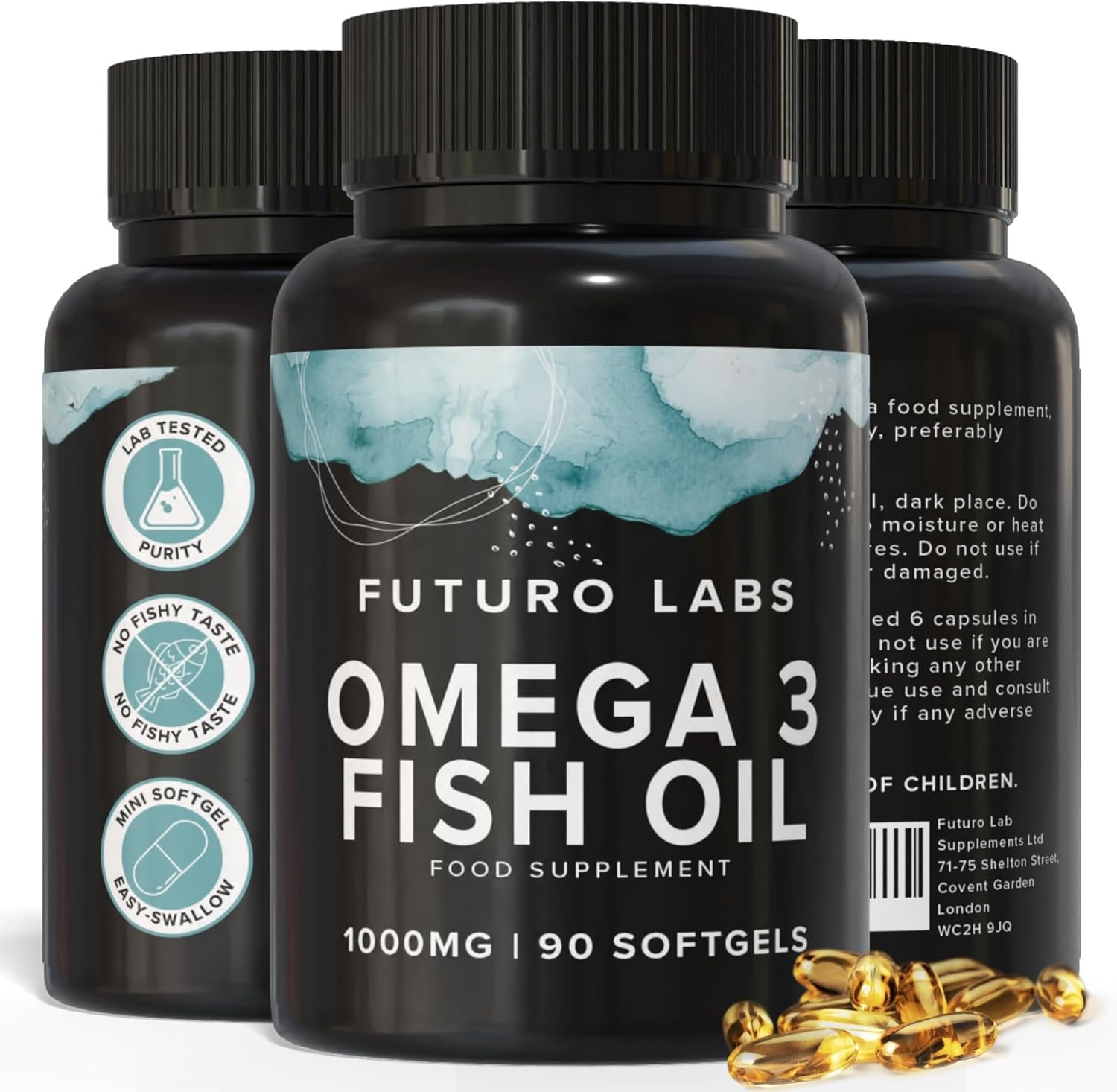
Futuro Labs Omega 3 Fish Oil
£14.99 for 90-day supply (90 softgels) · ~17p per day
Pros
- 1000mg fish oil per softgel — 180mg EPA + 120mg DHA stated
- Mini softgel, no fishy taste, lab tested
- 90-day supply at £14.99 (~17p/day), UK made
Cons
- Fish-derived, bovine-gelatin softgel — not vegan or vegetarian (algal DHA is that route)
- Ethyl-ester form — take with a meal; DHA brain/vision register claims need 250mg DHA daily, above the one-a-day serving
Available from: Amazon UK — £14.99
Memory's real levers — the routing that respects the search
What the evidence actually supports for the thing you searched: sleep — consolidation is a sleep function, and chronic short sleep is the most common reversible memory complaint in working adults; vascular health — the brain runs on its vessels, making blood pressure known-and-managed a genuine cognitive intervention (the canon's page); movement — the exercise-cognition file is one of the field's most consistent; hearing — checked and corrected, an underrated protector of cognitive engagement in later life; and engagement itself — social and mentally demanding activity, the use-it lever. The door this page holds open without drama: memory change that worries you or those around you — progressive, interfering, unlike your normal — is a prompt GP conversation, where real assessment lives; no aisle serves that reader. The capsule's honest seat for everyone else: the same base layer as every page — Futuro Labs Omega 3 at 300mg EPA+DHA with a meal, ~17p, quiet on its months-long clock (the timeline), gates standing as ever: pregnancy, nursing or any medication → doctor first per the label (the conversation). Omega 3 for memory, honestly: no claim, cooled trials, a lifestyle that carried the glow — and tonight's sleep still the best memory product on any shelf.
Frequently asked questions
Does omega 3 help memory?
No authorised claim says so — the register's DHA sentence covers maintenance of normal brain function, not memory improvement — and the trial file matches the silence: randomised studies of omega-3 for memory in healthy and older adults have been broadly disappointing, whatever the observational studies hinted. Honest answer: not a memory intervention; a base-layer fat with a brain-adjacent maintenance role.
Why do observational studies and trials disagree here?
The classic pattern: fish-eaters differ from non-fish-eaters in income, education, activity and whole diet — associations soak up all of that — while randomised capsules isolate the fat and mostly find little. When observation glows and intervention doesn't, the honest read is that the fish-eating lifestyle carried the signal, not the capsule.
What actually supports memory?
The evidence-backed levers are systemic: sleep (consolidation happens there), blood pressure and cardiovascular health (the brain runs on its vessels), physical activity, hearing checked and corrected, social and cognitive engagement — and any genuinely concerning memory change is a GP conversation promptly, not a supplement search.