Over-60s Brain: Hearing Aids Beat This Aisle
The DHA gate stated as everywhere, the lifestyle credited for the signal it carried — and prompt conversations crowned over bigger bottles.
At a glance
- The trials, told straight: cognitive-ageing supplementation studies broadly disappointed
- The gate as ever: DHA's sentence at 250mg — above this label's stated 120mg
- The real protectors: vascular health · hearing corrected · activity · engagement · sleep
- The door: memory change that worries → prompt GP conversation, not a bigger bottle
The decade's search, met with the decade's evidence
Over-60s brain searches deserve the file without the flattery: the register position first — DHA's maintenance sentence (normal brain function, 250mg DHA daily) is real and sits above this one-a-day label's 120mg, stated here as everywhere rather than borrowed (the arithmetic's home); and the trials for this demographic specifically — the major randomised attempts at cognitive-ageing supplementation with omega-3 have been broadly disappointing: little reliable separation from placebo on memory and cognition endpoints across the landmark studies, the same cooled file the memory page prints and this decade's searchers most need printed: no capsule on this shelf holds a cognitive-ageing result worth building hope on (the layers).
The glow explained — and the protectors that actually test well
The pattern that keeps generating the search: fish-eating populations associate with better cognitive ageing across observational cohorts — real data, honestly reported — and the interventional silence beside it tells the sober story: fish-eaters differ systematically (whole diet, activity, education, healthcare contact), associations absorb everything, and isolating the fat in capsules finds little: the lifestyle carried the signal, and copying the plate remains worthwhile for the plate's own sake (that plate). The protectors with genuine files, ranked for the decade: blood pressure managed — the brain runs on its vessels, and vascular control is the strongest modifiable cognitive lever going (the number-first page); hearing checked and corrected — a heavyweight in the dementia-risk literature and the most under-acted-on line here; activity — the exercise-cognition file stays one of the field's most consistent; engagement — social and cognitively demanding life, kept deliberately; and sleep — respected, not sacrificed to 4am habits.
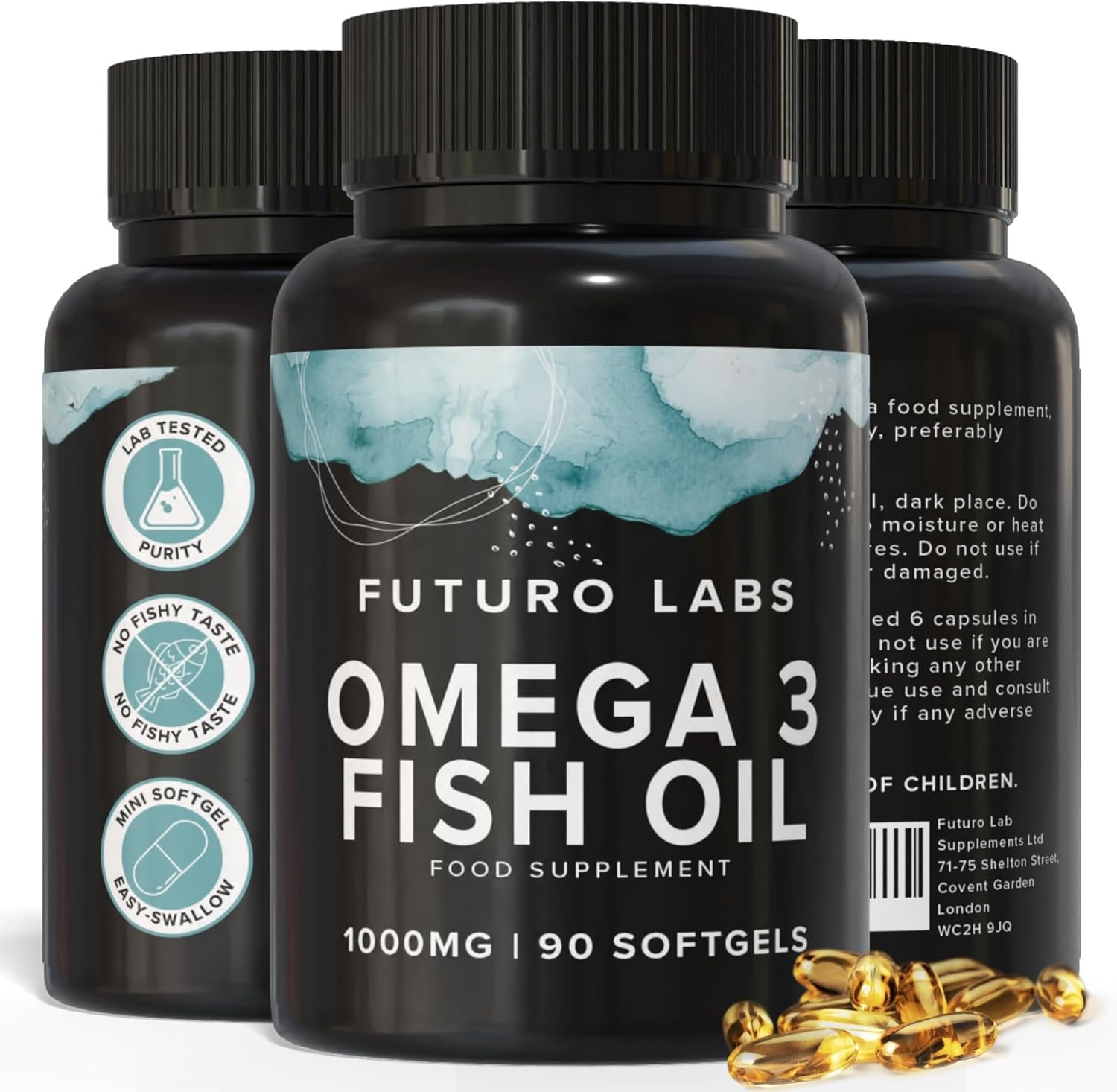
Futuro Labs Omega 3 Fish Oil
£14.99 for 90-day supply (90 softgels) · ~17p per day
Pros
- 1000mg fish oil per softgel — 180mg EPA + 120mg DHA stated
- Mini softgel, no fishy taste, lab tested
- 90-day supply at £14.99 (~17p/day), UK made
Cons
- Fish-derived, bovine-gelatin softgel — not vegan or vegetarian (algal DHA is that route)
- Ethyl-ester form — take with a meal; DHA brain/vision register claims need 250mg DHA daily, above the one-a-day serving
Available from: Amazon UK — £14.99
The door, the capsule's seat, and the close
The routing this page holds with care: memory change that worries — progressive, interfering, noticed by others — is a prompt GP conversation where real assessment lives: going early is the strong move, the checkable contributors (thyroid, B12 and kin) get found there, and no aisle serves that reader better than the appointment does (the checkables' page). The capsule's honest seat for the decade: the same base layer as every age — fish-light plates covered at the 250mg heart condition, one Futuro Labs Omega 3 softgel with a meal at ~17p, the pharmacist minute at this decade's full weight (medication lists and this label's doctor-first line — the standing gate, the adjacent decade's same logic), and the DHA gate stated on every page it touches (the printed limitation). Omega 3 for the over-60s brain, closed honestly: cooled trials printed, real protectors ranked, the door held — and a decade served better by hearing aids and blood-pressure checks than by anything this aisle sells.
Frequently asked questions
Is omega 3 good for the brain over 60?
The honest file for the decade: DHA's maintenance sentence exists (250mg DHA daily — above this label's 120mg, stated as ever), and the cognitive-ageing trials of omega supplements have been broadly disappointing — little separation from placebo in the major attempts. The levers with real evidence are systemic: vascular health, hearing corrected, activity, engagement — and prompt GP conversations for memory change that worries.
Why do fish-eating populations age better cognitively then?
The pattern this cluster keeps honest: observational glow, interventional silence — fish-eaters differ in diet pattern, activity, education and healthcare contact, associations absorb the lot, and capsule trials isolating the fat find little. The lifestyle carried the signal; the plate remains worth copying for its own sake.
What actually protects an ageing brain?
The evidence-ranked set: blood pressure managed (the brain runs on its vessels — the strongest modifiable lever), hearing checked and corrected (a heavyweight in the dementia-risk literature), physical activity, social and cognitive engagement kept up, and sleep respected. All beat this aisle; most are free.