Students: Coverage for the Plate, Canon for the Grades
Sleep, spaced practice and retrieval testing handed over free — with exam-week starts welcomed as habits and refused as interventions.
At a glance
- No study claims exist — and the DHA sentence sits above this label's gate anyway
- What's true: student diets run fish-light — the base-layer case at full strength, 17p arithmetic
- Grades live in the canon: sleep · spaced practice · retrieval · timed caffeine
- Exam-week starts: fine as a habit, useless as an intervention — the clock runs months
The student shelf — cleared of borrowed promises first
Student-targeted supplement marketing sells grades, so the clearing comes first: no authorised claim touches studying, concentration, memory or academic performance at any dose (the layers, focus audited, memory's cooled file); the register's one brain sentence — DHA's normal-function maintenance — sits at a 250mg-DHA gate this one-a-day label sits below and states plainly (that arithmetic); and the exam-performance literature specifically is thin enough that nothing purchase-worthy survives contact. What survives instead is unglamorous and real: the student plate — famously fish-light, oily fish rarer still, the essential-fat guidance line unmet across most halls and house-shares — making the base-layer case apply at full strength to exactly this reader (the sort).
Where grades actually live — the canon students know and skip
The study performance file, handed over free: sleep — memory consolidation is a sleep function, the all-nighter is self-sabotage with extra steps, and exam-period sleep protection is the single highest-yield academic intervention available; method — spaced practice and retrieval testing (closed-book self-quizzing) beat re-reading and highlighting by embarrassing margins in the learning-science literature: how you study outranks how long; caffeine — timed early and kept moderate, because the 9pm double-shot borrows from the sleep that was doing the actual remembering; movement — breaks that move the body reset the attention doing the work; and boring routines — same wake time, real meals, the exam fortnight run like training, not crisis. Every line outranks this aisle; a student page that says so has earned its next paragraph.
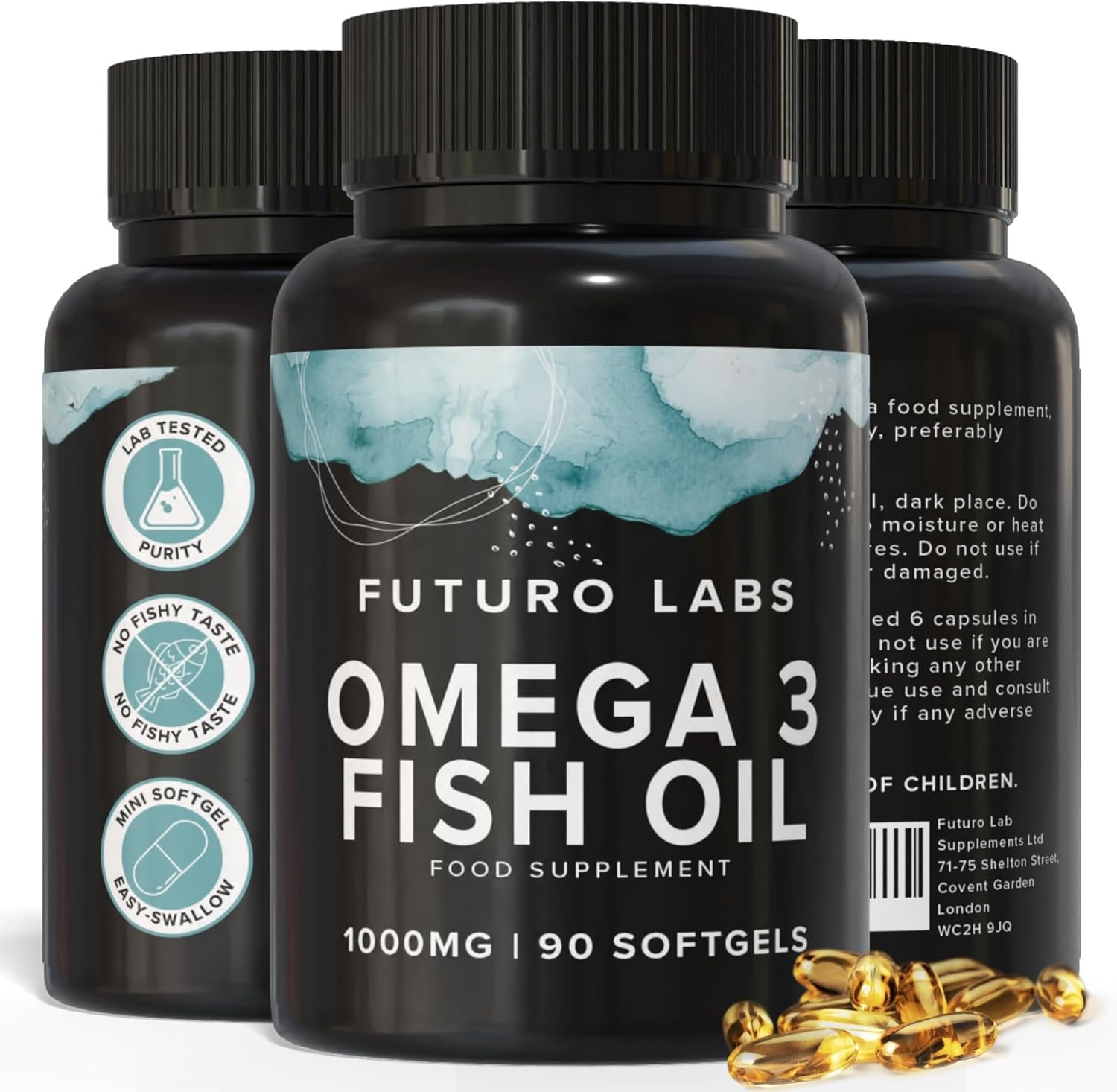
Futuro Labs Omega 3 Fish Oil
£14.99 for 90-day supply (90 softgels) · ~17p per day
Pros
- 1000mg fish oil per softgel — 180mg EPA + 120mg DHA stated
- Mini softgel, no fishy taste, lab tested
- 90-day supply at £14.99 (~17p/day), UK made
Cons
- Fish-derived, bovine-gelatin softgel — not vegan or vegetarian (algal DHA is that route)
- Ethyl-ester form — take with a meal; DHA brain/vision register claims need 250mg DHA daily, above the one-a-day serving
Available from: Amazon UK — £14.99
The honest purchase — and the close
What a student actually buys here, aimed correctly: base-layer coverage for a fish-light plate — Futuro Labs Omega 3 at 300mg EPA+DHA per mini softgel, the heart condition met at one, £14.99 across 90 days at ~17p: arithmetic that fits a maintenance loan and a habit that fits beside the cereal (the claim held, why the meal matters, the value maths in full). The timeline honesty that saves exam-week disappointment: the tissue clock runs weeks-to-months and nothing arrives by Thursday's paper — start whenever for the plate's sake, judge at the 90-day review, and aim the expectation at coverage, never the transcript (the clock, the exam-season page to come). The wellbeing line a student page owes: exam pressure that tips into persistent low mood or overwhelm is what university support services and GPs are for — using them early is the strong move. Gates as ever: pregnancy, nursing or any medication → doctor first per the label (the conversation). Students and studying, closed honestly: no claims, a fish-light plate genuinely covered, 17p arithmetic — and the grades still coming from sleep, method and showing up.
Frequently asked questions
Is omega 3 good for students and studying?
Honestly framed: no claims touch studying, memory, focus or grades — the DHA brain sentence sits at a 250mg gate above this label, and the exam-performance literature is thin. What's genuinely true: student diets are famously fish-light, the base-layer case applies at full strength, and ~17p/day is student-budget arithmetic. Coverage for the plate; the grades come from the canon.
What actually improves study performance?
The evidence-backed set every student knows and skips: sleep (memory consolidation is a sleep function — all-nighters are self-sabotage with extra steps), spaced practice and retrieval testing over re-reading, caffeine timed early rather than escalated late, movement breaks, and exam-period routines kept boring. Free, proven, and outranking every supplement aisle combined.
Is it worth starting fish oil during exam season?
Start it for the right reason and timeline: as a base-layer habit for a fish-light diet, begun whenever, judged at 90 days — not as an exam-week intervention, because the tissue clock runs months and nothing arrives by Thursday's paper. If exam season prompts the habit, lovely; just aim the expectation at the plate, not the paper.