Interactions: The Referral, Made Without Hedging
This page refuses the 'no known interactions' all-clear — the gap-covering rule, the renewal on every prescription change, and the line this site would rather lose sales than blur.
At a glance
- The file's honest state: thin documented interactions — and thin ≠ absent
- The rule that covers the gap: any prescription → pharmacist minute, product named, before starting
- The bold-type context: chemotherapy/oncology — team conversation only, never self-directed
- The renewal rule: every prescription change reopens the question
Reading a thin file correctly — the epistemics this page runs on
Oral glutathione's documented interaction file is genuinely short — no long-established list of named drug conflicts of the kind some botanicals carry — and the honest interpretation of that thinness is this page's whole foundation: thin can mean 'well-studied and clean' or it can mean 'insufficiently studied', and for a supplement whose modern oral-dosing literature is measured in years rather than decades, humility says the second explanation deserves standing room. So this cluster refuses the move the marketing makes — 'no known interactions!' as an all-clear — and installs the rule that covers the gap regardless of which explanation is true: anyone on any prescription medication has the pharmacist conversation before the first capsule, product named specifically (reduced glutathione, 500mg daily), current list in hand — two free minutes that outperform any interaction table this page could print, because the pharmacist holds your actual picture and this page holds a generic one (the safety file this extends).
The context in bold — oncology, stated without hedging
One situation earns more than the general rule, and this cluster prints it at full weight on every page it touches: anyone undergoing chemotherapy or related oncology treatment must treat antioxidant supplementation — glutathione included — as a conversation with their oncology team, and nothing else. The reason deserves stating plainly rather than darkly: some cancer treatments work partly through oxidative mechanisms, which makes 'does adding an antioxidant help, hinder or do nothing' a real, active, regimen-specific clinical question — one that varies by drug, timing and individual picture, and that belongs exclusively to the team holding all three. No supplement page, this one included, has standing in that conversation; our only honest move is the referral, made without hedging, and the sentence this site has used before fits here best: we would rather lose every sale this page could make than blur that line. (The same team-first logic extends to anyone under active specialist care for any serious condition — the specialist knows the plan; loop them in.)
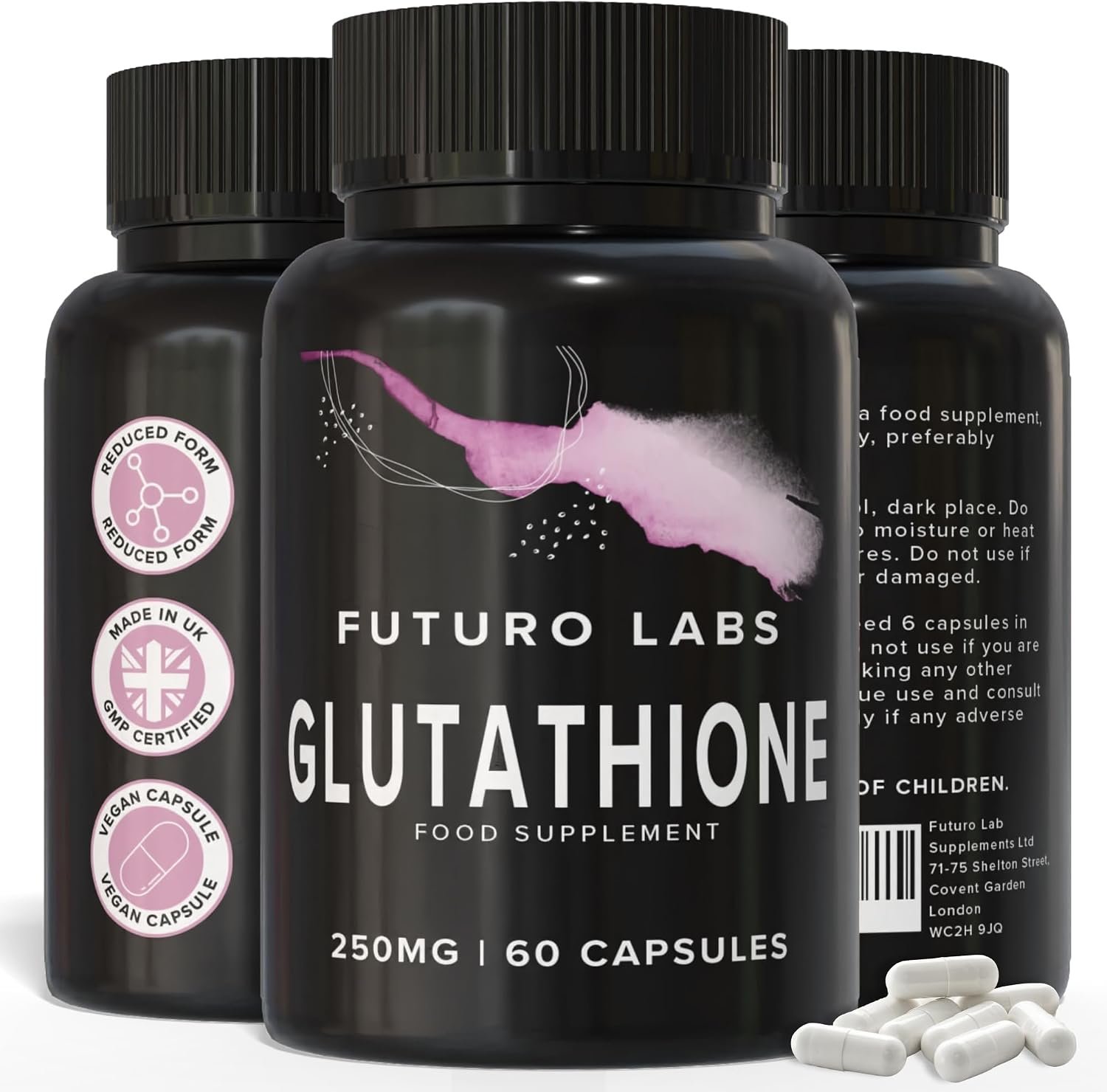
Futuro Labs Glutathione
£22.99 for 30-day supply · 77p per day
Pros
- 500mg reduced glutathione (GSH) per serving — the active form
- UK manufactured under GMP certification
- Single-ingredient, vegan, no fillers
- Independently lab tested — microbiology and heavy metals
- ~77p per day vs £1.20-1.80/day for liposomal formats
Cons
- Capsule format — no liposomal delivery system
- Newer brand versus heritage names like Solgar
Available from: Amazon UK — £22.99
The working protocol — and the design choice that helps
The interactions protocol, complete: before starting — the pharmacist minute (list, product name, direct question), with pregnancy and breastfeeding routed to medical advice as always; ongoing — the renewal rule: every change to the prescription list reopens the question, because 'checked once in 2026' doesn't cover next year's new script; and during — the attribution habit: any new symptom after starting anything new gets reported with the product named, keeping the clinical picture clean (the same discipline, applied to efficacy). The design choice that makes all of it easier, and the honest reason single-ingredient formulation matters beyond marketing: Futuro Labs Glutathione gives the pharmacist exactly one molecule to check — 500mg reduced glutathione, vegan capsule, no proprietary blend hiding six other actives behind a complex name — which turns the two-minute conversation into an actual two minutes (£22.99/30 days, independently tested, the record, the form test). The close, calibrated as ever: a thin file read with humility, a free professional covering the gap, one context in bold belonging to its team — and a supplement that's only ever the least important thing in any of those conversations.
Frequently asked questions
Does glutathione interact with medications?
The documented oral-GSH interaction file is thin — but thin is not the same as absent, and this cluster's rule does the work the data can't: anyone on any prescription medication runs the pharmacist minute before starting, product named, list in hand. One context gets named in bold rather than left to a list: chemotherapy and related oncology treatment — antioxidant supplementation there is a genuine oncology-team conversation, individual to the regimen, and never self-directed.
Why is the chemotherapy line so firm?
Because the mechanism question is real and regimen-specific: some cancer treatments work partly through oxidative mechanisms, and whether antioxidant supplementation helps, hinders or does nothing is an active clinical question that varies by drug and context — exactly the kind of question that belongs to the team running your treatment, with the full picture, and to nobody else. A supplement page's only honest move is the referral, made without hedging.
What should the pharmacist conversation cover?
The two-minute version: your current prescription list, the product named specifically ('reduced glutathione, 500mg daily'), and the direct question — anything here this touches? Renew the conversation whenever the prescription list changes; a new medication reopens the question every time. Free, fast, and the entire point of having a pharmacist.