Worth It: Coverage, Never Magic
A hundred pages compressed into three honest questions — plate, gates, expectations — with the no printed at equal weight to the yes.
At a glance
- The verdict shape: worth it as coverage, never as magic — yes-if, structured
- Worth it for: fish-light plates wanting the condition met at ~£60/year
- Not worth it for: covered plates · outcome-promise shoppers · feeling-seekers
- The decision: plate question → gates → expectations — three honest yeses
The question the whole cluster was building toward
A hundred pages of this cluster compress into one verdict, structured the only honest way — yes-if: worth it if your plate runs fish-light (the marine pair arrives by oily fish or not at all, and most UK plates miss the widely followed two-portions-one-oily shape most weeks — the sort, the table); worth it if the claim at its own bar is the purchase — EPA and DHA contribute to the normal function of the heart, 250mg daily: maintenance grammar, a real register sentence, and everything this label promises (the claim in full, the ladder above it); and worth it if quiet suits you — the tissue clock runs on months, nothing announces itself, and the routine is judged at reviews rather than by sensations (the clock).
The honest no — who saves their £60
The verdict's other half, printed with equal weight: not worth it for the covered plate — genuine weekly oily fish has the line supplied and the condition met at the fish counter: this aisle is optional, and this cluster's food-first pages have been saying so for a hundred pages (the table that covers you); not worth it for the outcome-promise shopper — the major trials cooled the risk-reduction hopes at supplement doses, the register holds maintenance sentences rather than prevention ones, and any bottle sold on outcomes is selling past its licence: this cluster told that story straight every time and prices those promises at zero (the trials, told honestly); and not worth it for the feeling-seeker — brain sharpening, joint relief, mood lifts and energy all live in the borrowed-words file, claimed by marketing and unclaimed by evidence at this label's doses (the gates, the joints truth): a purchase made for a feeling will be reviewed against one, and this product will lose that review by design.
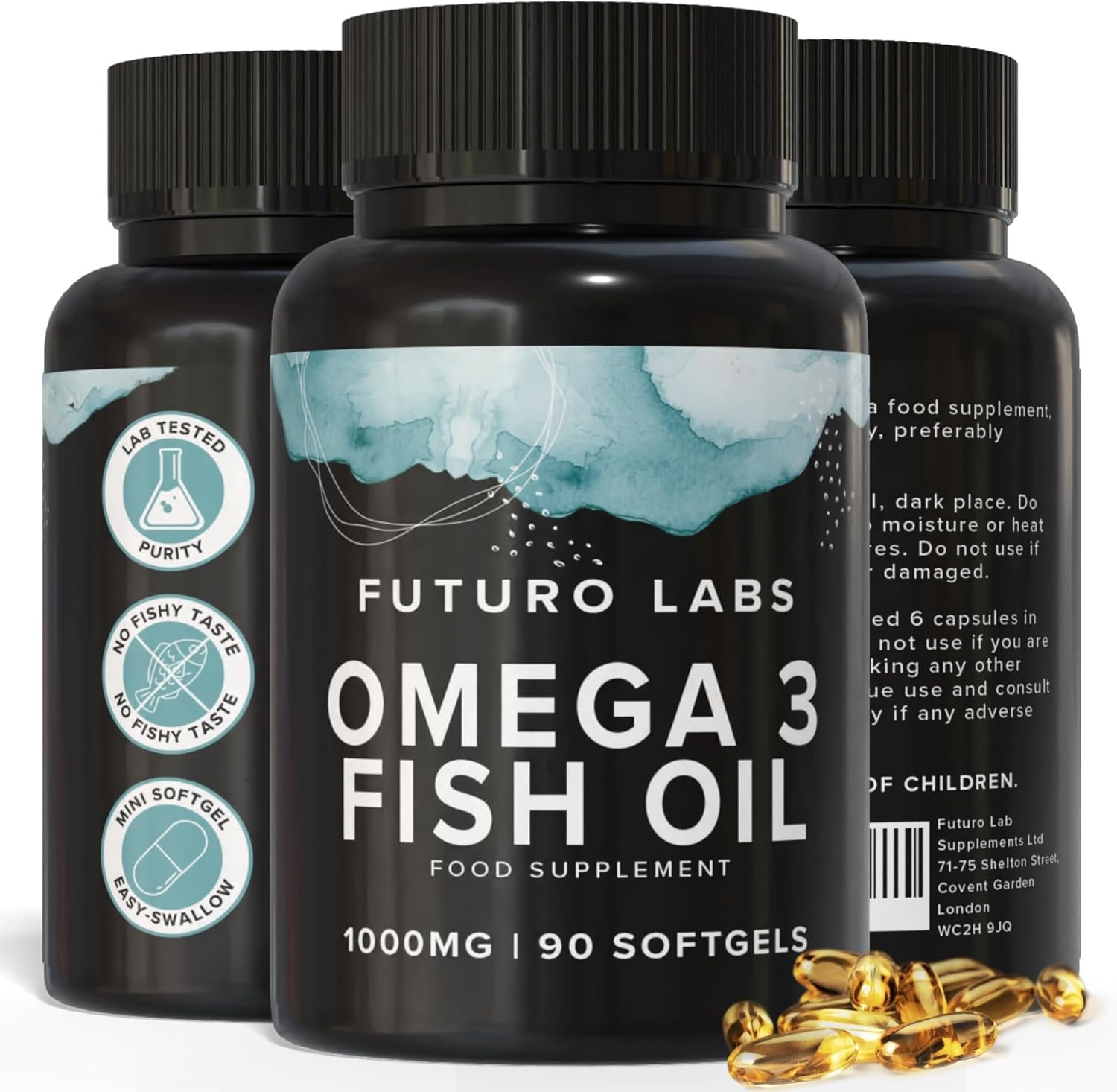
Futuro Labs Omega 3 Fish Oil
£14.99 for 90-day supply (90 softgels) · ~17p per day
Pros
- 1000mg fish oil per softgel — 180mg EPA + 120mg DHA stated
- Mini softgel, no fishy taste, lab tested
- 90-day supply at £14.99 (~17p/day), UK made
Cons
- Fish-derived, bovine-gelatin softgel — not vegan or vegetarian (algal DHA is that route)
- Ethyl-ester form — take with a meal; DHA brain/vision register claims need 250mg DHA daily, above the one-a-day serving
Available from: Amazon UK — £14.99
The decision, run — and the close
The three-step sort that settles any reader: the plate question — two fish portions weekly including one oily, most weeks, honestly audited by calendar rather than intention: yes = covered, close the tab with this cluster's blessing; no = the coverage case applies (its fullest version); the gates — pregnancy or nursing → this label's own do-not-use-without-a-doctor line; any medication → the pharmacist minute before capsule one, blood thinners firmest of all (the conversation, the label's words); the expectations — maintenance grammar accepted, quiet months accepted, the 90-day review as the judgement point (the record to judge against). Three yeses and the proposition is exactly this: Futuro Labs Omega 3 — 300mg EPA+DHA at one mini softgel with a meal, deodorised and tocopherol-guarded, independently batch-tested and shown, £14.99 per 90 days: ~17p a day, ~£60 a year, for a met condition and a covered line and not one promise more (the six checks it passes, the full buying guide beside this verdict). Is omega 3 worth it, closed the way this cluster opened: worth exactly what the claim says, for exactly the plate that needs it — and this page just told half its readers to keep their money.
Frequently asked questions
Is omega 3 actually worth taking?
The cluster's whole verdict in one answer: worth it as coverage, not as magic — a fish-light plate leaves the marine line unsupplied, one softgel meets the everyday 250mg heart-maintenance condition for ~£60 a year, and that's the entire honest proposition. Not worth it for covered plates (the fish already did it), outcome-promise shoppers (the big trials cooled those), or anyone expecting to feel something (the clock is quiet by design).
What am I actually getting for £60 a year?
A met condition and a covered line: the register's everyday heart sentence held daily (maintenance of normal function — its real grammar), the essential-fat line supplied on a fishless plate, freshness and testing engineered and shown. What you're not getting: risk-reduction promises, cognitive sharpening, joint relief, or any feeling to report — this cluster priced all of that honestly at zero.
How do I decide for my own situation?
Run the sort this cluster built: the plate question first (two fish portions weekly, one oily, most weeks? — covered, save the money), the gates second (pregnancy, nursing, any medication → doctor first, per the label), the expectations third (maintenance grammar accepted, quiet clock accepted). Three yeses to coverage-need, gate-clearance and honest expectations = worth it at 17p.