Index Testing: Optional Beside a Readable Plate
No score unlocks claims — the number confirms what the menu declared, and the routine runs identically measured or not.
At a glance
- What it measures: red-cell EPA+DHA % — months of intake, not last night's salmon
- The research framing: ~8% discussed as desirable, ~4% typical Western — orientation, not diagnosis
- Worth it? Curiosity tier — the plate question answers most people for free
- Retest logic: 3-4 months after any change — the tissue clock sets the calendar
The measurement behind this whole cluster — explained properly
The omega-3 index deserves its page because it's the number the entire field runs on: a blood measure — typically a finger-prick dried-spot kit — reporting EPA+DHA as a percentage of total fatty acids in red-cell membranes, chosen by researchers precisely because membranes integrate: the score reflects your last few months of intake rather than yesterday's dinner, making it the honest counterpart to everything this cluster says about tissue loading (the clock it measures, the pool it samples). UK availability, hedged honestly: home kits exist from various providers at meaningful double-digit prices that move around — check current listings rather than any figure a page could print — with results returned as your percentage against reference framings the next section handles carefully.
Reading a score — research framings, worn lightly
What the numbers mean, attributed the way honesty requires: the research literature commonly discusses an index around 8% and above as the desirable zone (framings drawn from cohort work associating higher membrane status with the outcomes the field studies) and around 4% as typical of Western fish-light eating — orientation from population research, and worth holding lightly: these are study framings, not diagnostic thresholds, not treatment targets, and not numbers any capsule label may promise movement against (the layers, applied to your own data). The honest interpretive rules: a low score mostly confirms what your menu already declared (fishless plates test low — the plate question knew — that sort); movement takes months — any retest belongs 3-4 months after a dietary or capsule change, the tissue clock setting the calendar and earlier retests measuring noise; and a number that worries you belongs in a GP conversation alongside whatever prompted the testing urge, not in an escalating self-experiment.
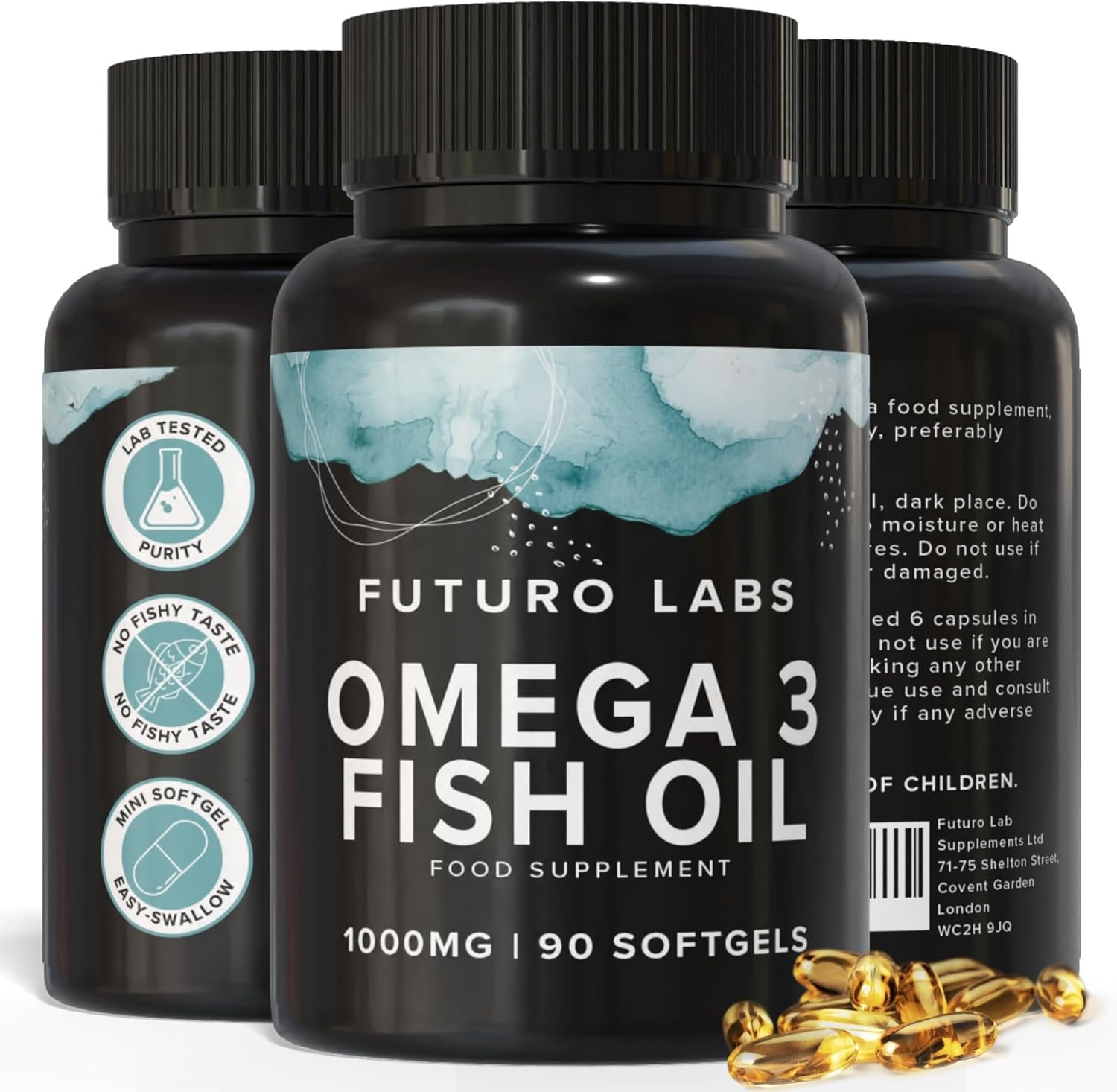
Futuro Labs Omega 3 Fish Oil
£14.99 for 90-day supply (90 softgels) · ~17p per day
Pros
- 1000mg fish oil per softgel — 180mg EPA + 120mg DHA stated
- Mini softgel, no fishy taste, lab tested
- 90-day supply at £14.99 (~17p/day), UK made
Cons
- Fish-derived, bovine-gelatin softgel — not vegan or vegetarian (algal DHA is that route)
- Ethyl-ester form — take with a meal; DHA brain/vision register claims need 250mg DHA daily, above the one-a-day serving
Available from: Amazon UK — £14.99
The worth-it verdict — and the close
Filed where it honestly belongs: the curiosity tier — nothing about running a base-layer routine requires the test (the plate question sorts intake for free, the everyday condition is met by label arithmetic, and the quiet clock runs identically measured or not), while three readers genuinely enjoy the number: data-lovers who track everything, change-verifiers wanting before-and-after around a new routine (the one use where the 3-4-month retest logic shines), and the professionally-advised whose clinician asked. What the test never becomes on this site: a sales device — no score unlocks claims, no percentage overrides the register, and a capsule's case was always the coverage case: Futuro Labs Omega 3 meeting the 250mg everyday condition at 300mg per softgel, with a meal, ~17p, whether or not anyone ever pricks a finger (the claim held, the chemistry, the record). Gates as ever: pregnancy, nursing or any medication → doctor first per the label (the conversation). The index test, closed at its true size: the field's real number, worn lightly, retested on the clock's schedule — and entirely optional beside a plate you can already read.
Frequently asked questions
What is the omega-3 index test?
A finger-prick blood measure of EPA+DHA as a percentage of red-cell membrane fatty acids — the research field's favourite status marker, reflecting months of intake rather than yesterday's dinner. UK home kits exist from various providers at meaningful prices; results land as a percentage against research-derived reference framings.
What's a good omega-3 index score?
The research framing, honestly attributed: the literature commonly discusses ~8%+ as the desirable zone and ~4% as typical of Western fish-light diets — useful orientation from cohort research, not a diagnostic threshold or treatment target. A low score says what your menu already said; a retest belongs 3-4 months after any change, matching the tissue clock.
Is the test actually worth buying?
Curiosity tier, honestly filed: the plate question answers most people for free (fishless = low status, definitionally), the test adds a number for those who want measurement — data-lovers, the change-verifiers, the professionally-advised. Nothing about starting a base-layer capsule requires it; nothing about owning the number changes the routine it confirms.