Sea Moss Smell: Tolerate the Ocean, Trust the Nose on Decay
The baseline is information, not a defect — and it earns respect in both directions. The sort that never misleads, the gel-fridge vigilance, and the structural exit at 17p.
At a glance
- The baseline: briny, mineral, oceanic — seaweed smelling like the sea is normal
- The bin verdicts: ammonia, sour rot, decay that worsens — spoilage, not character
- Gels announce fastest: short fridge-life makes the nose the freshness instrument
- The format exit: capsules seal it — a faint bottle-note, nothing on the palate
The chemistry of the ocean note — what's normal and why
Sea moss smells of the sea because it is the sea, concentrated: marine algae carry sulfur-bearing compounds and the volatile chemistry of their shoreline — the briny, mineral, faintly oceanic baseline every honest sea vegetable shares, stronger in raw dried moss (which also arrives salted from traditional processing), present in gels, and muted in well-processed extracts. That baseline is information, not a defect: a clean product smelling like clean ocean is the raw material being what it claims (the harvest it came from), and buyers expecting supplement-aisle neutrality from a whole seaweed have the wrong shelf, not a bad batch. The genuinely useful skill is the sort in the next section — because the nose is also this category's cheapest quality-control instrument, and it earns respect in both directions.
The sort — ocean versus decay
Normal, tolerate: briny and mineral; low-tide oceanic; the salt-and-shoreline of rehydrating raw moss; a faint marine note opening any container. Abnormal, bin: ammonia sharpness (protein breakdown announcing itself); sour or rotten-fish notes; any smell that intensifies over days in the fridge — gels especially, whose short fridge-life makes the nose the freshness instrument the format depends on (weeks, not months, and decay is unambiguous when it arrives — the storage file); and in dried product, overwhelming fishiness beyond the briny baseline, which can flag careless processing, poor storage upstream, or species games (the substitution's other tells). The rule that never misleads: trust the nose on decay absolutely, tolerate the ocean patiently — and a supplier whose product regularly fails the sort has failed the only sensory audit you can run at home.
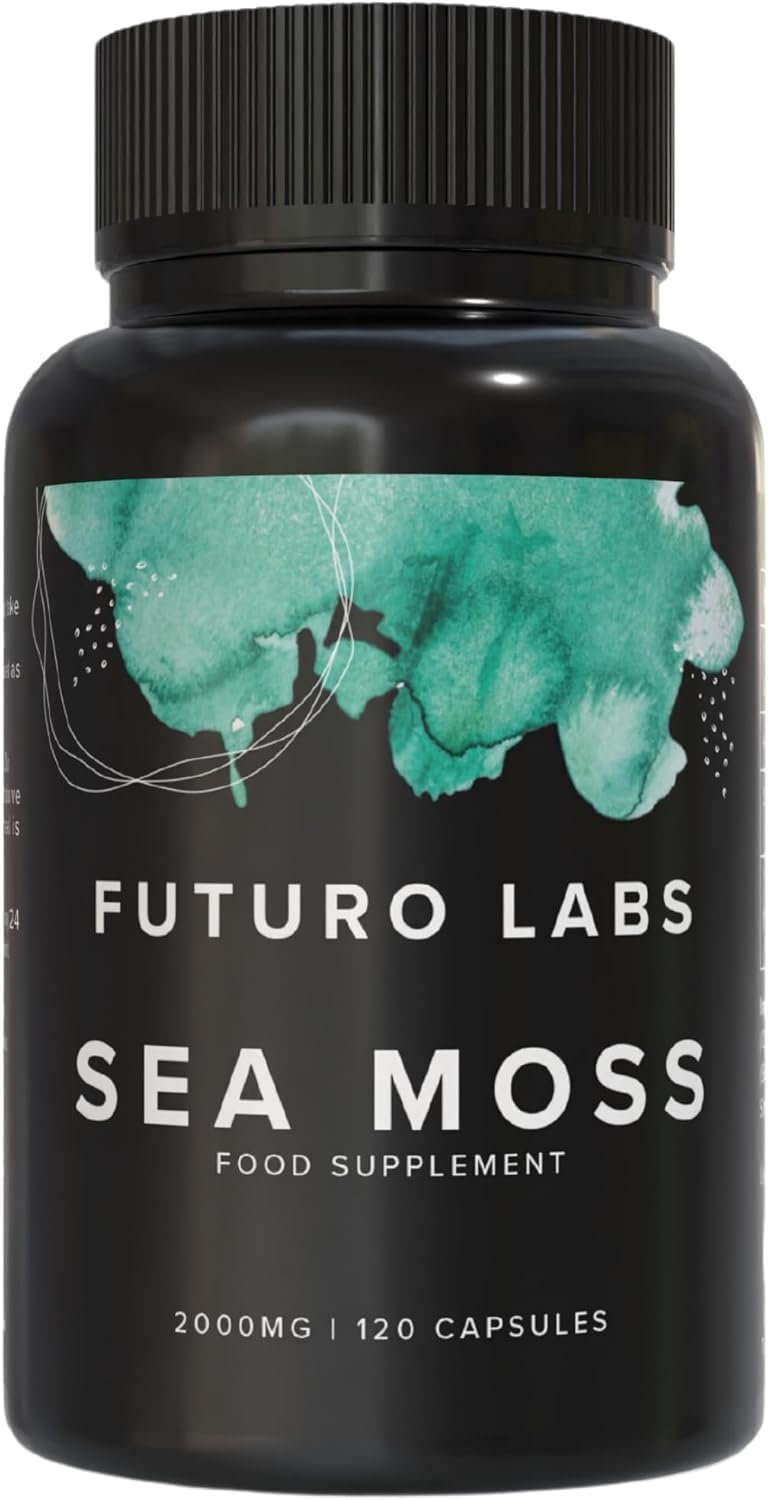
Futuro Labs Sea Moss
£9.99 for 60-day supply (120 capsules) · under 17p per day
Pros
- 2000mg raw sea moss equivalent per serving (15:1 extract)
- Wildcrafted North Atlantic Chondrus crispus — named species and origin
- Independently lab tested — heavy metals and microbiology
- Single-ingredient vegan capsules, UK GMP made
- 60-day supply £9.99 — under 17p/day
Cons
- Iodine content varies by harvest — not for precise-dose needs
- Young brand next to high-street names
Available from: Amazon UK — £9.99
Managing it by format — and the honest exit
For those staying with aromatic formats, the working craft: raw dried moss — rinse thoroughly (the salt and shoreline rinse off substantially), soak in cold water, and expect the gel you make to carry a mild ocean note that citrus or vanilla in smoothies covers completely; gels — cold serving mutes aroma, fruit-forward blending buries it, and the fridge-life vigilance above is non-negotiable; powders — the note rides mixing, and strong-flavoured vehicles (smoothies, juices) do the covering the plain-water route can't. The honest exit this cluster keeps stocked: capsules retire the entire question structurally — the shell seals the extract past your nose and palate, the daily experience is odour-free swallowing, and a faint marine whisper on opening the bottle is the only trace remaining (Futuro Labs' single-serving capsules at £9.99/60 days making the exit cost 17p — the format fork, the taste companion page). Either path is legitimate; the sort travels with both.
Frequently asked questions
Why does sea moss smell like that?
Because it's seaweed, and the compounds are honest: marine algae carry sulfur and iodine-adjacent volatiles plus the shoreline notes of their harvest — a clean product smells like the sea (briny, mineral, faintly oceanic), and that baseline is normal. The smell that isn't: rot, ammonia or sour-fishy decay signals spoilage or poor processing — a bin verdict, not a character note.
How do I tell normal sea-smell from a bad batch?
The sort: briny, mineral, low-key ocean = normal raw material; sharp ammonia, sour rot, or a smell that worsens after opening = spoilage (gels especially — their fridge-life is short and decay announces itself); overwhelming fishiness in dried product can also flag careless processing or the wrong species. Trust the nose on decay every time; tolerate the ocean.
Do capsules smell too?
Barely — the shell seals most of it, which is half the format's point: a faint marine note on opening the bottle is normal, nothing rides your palate, and the daily experience is odour-free swallowing. Gel and powder users manage the smell as part of the ritual; capsule users retire the question.