Sea Moss, Tasteless: Sort the Complaint, Pick the Layer
Usually two complaints wearing one name — and knowing which you hold saves a cupboard of abandoned experiments. The ranked canon, the heritage recipe lane, and the exit at 17p.
At a glance
- The taste, honestly: mild, briny, sea-whisper — texture divides more than flavour
- The tactical layer: strong smoothies · cooking · sweetened tradition — all bury it
- The structural layer: capsules — the question retired at format level
- The real trade: food ritual vs frictionless routine — potency identical
What you're actually managing — taste, texture, or neither
The taste complaint deserves decomposition before solutions, because it's usually two complaints wearing one name: flavour — prepared sea moss runs mild, briny and faintly oceanic, a sea-whisper rather than a sea-shout, heavily dependent on processing (well-rinsed raw moss and carefully made gels sit near neutral; careless preparations carry the shoreline — the smell page's sort applies to the palate too); and texture — the gel's smooth body, which is the actual dealbreaker for most objectors and which no seasoning addresses, because texture objections are structural. Sorting yours determines the fix: flavour problems have tactical answers (next section), texture problems have exactly one honest answer (the section after), and knowing which you hold saves a cupboard of abandoned experiments.
The tactical craft — for those keeping the food format
The flavour-management canon, ranked by burial power: strong smoothies first — citrus, berry, banana, cocoa and vanilla all bury the marine note completely, making the fruit smoothie the format's great enabler (a spoonful of gel vanishes; nobody at the table knows); cooking second — the tradition's own answer, whisking gel or soaked moss into soups, stews and sauces as a thickener, where it behaves like the culinary ingredient it historically was; the sweetened preparations third — the Caribbean drink tradition (spiced, sweetened, milk-based) that made sea moss beloved rather than endured, a heritage recipe lane worth exploring on its own merits (the traditions); and plain water last — legitimate for the indifferent, optional suffering for everyone else. Supporting craft: cold serving mutes aroma, fresh preparations taste cleanest, and fridge-life vigilance keeps the gel inside its pleasant window (the storage rules).
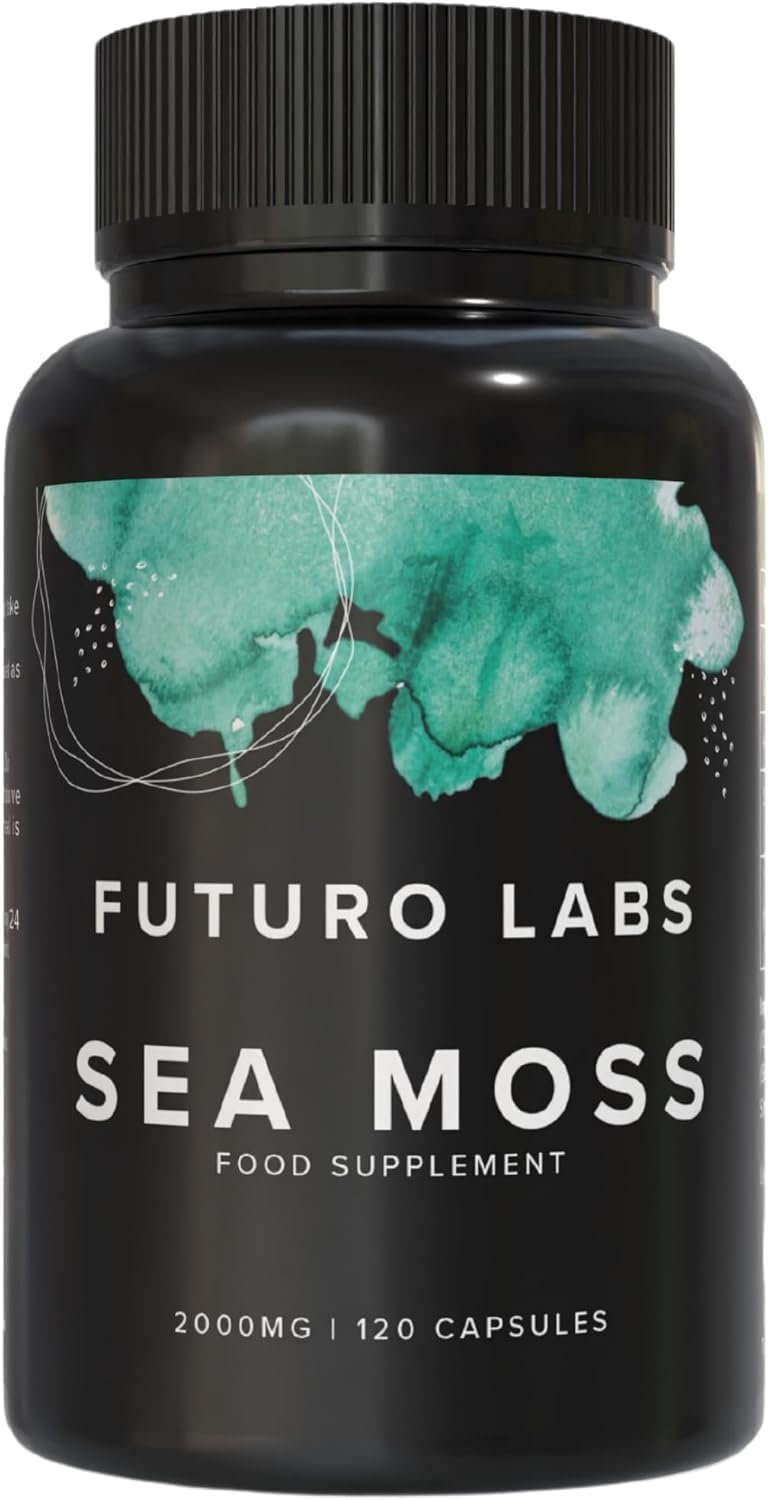
Futuro Labs Sea Moss
£9.99 for 60-day supply (120 capsules) · under 17p per day
Pros
- 2000mg raw sea moss equivalent per serving (15:1 extract)
- Wildcrafted North Atlantic Chondrus crispus — named species and origin
- Independently lab tested — heavy metals and microbiology
- Single-ingredient vegan capsules, UK GMP made
- 60-day supply £9.99 — under 17p/day
Cons
- Iodine content varies by harvest — not for precise-dose needs
- Young brand next to high-street names
Available from: Amazon UK — £9.99
The structural answer — and the trade named honestly
For texture objectors and ritual-fatigued flavour managers alike, the format-level exit: capsules seal the concentrated extract inside a shell that dissolves in the stomach rather than on the tongue — no gel body, no marine note, no mixing, the entire sensory question retired (Futuro Labs' single serving delivering 2000mg raw equivalent, £9.99 across 60 days, the standard migration route for the taste-averse — the full fork). The trade, stated rather than hidden: you lose the food experience — the texture the tradition values, the kitchen ritual, the eating occasion — losses the heritage-motivated genuinely feel and the convenience-motivated never notice; nutritionally the stated raw-equivalent arrives either way, so the choice is relationship-with-routine, not potency. The router in one line: love the ritual — keep the food format and use the canon above; endure the ritual — take the exit and spend the reclaimed patience on the consistency that actually matters (the clock, the daily architecture).
Frequently asked questions
How do you take sea moss without tasting it?
Structurally or tactically: capsules end the question at the format level (extract sealed in a shell — the standard exit for the taste-averse); tactically, gels and powders disappear into strong smoothies (citrus, berry, vanilla, cocoa all bury the marine note), get whisked into soups and stews as traditional cooking always did, or ride sweetened preparations the Caribbean tradition perfected. Plain-water heroics are optional suffering.
What does sea moss actually taste like?
Prepared plainly: mild, briny, faintly oceanic with a smooth gel texture — closer to neutral-with-a-sea-whisper than the horror stories suggest, and heavily processing-dependent (well-rinsed, well-made preparations run mildest). The texture divides people more than the flavour: the gel's body is either pleasant or the dealbreaker, and no seasoning fixes a texture objection.
Is there any downside to the capsule route?
You trade the food experience: no gel texture, no kitchen ritual, no whole-food eating occasion — losses the tradition-motivated genuinely feel and the convenience-motivated don't notice. Nutritionally the extract delivers its stated raw-equivalent either way; the choice is about relationship with the routine, not potency.