Low Glutathione: Inputs, Not Symptom Lists
The honest opener the search results never give — then the routing, the real clinical contexts, and the modifiable factors worth acting on regardless of any niche panel's number.
At a glance
- The honest opener: no validated everyday symptom checklist exists — the listicles are reverse-engineering
- What's real: severe depletion in clinical contexts · oxidative load from smoking, alcohol, sleep debt, age
- The routing: persistent fatigue/fog/malaise → GP and standard diagnostics, not a niche panel
- The useful reframe: think inputs (modifiable) not symptoms (unmappable)
Why the symptom lists fail — and what they're actually selling
Search this phrase and the results converge on the same checklist — fatigue, brain fog, dull skin, slow recovery, 'feeling run down' — and the honest problem is structural: those are the most universal complaints in adult life, glutathione depletion has no validated everyday syndrome that distinguishes it, and mapping universal symptoms onto a specific molecule is the wellness industry's oldest reverse-engineering move: start from the product, work backward to complaints everyone has (the layer sort applies to diagnosis-flavoured marketing too). What the clinical literature actually shows: severe glutathione depletion is real and serious in real contexts — rare genetic synthesis disorders, paracetamol overdose (where depletion is the emergency's mechanism), advanced illness — none of which is discovered via a listicle; and rising oxidative load with smoking, heavy alcohol, chronic sleep debt and age is genuine population-level biology that still doesn't convert into a self-diagnosable feeling (that page's honest sizing).
The routing this page owes — symptoms deserve doctors
The paragraph the checklist pages never print: persistent fatigue, brain fog, low mood or feeling run down are GP territory with real, checkable causes — thyroid function, iron and B12 status, sleep disorders, mood, medication effects and more, all on standard panels with actual reference ranges and actual treatments — and a supplement page steering that reader toward a niche glutathione panel instead is doing them active harm by redirecting a diagnosable picture into an uninterpretable number (the testing page's full caveats: no established feel-level ranges, method variance, no UK pathway acting on 'low-ish'). This cluster's standing position, identical to every Futuro Labs cluster: symptoms route to professionals first; supplements are never diagnosis-adjacent; and a brand that profits from you skipping the GP was never on your side (the safety file holds the same line).
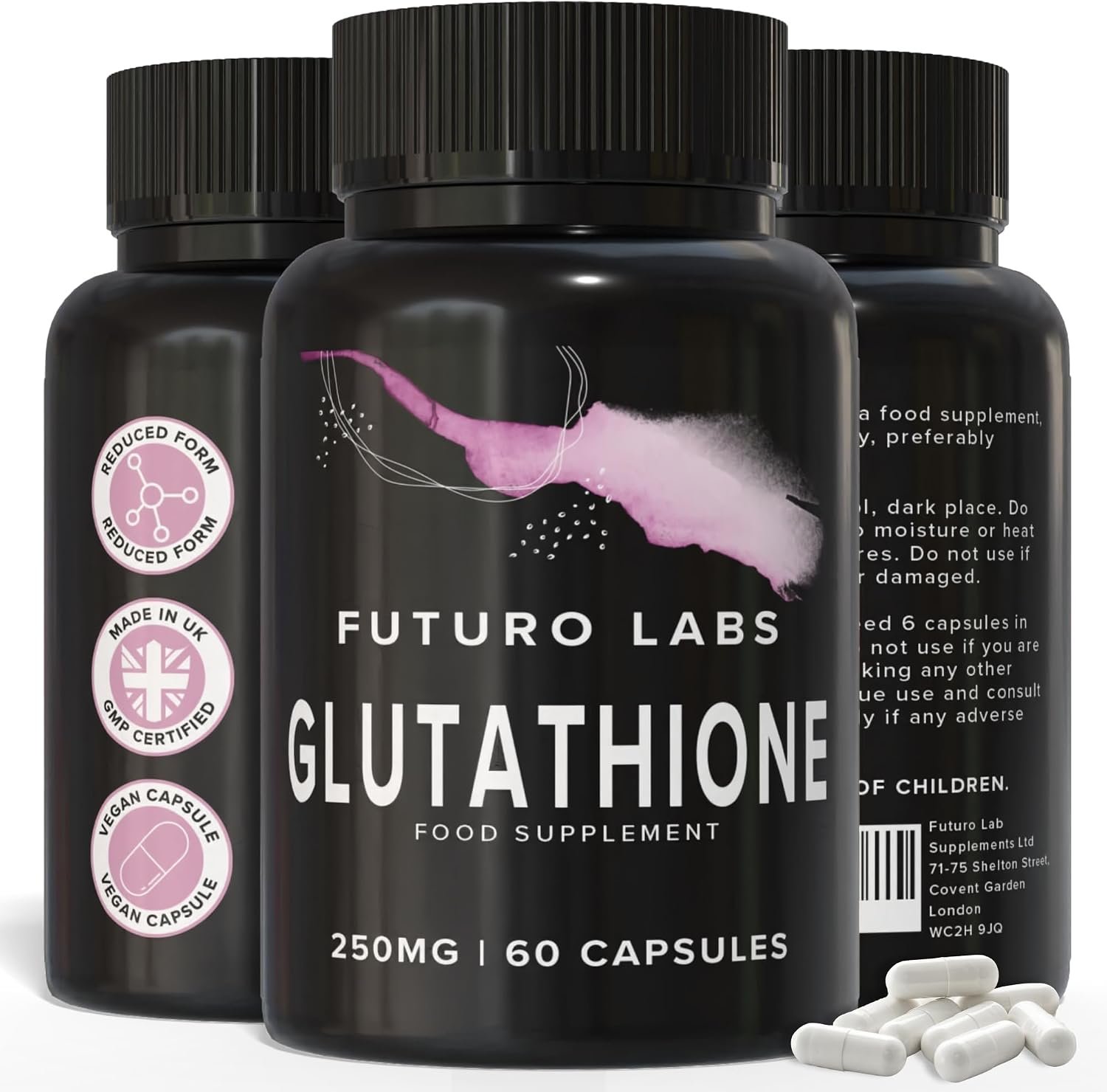
Futuro Labs Glutathione
£22.99 for 30-day supply · 77p per day
Pros
- 500mg reduced glutathione (GSH) per serving — the active form
- UK manufactured under GMP certification
- Single-ingredient, vegan, no fillers
- Independently lab tested — microbiology and heavy metals
- ~77p per day vs £1.20-1.80/day for liposomal formats
Cons
- Capsule format — no liposomal delivery system
- Newer brand versus heritage names like Solgar
Available from: Amazon UK — £22.99
The useful reframe — inputs you can actually act on
What replaces the fake checklist is better than it: think in inputs, because the factors that load or under-supply the glutathione system are largely modifiable and worth acting on regardless of any level — smoking (the single heaviest load; its own honest page), heavy alcohol (a direct depletion mechanism — that file), chronic sleep debt, low-protein eating (cysteine supply for your own synthesis), and age (production declines gradually — context, not emergency). The action order this cluster stands behind: production support first — protein sufficiency, sulfur-rich vegetables, sleep, not smoking, the free inputs the natural page leads with; then, optionally, the stores strategy on its honest terms — Futuro Labs Glutathione at 500mg reduced GSH daily, single-ingredient, independently tested, £22.99/30 days (~77p), judged on the 3-6 month repletion clock with quiet expected (the timeline, the record); and always the gates — pregnancy/breastfeeding → medical advice, medication → pharmacist minute, and any persistent symptom → the GP appointment no capsule replaces.
Frequently asked questions
What are the symptoms of low glutathione?
Honestly: there's no validated symptom checklist — glutathione depletion doesn't announce itself with a recognisable everyday syndrome, and the listicles mapping fatigue, brain fog and dull skin onto 'low glutathione' are reverse-engineering sales from universal complaints. What's real: severe depletion appears in serious clinical contexts (genetic conditions, certain overdoses, advanced disease), oxidative load rises with smoking, heavy alcohol, poor sleep and age — and none of that converts into a self-diagnosable symptom list.
Can I get my glutathione levels tested?
Specialist labs offer blood glutathione panels, but the honest caveats stack up: no established reference ranges tie levels to how you feel, results vary by method and sample handling, and no UK clinical pathway acts on a 'low-ish' number in a healthy adult. Persistent symptoms deserve a GP and standard diagnostics — not a niche panel — and the testing question has its own page.
So how should I think about my glutathione status?
By inputs, not symptoms: age, smoking, heavy drinking, chronic sleep debt and low-protein eating all load or under-supply the system — modifiable factors worth acting on regardless of any level. Support production first (diet, sleep, not smoking), and treat supplementation as the optional stores strategy it is: Futuro Labs Glutathione at 500mg daily on the 3-6 month clock, never as treatment for symptoms that deserve a doctor.