Smokers & Ex-Smokers: The Cigarette Question Outranks Everything
Clarity over comfort for the current smoker, genuine congratulations for the quitter — and a supplement never sold as licence, accelerant or repair kit.
At a glance
- The order: quitting is the intervention — a capsule is never a licence to smoke
- The load, honestly: smoking measurably depresses glutathione status — chronic demand while it lasts
- Ex-smokers: congratulations first — the load stopped; the strategy can join the recovery
- Quitting help: GP, pharmacist and local stop-smoking services — effective, free, judgment-free
The current smoker's page — one honest paragraph, then the door
For the reader still smoking, this page owes clarity over comfort: cigarette smoke is the heaviest routine oxidative load in ordinary life — each inhalation delivers a substantial oxidant burden, the literature consistently shows altered glutathione status in smokers, and the system runs under chronic demand for exactly as long as the habit does — which makes the arithmetic unambiguous: no 500mg capsule offsets an active multi-pack load, 'antioxidant protection for smokers' marketing is the harm-reduction costume this cluster refuses outright (a supplement is never a licence to keep smoking, and any listing implying otherwise has self-identified its layer — the sort), and the single intervention that changes the picture is the one this paragraph ends on: quitting — for which the effective, free, judgment-free help is your GP, pharmacist or local stop-smoking service, whose combined toolkit (support plus medication where suited) outperforms willpower alone in every honest comparison. That door first; everything below is for after.
The ex-smoker's page — congratulations first, then the honest role
For the reader who quit — recently or years back — the first sentence is the one this site's clusters always give this audience: congratulations, genuinely; quitting was the intervention, the load has stopped, and your body's own recovery timelines (running months to years across different systems, rewarding patience) are already the main event. Where a glutathione strategy honestly fits that picture: as supporting cast — the oxidative demand that suppressed status has been removed, the endogenous system recovers on its own schedule, and a daily stores strategy joins that recovery on the standard evidence terms this cluster sells everywhere: the six-month repletion trial (stores rising, quietly), the 3-6 month clock (the timeline), zero authorised claims and zero felt promises — explicitly never sold as accelerating, detoxing or repairing what your own biology is already doing, because that framing would be the smoker's-page costume wearing a success story (the spine).
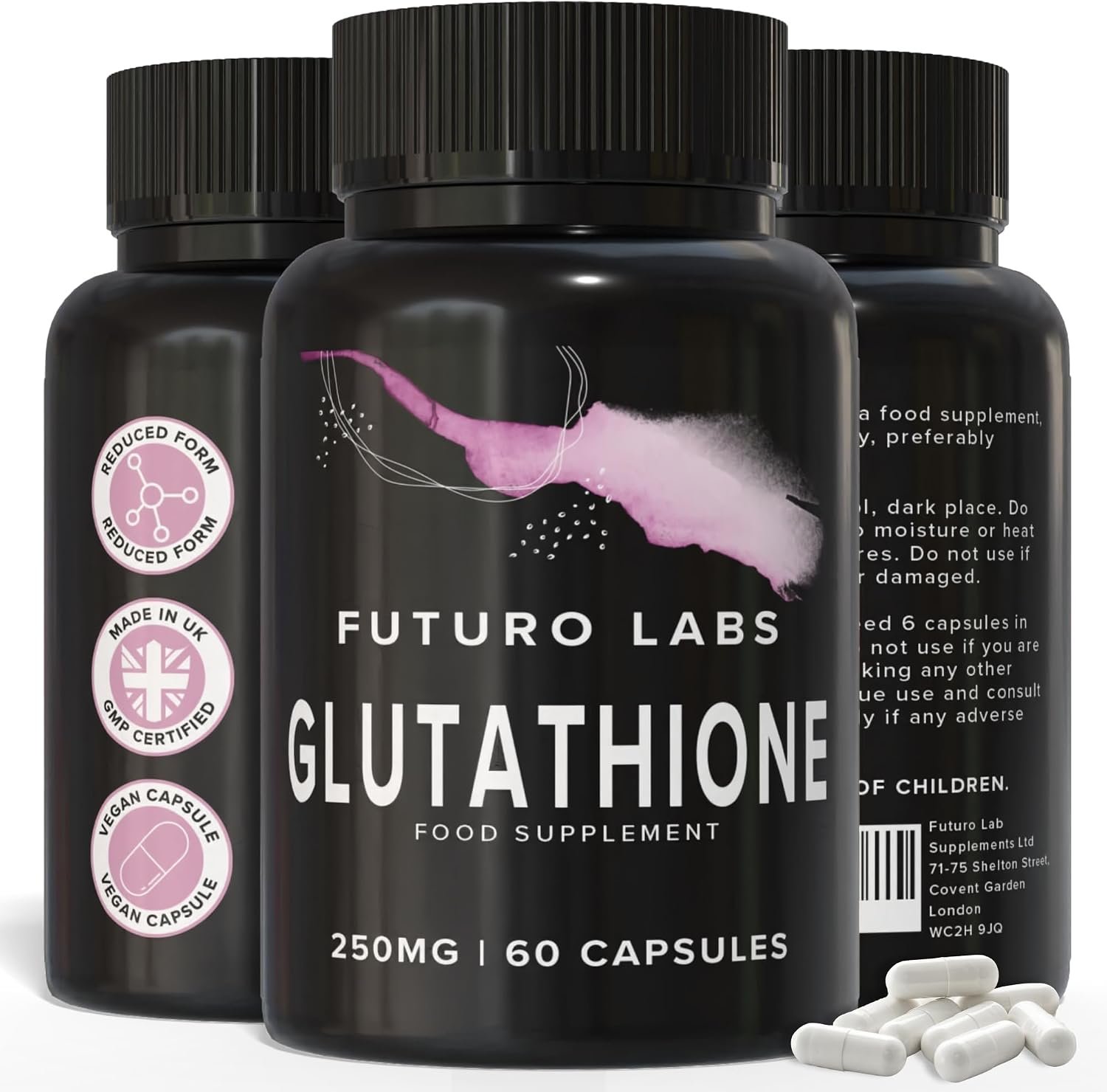
Futuro Labs Glutathione
£22.99 for 30-day supply · 77p per day
Pros
- 500mg reduced glutathione (GSH) per serving — the active form
- UK manufactured under GMP certification
- Single-ingredient, vegan, no fillers
- Independently lab tested — microbiology and heavy metals
- ~77p per day vs £1.20-1.80/day for liposomal formats
Cons
- Capsule format — no liposomal delivery system
- Newer brand versus heritage names like Solgar
Available from: Amazon UK — £22.99
The full recovery stack — ranked, as ever
The ex-smoker's honest hierarchy, in the order the evidence weights it: staying quit — the compounding intervention everything else supports (cravings and wobbles are what the stop-smoking services above remain for, years in included); sleep — the recovery variable that dwarfs the aisle; food quality and protein — supplying the cysteine your own glutathione synthesis runs on (the free inputs, ranked first always); movement — on its own merits and its own page's honest terms (that file); and then, optionally, the capsule line: Futuro Labs Glutathione at 500mg reduced glutathione daily — single-ingredient, independently tested for heavy metals and microbiology, £22.99/30 days at ~77p — with food, anchored, reviewed at 12 weeks like everything here (the record, the review). Gates unchanged by anyone's history: pregnancy/breastfeeding → medical advice; prescription medication (stop-smoking prescriptions included) → the pharmacist minute (the routing). The close both readers deserve: the cigarette question outranks the supplement question by orders of magnitude — and a page that pretends otherwise was never on your side.
Frequently asked questions
Is glutathione good for smokers?
The honest order: quitting is the intervention — smoking is the single heaviest ongoing oxidative load a person can volunteer for, it measurably depresses glutathione status, and no capsule offsets an active habit; a supplement is never a licence to keep smoking, and this page refuses the harm-reduction framing outright. For ex-smokers, the picture is different and better: the load has stopped, and a stores strategy joins the recovery on its honest terms.
Does smoking really deplete glutathione?
The literature is consistent: cigarette smoke delivers a large oxidant burden per inhalation, smokers show altered glutathione status across studies, and the system runs under chronic demand for as long as the habit does. That's precisely why the honest conclusion points at the cigarettes, not the supplement aisle: removing the load beats topping up against it, always.
What should ex-smokers actually do?
Congratulations first — quitting was the intervention, and everything else is supporting cast. Then the ordinary stack: time (the body's recovery timelines run years and reward patience), sleep, food quality, movement — and optionally the stores strategy on its standard terms: Futuro Labs Glutathione at 500mg daily on the 3-6 month clock, judged quietly, never sold as accelerating what your own biology is already doing.