Athletes: Mop Modestly, or Not at All
The half-truth completed, the open question converted to practical guidance, and recovery's unbeaten trio ranked above every capsule — this cluster's included, in print.
At a glance
- The honest wrinkle: exercise's reactive species are partly signalling — adaptation's raw material
- The caution's source: high-dose C/E studies with blunting signals — real, not universal, not GSH-tested
- The resolution: keep antioxidant strategies modest · never stack high doses around training
- Recovery's real levers: food · sleep · programming — the aisle is rounding error
The wrinkle most athlete-marketing hides — hormesis, plainly
The athletic glutathione pitch runs on a half-truth this page completes: training does generate reactive oxygen species — that part's real — but a meaningful share of that oxidative traffic is signalling, not damage: transient ROS pulses participate in the pathways that drive mitochondrial adaptations, antioxidant-system upregulation and other gains training exists to produce (the hormesis principle: the stress is partly the stimulus). Which reframes 'mop up exercise oxidation' from obvious good to open question — and the literature obliges with a genuine caution: several studies, mostly using high-dose vitamins C and E around training, observed blunted markers of certain adaptations versus placebo; not a universal finding across trials, not settled science, but real enough that sports-science consensus has grown cooler on routine high-dose antioxidant stacking around training (the same evidence-first posture, applied to a caution). The GSH-specific honest line: oral glutathione at supplement doses hasn't been properly tested on adaptation endpoints either way — thin data cuts in both directions, and this page prices that in rather than around it.
What the open question buys — the modest-strategy resolution
An unresolved caution converts into practical guidance cleanly: keep any antioxidant strategy modest — a single product at label dose (the shape this cluster mandates anyway) sits far from the multi-gram C/E protocols the blunting studies used, which is genuine reassurance without being clearance; never stack multiple high-dose antioxidants around training — the one behaviour the caution literature most directly indicts, and the exact behaviour 'recovery stack' marketing sells hardest; and hold the strategy's actual identity — a stores play on the 3-6 month clock (the repletion finding), not a post-session recovery agent, so the training calendar and the capsule calendar were never really in conversation (the timing page runs that logic, the adaptation debate's own page). Athletes wanting the deeper read route there; athletes wanting the verdict have it: modest, singular, long-horizon — or not at all, which for the adaptation-maximalist is a fully respectable answer this page prints without flinching.
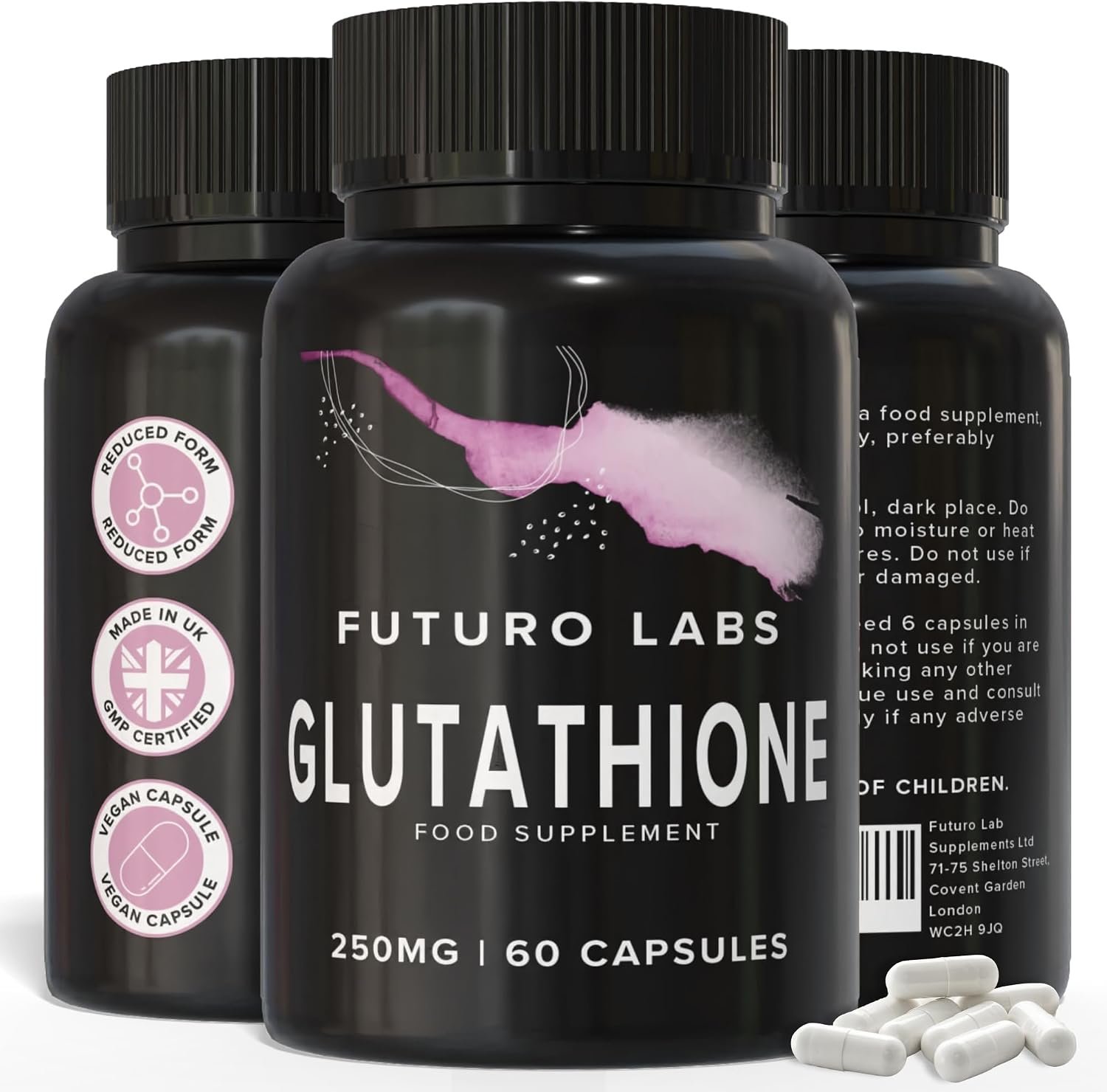
Futuro Labs Glutathione
£22.99 for 30-day supply · 77p per day
Pros
- 500mg reduced glutathione (GSH) per serving — the active form
- UK manufactured under GMP certification
- Single-ingredient, vegan, no fillers
- Independently lab tested — microbiology and heavy metals
- ~77p per day vs £1.20-1.80/day for liposomal formats
Cons
- Capsule format — no liposomal delivery system
- Newer brand versus heritage names like Solgar
Available from: Amazon UK — £22.99
Recovery's real levers — ranked, then the close
The hierarchy every honest sports page ends on, unchanged by any molecule: food — protein and carbohydrate around training are recovery's actual mechanism, unbeaten and unbeatable by capsules; sleep — where adaptation consolidates, the lever that dwarfs the aisle combined; programming — progressive load and planned easy days, the variable most 'recovery product' shoppers actually need adjusted; and hydration-with-sodium for the heavy-sweat sessions, per ordinary sports nutrition. Behind all four, optionally and honestly last: Futuro Labs Glutathione on its standard terms — 500mg reduced glutathione daily, single-ingredient (the pharmacist-friendly design — that page), independently tested, £22.99/30 days at ~77p, judged at 12 weeks like everything here (the record, the review) — bought by the athlete who read this page's wrinkle and chose anyway, which is the only athlete this cluster wants as a customer. Gates as ever: pregnancy/breastfeeding → medical advice; prescription medication → pharmacist minute. The close, in the register athletes respect: the adaptation you're training for is partly built from the stress you're tempted to mop up — so mop modestly, or not at all, and let food and sleep do what they've always done.
Frequently asked questions
Is glutathione good for athletes and recovery?
Honestly mixed and worth knowing before buying: exercise generates reactive species as part of its normal signalling, some of that signalling drives the adaptations training exists to produce, and the antioxidant-supplement literature contains a genuine caution — studies (mostly high-dose vitamins C/E) where supplementation appeared to blunt certain training adaptations. Glutathione-specific data is thin either way; recovery's proven levers remain food, sleep and programming.
Will glutathione blunt my training gains?
Unknown at honest resolution: the blunting signal comes mainly from high-dose C/E studies, isn't universal across trials, and hasn't been properly tested for oral GSH at supplement doses — so neither 'definitely fine' nor 'definitely blunting' is purchasable. What the open question buys you: a reason to keep any antioxidant strategy modest, and zero reason to stack multiple high-dose antioxidants around training.
What actually drives recovery?
The unbeaten trio, in order: food (protein and carbohydrate around training — the actual mechanism), sleep (where adaptation consolidates), and sensible programming (progressive load, planned easy days). Everything in the supplement aisle is rounding error behind those three — this cluster's molecule included, and said so in print.