Deficiency: The Menu Answers, Not the Quiz
Vague-symptom lists convert because they fit everyone — the two honest routes handed over instead, with the GP door held for what persists.
At a glance
- Frank deficiency is rare — a clinical state, not a Tuesday feeling
- No checklist diagnoses status — vague-symptom lists are conversion machinery
- The two honest routes: the plate question (fishless = low intake, definitionally) · the index test
- The action: dietary-pattern logic, not symptom-hunting — coverage decided by the menu
Deficiency, defined honestly — before the checklists get you
The search that brought you here deserves the clinical truth first: frank essential-fatty-acid deficiency is a real, rare medical state — classically described with dry, scaly dermatitis and related signs, historically documented in exceptional contexts (long-term fat-free feeding among them) — and it is not the territory everyday omega conversations occupy: nobody eating any remotely normal diet develops it, and no supplement page should imply otherwise (what 'essential' actually means). What everyday conversations honestly concern is status — where your tissue EPA+DHA sits on a spectrum shaped by diet — which is a different question entirely: low status is common on fish-light plates, carries no diagnostic symptom set, and gets answered by two honest routes this page hands over next (the tissue picture).
The symptom-bait pattern — named, then replaced with the real routes
Why deficiency-symptom content floods this search: the pattern this site names everywhere — universal symptoms rinsed into purchases: tiredness, dry skin, low mood, poor concentration and brittle everything describe most adults in most winters, attach to any product on any shelf, and can't be falsified — vague enough to fit, specific enough to sell (the fog edition of the same machinery, the layers that sort it). The two routes that answer honestly instead: the plate question — marine omega-3 arrives by diet or not at all, so a menu without oily fish most weeks predicts low intake definitionally: no quiz required, and the fix is dietary either way (fish on the plate or the 250mg condition met by capsule — the full sort, the plate); and the measurement — the omega-3 index, a finger-prick test of red-cell EPA+DHA percentage: the only way symptoms never were, covered honestly on its own page.
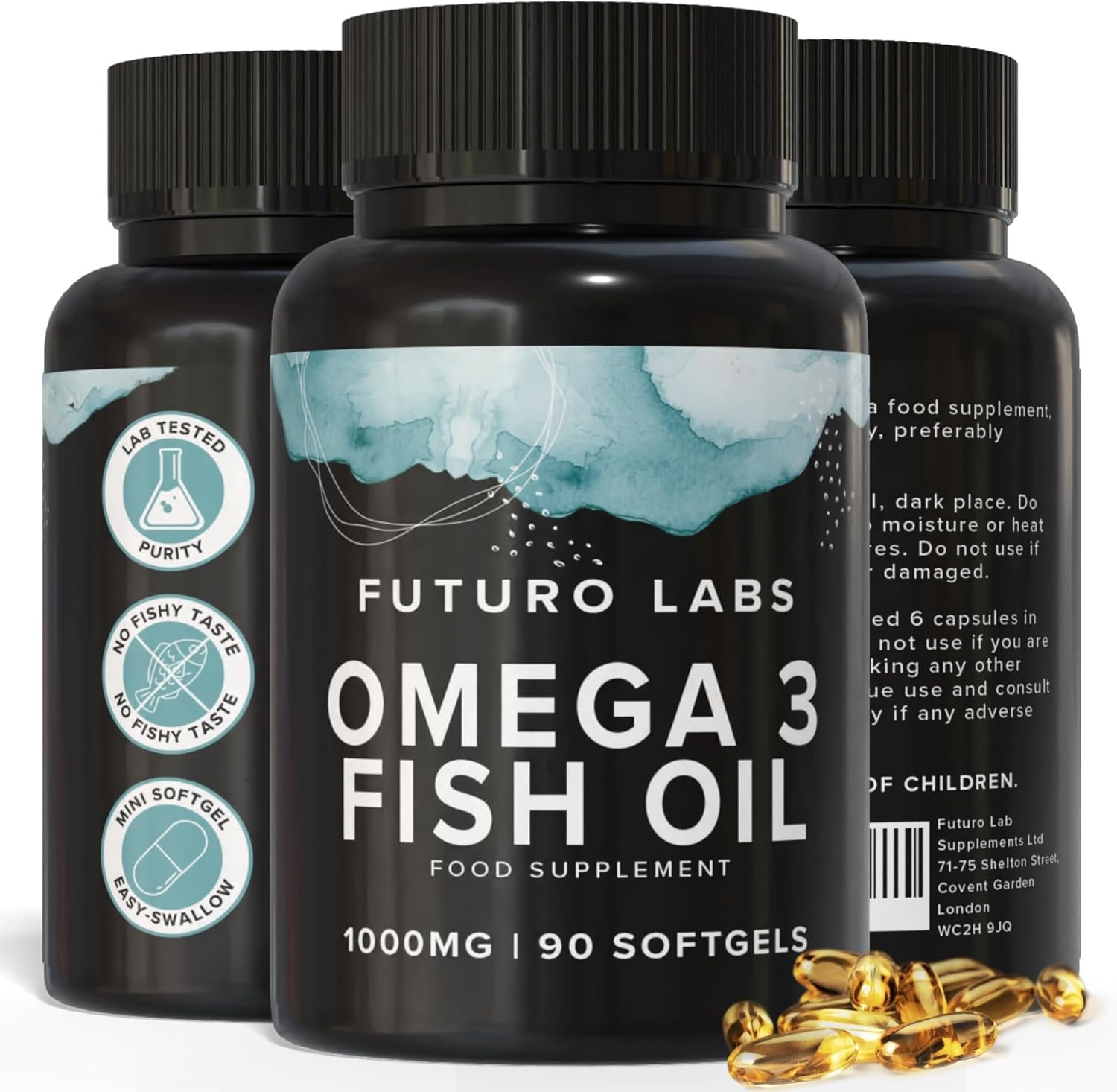
Futuro Labs Omega 3 Fish Oil
£14.99 for 90-day supply (90 softgels) · ~17p per day
Pros
- 1000mg fish oil per softgel — 180mg EPA + 120mg DHA stated
- Mini softgel, no fishy taste, lab tested
- 90-day supply at £14.99 (~17p/day), UK made
Cons
- Fish-derived, bovine-gelatin softgel — not vegan or vegetarian (algal DHA is that route)
- Ethyl-ester form — take with a meal; DHA brain/vision register claims need 250mg DHA daily, above the one-a-day serving
Available from: Amazon UK — £14.99
The persistent-symptoms door — and the close
Because the symptoms that drove the search sometimes matter for other reasons: tiredness, skin changes, mood or focus complaints that persist have real, checkable causes a GP sorts with ordinary tests — iron, B12, thyroid and kin (the checkable trio's home) — and routing persistent symptoms to a blood panel beats attributing them to any aisle, this one included: a page that sold you omega for your tiredness would be delaying the appointment that finds the ferritin. The honest action this page endorses: dietary-pattern logic — if the plate runs fishless, cover the line: one Futuro Labs Omega 3 softgel meets the everyday 250mg condition at 300mg, with a meal, ~17p, on the quiet months-long clock that never promised your Tuesday would feel different (the claim held, the chemistry). Gates as ever: pregnancy, nursing or any medication → doctor first per the label (the conversation). Deficiency symptoms, answered the only defensible way: a rare clinical state kept clinical, a common status question answered by menu or measurement — and the checklist industry left to quiz someone else.
Frequently asked questions
What are the symptoms of omega 3 deficiency?
The honest reframe: frank essential-fatty-acid deficiency — the clinical state with textbook signs like dry scaly skin — is rare outside exceptional medical contexts, and no everyday symptom checklist can diagnose your omega status. The useful question isn't 'do I have symptoms' but 'does my plate supply it': a fishless diet predicts low status reliably; tiredness quizzes don't.
So how do I know if my omega 3 is low?
Two honest routes: the dietary read (no oily fish most weeks = low marine-omega intake by definition — no test required to act on that) and the actual measurement (the omega-3 index, a finger-prick blood test of red-cell EPA+DHA — the only way symptoms never were). Everything between those two is symptom-bait.
Why do so many sites list deficiency symptoms then?
Because vague-symptom lists convert: tiredness, dry skin, low mood and poor focus describe most adults in most winters, attach to any product, and can't be falsified. The pattern — universal symptoms rinsed into a purchase — is the same one this site names on every cluster; the plate question and the index answer honestly instead.