Gummies: Small Payloads, Smiling Hard
The format actually taken beats the format merely owned — a knowing purchase respected, a smiling default declined.
At a glance
- The typical panel: small payloads — often well under 100mg, sometimes no marine pair at all
- The sum: multiple gummies to the condition = the shelf's most expensive fish oil
- The honest exception: adherence — the format actually taken beats the format merely owned
- Children's questions: routed to the children's page and its professionals, entirely
The format, audited — what gummy panels typically say
Gummies are the aisle's friendliest format and this audit reads them like anything else: the payload reality — gummy omega panels typically carry small EPA+DHA amounts (often well under 100mg per gummy, the physics of a palatable chew limiting how much oil hides inside), and a meaningful share of the category is ALA-based — flax or chia oils wearing the omega name with no marine pair at all: the blend-fails-on-sight rule applies with full force (the unit, why ALA can't substitute); the sum that follows — reaching the 250mg everyday condition on typical gummy payloads means multiple gummies daily, and the pence-per-condition-met-day division routinely crowns gummies the shelf's most expensive fish oil while the front label smiles (the sum's home); and the riders — sugar (or sweetener) content doing daily work the softgel never asks, and 'supplement theatre' pricing for the pleasantness itself.
The honest exception — adherence, credited properly
The clause that keeps this audit fair, borrowed from the alternative pages' reverse logic: the format actually taken beats the format merely owned — for the genuinely capsule-averse adult who has tried softgels (including minis — that page first) and liquids and lands only on gummies, a checked gummy taken daily delivers more than a perfect softgel gathering drawer-dust: adherence outranks arithmetic in both directions, and this cluster prints it here as everywhere (the clause's origin). The checked part carries the weight though: the marine pair stated in milligrams per gummy, the honest multiple counted, the sugar acknowledged, the sum run with open eyes — a knowing adherence purchase, not a smiling default (the six checks, gummy edition). The children's note, deferred entirely: gummy marketing courts parents hardest, and this page routes exactly as the children's page does — professionals decide, purpose-designed products exist, no adult-format page doses kids.
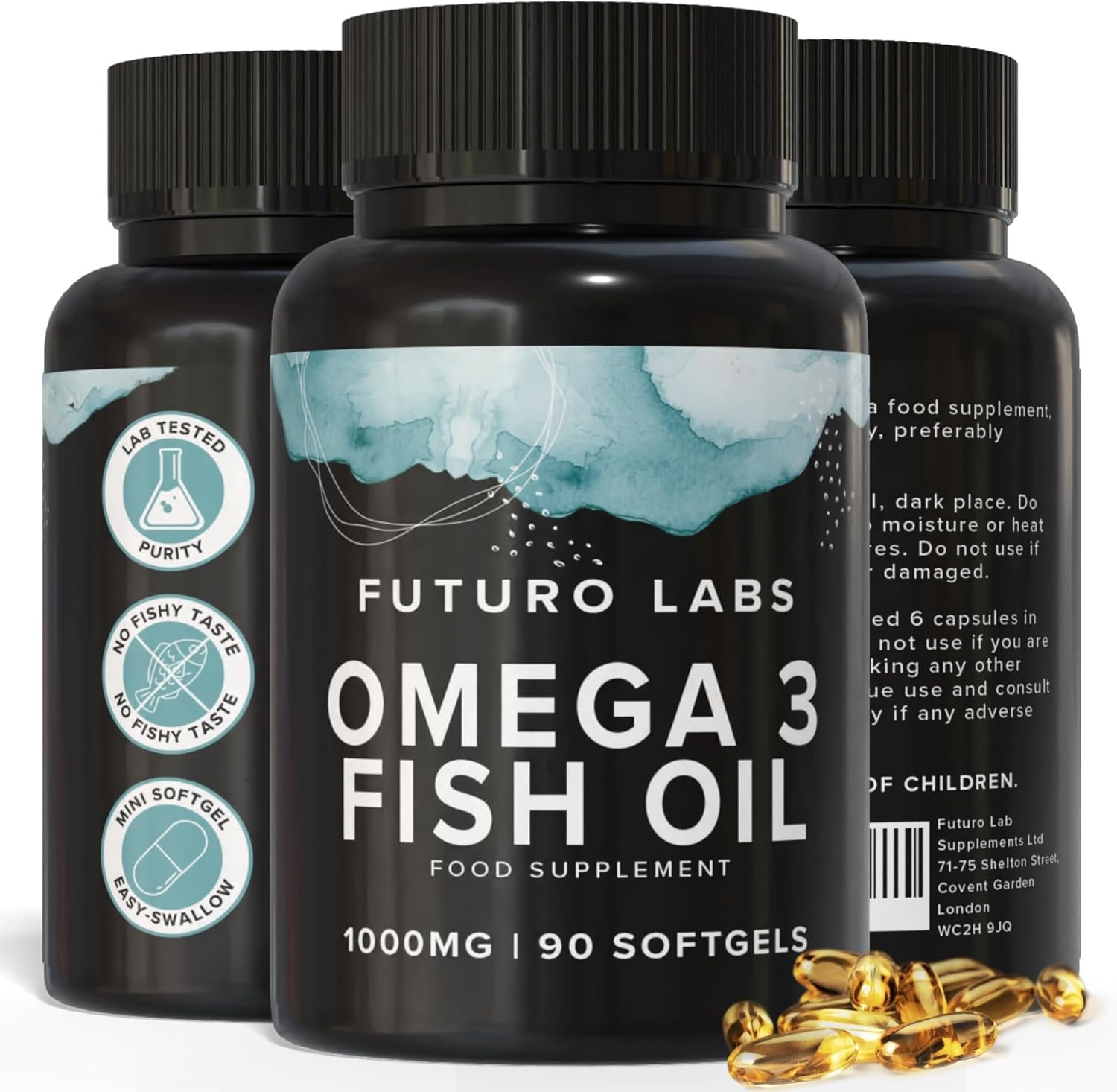
Futuro Labs Omega 3 Fish Oil
£14.99 for 90-day supply (90 softgels) · ~17p per day
Pros
- 1000mg fish oil per softgel — 180mg EPA + 120mg DHA stated
- Mini softgel, no fishy taste, lab tested
- 90-day supply at £14.99 (~17p/day), UK made
Cons
- Fish-derived, bovine-gelatin softgel — not vegan or vegetarian (algal DHA is that route)
- Ethyl-ester form — take with a meal; DHA brain/vision register claims need 250mg DHA daily, above the one-a-day serving
Available from: Amazon UK — £14.99
The verdict, and the close
Where gummies land in the house scoring spirit: mostly no, with respect — for the payload buyer the format fails on arithmetic before taste enters it, the condition sitting multiple sugared units and multiple pounds away from where one softgel stands (that format's case); for the adherence buyer who has genuinely exhausted the alternatives, a checked gummy habit is a legitimate knowing purchase this page respects; and for everyone between, the mini softgel exists precisely as the bridge — a third smaller than standard, taste-sealed, the condition at one: Futuro Labs Omega 3's exact design for the capsule-hesitant who never needed the sugar (the record, taken with the meal either way). Gates unchanged by any format's friendliness: pregnancy, nursing or any medication → doctor first per the label (the conversation). Omega gummies, closed at their honest size: small payloads smiling hard, one respectable exception — and a sum the front label was always hoping you'd skip.
Frequently asked questions
Are omega 3 gummies worth it?
Usually not for the payload: gummy panels typically carry small EPA+DHA amounts — often well under 100mg per gummy, sometimes ALA-based with no marine pair at all — beneath sugar and 'supplement theatre' pricing, leaving the 250mg condition multiple gummies and multiple pounds away. The honest exception: adherence — the only format someone will actually take beats the perfect format they won't.
How do I check if a gummy is any good?
The same panel read, applied ruthlessly: EPA and DHA stated in milligrams per gummy (an 'omega blend' or flax-based line fails the marine question on sight), the true serving count, the sugar line acknowledged, and the pence-per-condition-met-day sum — which is where most gummies quietly become the shelf's most expensive fish oil.
What about gummies for children?
That's the children's page's territory and this one defers to it entirely: children's supplementation routes through GP, health visitor or pharmacist, purpose-designed children's products exist for the cases where the answer is yes, and no adult-format page doses kids — gummy-shaped or otherwise.