Sustainability: Traceability Is the Precondition
Both supply worlds start well and vary by operator — the audit is disclosure over decoration, the filter is the triad you already run, and the proportion note keeps the whole file sized honestly.
At a glance
- The structural case: regenerating wild beds · low-input aquaculture — both start well
- The honest pressure: boom demand vs traditional self-limits — practice varies by operator
- The ecological filter: named waters = traceability = sustainability's precondition
- The proportion note: a capsule's footprint sits inside your grocery-scale choices
The case each supply world can honestly make
Sea moss starts from a better sustainability position than most commodities, in both its worlds. Wild harvest: Chondrus crispus regenerates from its holdfasts when cut rather than ripped, traditional practice built seasonal, rotational take into local knowledge over centuries, and a well-run wild fishery is closer to pruning than mining (the chain's page). Cultivation: seaweed farming is about as low-input as aquaculture gets — no feed inputs, no freshwater draw, no fertiliser, absorbing carbon and nutrients from its water while it grows — the properties behind seaweed's broader reputation in sustainable-food conversations. Stated precisely, as this site's collagen cluster does for its own by-product case: both structural stories are genuinely good and genuinely category-wide — which is exactly why they can't differentiate products, and why the operator-level questions come next.
Where the gloss needs trimming — boom pressure and the verification link
The honest limits the imagery skips: traditional wild harvest was self-limiting by design — local consumption, seasonal windows, community knowledge of the beds — and global boom demand removed the limiter, so pressure on accessible wild stands is real wherever take outruns regeneration and nobody's watching; cultivation's variance runs through siting and practice (coastal pond placement, density, local ecosystem interaction) with the same operator-dependence. The practical consequence joins two of this cluster's threads: traceability is sustainability's precondition — a supplier who names waters and species can be held to a harvest story; 'sustainably ocean-sourced' floating free of any sea can't — which means the named-origin check this cluster runs for authenticity (the triad) does silent double duty as the ecological filter, and disclosure-over-decoration remains the whole audit (the tiers where disclosure disappears first).
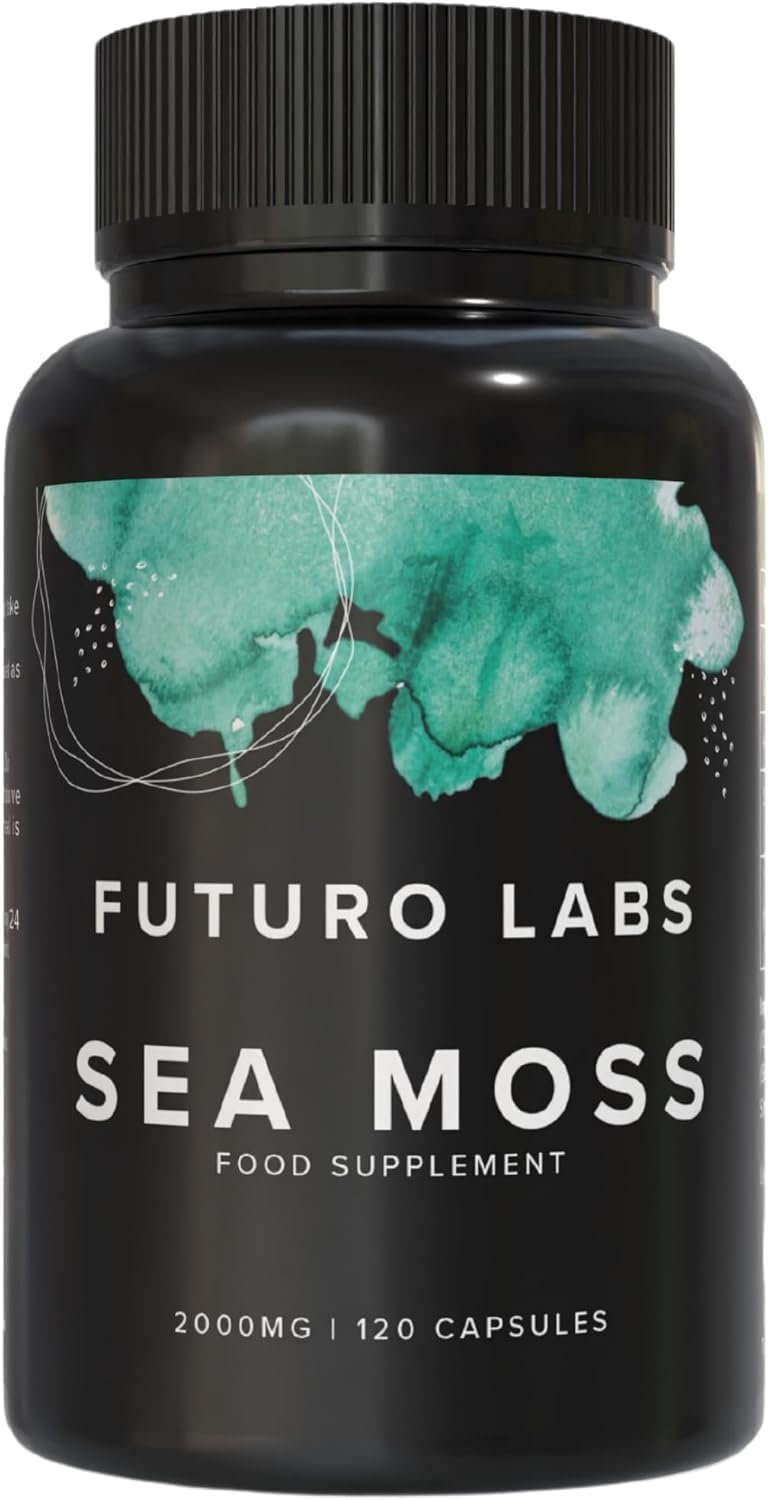
Futuro Labs Sea Moss
£9.99 for 60-day supply (120 capsules) · under 17p per day
Pros
- 2000mg raw sea moss equivalent per serving (15:1 extract)
- Wildcrafted North Atlantic Chondrus crispus — named species and origin
- Independently lab tested — heavy metals and microbiology
- Single-ingredient vegan capsules, UK GMP made
- 60-day supply £9.99 — under 17p/day
Cons
- Iodine content varies by harvest — not for precise-dose needs
- Young brand next to high-street names
Available from: Amazon UK — £9.99
Responsible buying, sized honestly — and the closing proportion
The buyer's working position: demand the specific chain — Futuro Labs Sea Moss states its own plainly (wildcrafted North Atlantic Chondrus crispus, named waters, independent testing, £9.99/60 days), and any label matching that disclosure standard has met sustainability's precondition whichever supply world it comes from; prefer specificity to atmosphere — a harvest story with a coastline beats a green leaf icon every time; and keep the proportion this site prints on every sustainability page it writes: a daily capsule habit's footprint sits inside — and is dwarfed by — the grocery-scale choices of your ordinary basket, so the conversation belongs to your week's big lines first and its supplements second (the same honest sizing applied to nutrition). Verify the chain, skip the decoration tax, keep perspective: the whole responsible-buying file, three clauses long — and the category's structural head start means a verified purchase here is one of the easier good choices on your shelf (the framework closes it as ever).
Frequently asked questions
Is sea moss sustainable?
The structural case is decent in both supply worlds: wild Chondrus crispus harvest, done traditionally with seasonal take from regenerating beds, has centuries of sustainable practice behind it; warm-water cultivation is low-input aquaculture — no feed, no freshwater draw, carbon-absorbing while it grows. The honest limits: practice varies by operator, boom demand pressures both worlds, and 'sustainable' on a label is a claim to verify, not absorb — disclosure beats decoration here as everywhere.
Does the sea moss boom threaten wild stocks?
Pressure is real where demand meets unmanaged take: traditional harvest was self-limiting (local use, seasonal knowledge); global demand isn't, and responsible sourcing now means suppliers who name waters and respect regeneration — one more reason the named-origin check does double duty as an ecological filter.
What does responsible buying look like?
The same triad, working ecologically: named species and waters (traceability is sustainability's precondition), suppliers whose harvest story is specific rather than atmospheric, and — the proportion note this site keeps everywhere — remembering a daily capsule's footprint is dominated by the same grocery-scale choices as everything else you eat. Verify the chain, keep perspective.