Sea Moss vs Collagen: Different Grammars, Same Honesty
A bridge between two clusters held to identical standards — different molecules, different claim territories, one editorial spine. The forks that decide, and both products at the honest floor.
At a glance
- Different shelves: mineral line (iodine's territory) vs peptide line (vitamin C's formation claims)
- The vegan fork: collagen is animal-derived always — plant-based routes to sea moss only
- Skin claims compared: maintenance (iodine) vs formation-support (vitamin C) — complementary
- Stacking: clean — no overlap, no conflict, two honest lines
Two shelves, two grammars — the comparison built properly
This page bridges two clusters this site maintains at identical standards, so the comparison writes itself honestly. Sea moss's card: a whole-seaweed mineral contributor whose claim territory is iodine's — contribution to normal thyroid function and hormone production, energy-yielding metabolism, cognitive function, nervous system, and maintenance of normal skin (the regulated list) — with the frame, variability truth and professional-first gates attached (the numbers). Marine collagen's card, from its own cluster: hydrolysed fish-skin peptides whose honest architecture runs through vitamin C — the nutrient holding the authorised formation claims for normal skin, cartilage, bone and gum function — because collagen itself carries zero authorised claims, a truth that cluster prints as bluntly as this one prints the seaweed's (its evidence spine, its claims decode). Different molecules, different grammars, one shared editorial standard.
The forks that decide — diet first, territory second
Fork one is absolute: collagen is animal-derived, always — marine from fish, bovine from cattle, no vegan collagen exists despite the listings (that cluster's trust play) — so plant-based readers resolve this page in one line: sea moss (vegan by nature, Futuro Labs Sea Moss's capsules included) is your shelf, and the iodine territory is the honest prize (doubly relevant fish-free). Fork two is territorial for everyone else: mineral-gap needs — thin iodine carriers, the fish-free-and-dairy-light pattern — route to the seaweed's line; formation-support interest — the skin, cartilage and bone territory vitamin C's claims hold — routes to the peptide architecture; and the skin question both shelves get asked resolves as complement rather than contest: iodine maintains normal skin, vitamin C supports normal collagen formation — adjacent sentences, not rival ones, and neither a transformation promise (that cluster's honest skin file).
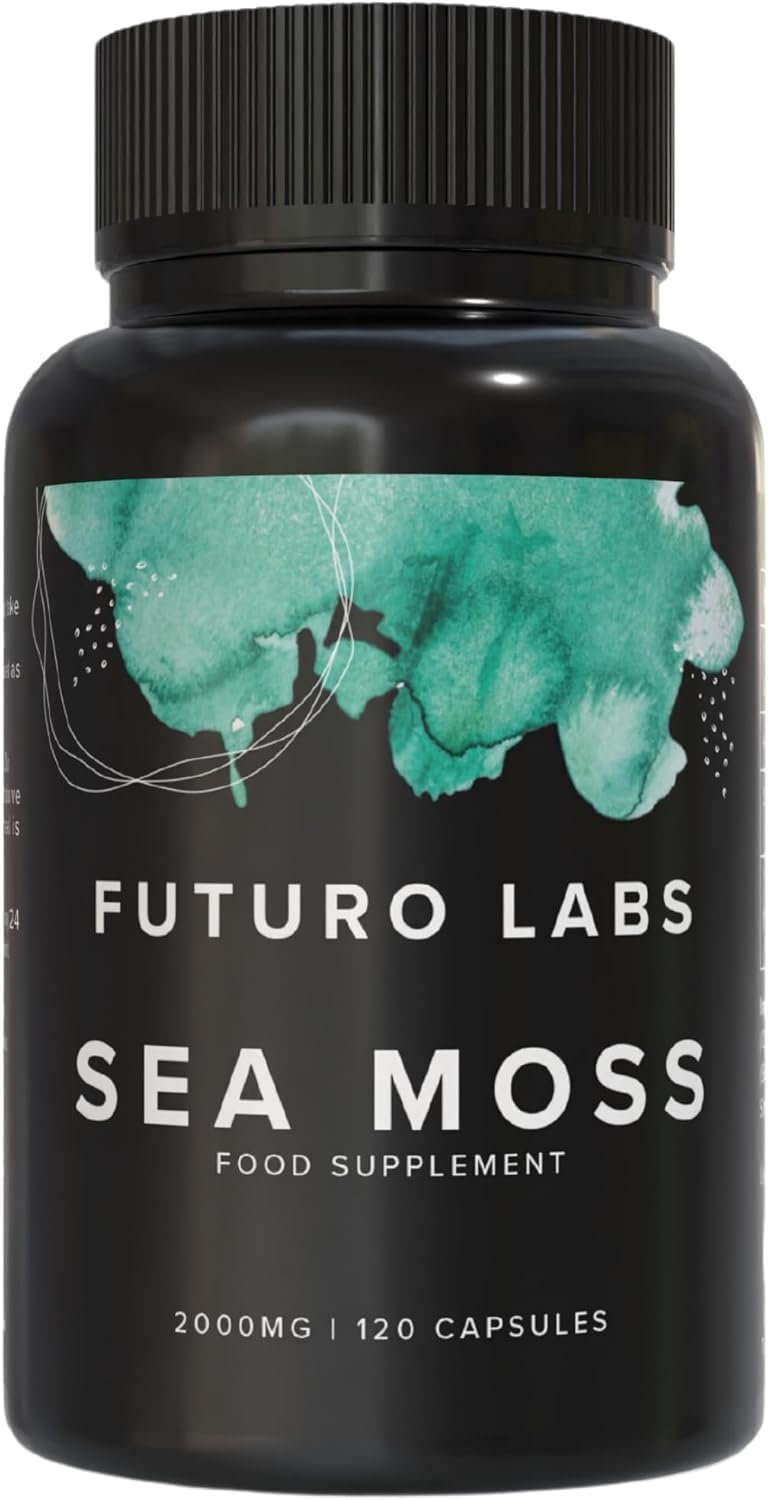
Futuro Labs Sea Moss
£9.99 for 60-day supply (120 capsules) · under 17p per day
Pros
- 2000mg raw sea moss equivalent per serving (15:1 extract)
- Wildcrafted North Atlantic Chondrus crispus — named species and origin
- Independently lab tested — heavy metals and microbiology
- Single-ingredient vegan capsules, UK GMP made
- 60-day supply £9.99 — under 17p/day
Cons
- Iodine content varies by harvest — not for precise-dose needs
- Young brand next to high-street names
Available from: Amazon UK — £9.99
Futuro Labs Marine Collagen

£16.99 for 60-day supply · about 28p per day
Pros
- 1200mg marine collagen peptides per serving
- Vitamin C included — the authorised collagen-formation architecture
- UK GMP manufactured, 60-day supply
- £16.99 — about 28p per day
Cons
- Capsule-dose collagen sits below multi-gram research servings — printed honestly
- Fish-derived — not vegetarian or vegan
Available from: Amazon UK — £16.99
Both, cleanly — and the shared rules
For omnivores wanting both territories, the stack is genuinely clean: no shared actives, no iodine conflict (collagen carries none), no interaction file — a morning mineral serving and a peptide serving are simply two lines in a sensible day, and Futuro Labs runs both at the honest floor: Futuro Labs Sea Moss at £9.99/60 days (2000mg raw equivalent, wildcrafted North Atlantic Chondrus crispus, tested — under 17p) beside Futuro Labs Marine Collagen at £16.99/60 days (1200mg peptides with vitamin C — about 28p), roughly 45p daily for both shelves' honest versions (record one, record two). The shared rules that travel with any stack: label doses each side, staggered starts when attribution matters (this clock and that one both run 8-12 weeks), and the seaweed's standing gates unmoved by company — thyroid conditions, thyroid medication, pregnancy or breastfeeding → GP, pharmacist or midwife before starting (the routing). Two shelves, honestly carded; the diet fork or your actual gap decides, and both answers were always allowed.
Frequently asked questions
Sea moss or collagen — which should I take?
Different products for different jobs: sea moss is the mineral line — iodine's authorised territory (thyroid, metabolism, cognition, nerves, skin) at £9.99/60 days — while marine collagen is the protein-peptide line, where vitamin C holds the formation claims for skin, cartilage and bones. Vegans: sea moss only (collagen is animal-derived, always). Omnivores wanting both territories: they stack cleanly — no interaction, no overlap.
Do sea moss and collagen do the same thing for skin?
No — they touch skin from different directions: iodine contributes to the maintenance of normal skin (sea moss's line), while vitamin C contributes to normal collagen formation for normal skin function (the collagen architecture's line). Complementary claim territories, not substitutes — and neither is a cosmetic transformation product.
Can I take sea moss and collagen together?
Cleanly: no shared actives, no iodine conflict, no interaction file — a mineral serving and a peptide serving are separate lines in a day. Usual rules each side: label doses, staggered starts if attribution matters, and sea moss's standing gates (thyroid conditions, thyroid medication, pregnancy → GP, pharmacist or midwife first).