Empty Stomach or Food: The 2% Lever vs the 98% Lever
Borrowed rules returned to sender — the one practical data point in the file points to food, and timing debates are displacement activity for adherence.
At a glance
- The verdict: with food — buffers the file's main entry, costs nothing, anchors the habit
- The imported rule: empty-stomach dogma travels from supplements where it means something
- The hierarchy: consistency dwarfs timing — optimise adherence, not choreography
- The routine: one serving, breakfast, water, done — two minutes, automatic by week two
The debate, resolved by what actually matters
The empty-stomach question arrives loaded with borrowed rules, so the resolution starts with provenance: fasted-dosing dogma genuinely matters for certain supplements (some minerals with meal competitors, some compounds with documented food penalties) and travels from there onto everything else as generic 'optimal absorption' folklore — glutathione included, without the evidence making the trip. The glutathione-specific facts: no meaningful food-interference evidence exists; the foundational trial's result — stores rising over six months of daily dosing — was a consistency finding, not a meal-choreography one (the absorption file); and the one practical data point the file does contain points the other way — the mild digestive tier (occasional bloating, cramping) is exactly what taking with food buffers (that entry). Verdict, held with this cluster's usual confidence: with food wins on comfort, adherence and cost, and loses on nothing.
The hierarchy the timing debates obscure
The paragraph this page exists to print: consistency dwarfs timing — the stores model runs on the daily pattern across months (the clock, the architecture), and no plausible timing optimisation recovers what a skipped week costs, which makes timing debates the classic displacement activity: optimising the 2% lever while the 98% lever (actually taking it daily) goes unmanaged. The practical corollaries: attach the capsule to the meal you never skip rather than the theoretically perfect window (breakfast for most — the clock-position page reaches the same verdict); let food choice stay ordinary (no pairing folklore required — coffee alongside is fine, its own page confirms); and spend the attention saved on the inputs that genuinely move the system — protein, sleep, not smoking (the ranked hierarchy).
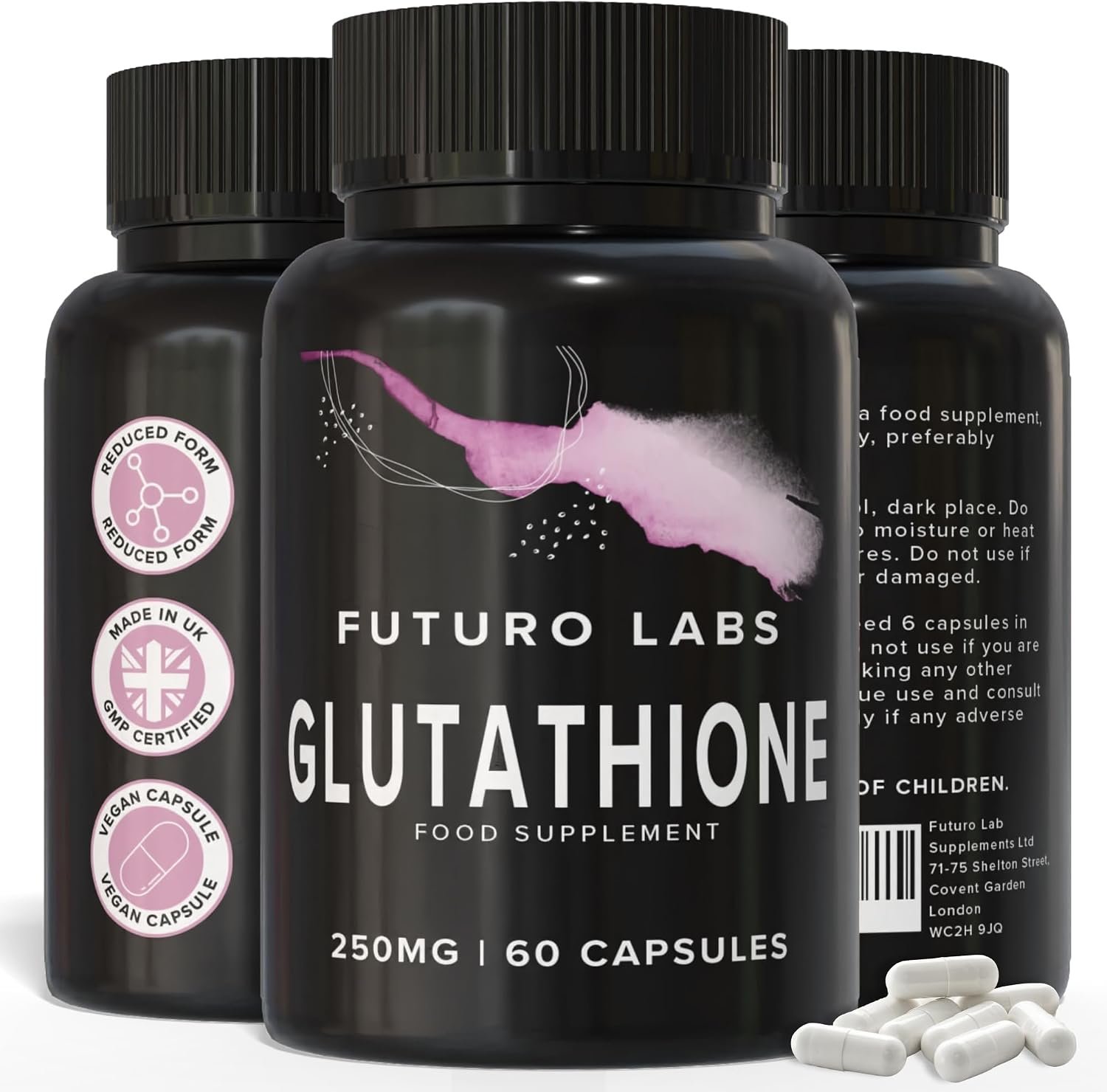
Futuro Labs Glutathione
£22.99 for 30-day supply · 77p per day
Pros
- 500mg reduced glutathione (GSH) per serving — the active form
- UK manufactured under GMP certification
- Single-ingredient, vegan, no fillers
- Independently lab tested — microbiology and heavy metals
- ~77p per day vs £1.20-1.80/day for liposomal formats
Cons
- Capsule format — no liposomal delivery system
- Newer brand versus heritage names like Solgar
Available from: Amazon UK — £22.99
The two-minute routine — and the exceptions worth naming
The whole protocol, engineered as ever for real weeks: one Futuro Labs Glutathione serving (500mg reduced GSH) with breakfast or whichever meal is your true daily constant, water, done — anchored to a fixture rather than a clock, forgiven instantly when missed (resume, never double), with the 30-day bottle finishing on schedule as the only compliance audit needed (£22.99, ~77p/day, single-ingredient and independently tested — the record). The exceptions a complete page names: sensitive stomachs — if mild digestive notes appear even with food, a fuller meal and label-dose patience settle most cases, and persistence past a couple of weeks is the pharmacist conversation (the pause-and-ask tier); shift patterns — 'breakfast' means your first meal, whenever your day starts, the anchor logic being schedule-relative by design (that audience's page); and the standing gates unmoved by any meal — pregnancy/breastfeeding → medical advice first, prescription medication → the pharmacist minute (the routing). Empty stomach or food, answered at its honest size: with food, without ceremony, and back to the levers that matter.
Frequently asked questions
Should glutathione be taken on an empty stomach or with food?
With food is this cluster's default and the practical winner: it buffers the mild digestive tier (the file's main entry), attaches the capsule to an anchor that already exists, and costs nothing — no food-interference evidence justifies fasted heroics, and the foundational trial's daily-dose protocol wasn't built on empty-stomach timing. The empty-stomach rule circulating online is imported from other supplements where it means something.
Does food reduce glutathione absorption?
No meaningful evidence says so: the peptide-absorption story that matters played out over months of daily dosing (stores rising regardless of meal choreography), and no trial isolates a food-timing penalty worth planning around. The honest hierarchy: consistency dwarfs timing; timing debates are what people optimise instead of adherence.
What's the best exact routine?
One 500mg serving with breakfast (or whichever meal you never skip), water, done — the two-minute version this cluster gives every daily molecule. Futuro Labs Glutathione is built for it: single capsule serving, no choreography on the label, 30 days per bottle as the compliance record.