Morning vs Night: Whichever Anchor You'll Never Skip
When the same trivia supports both rules, it supports neither — the real decision is anchor engineering, and the best time is the one your actual life protects.
At a glance
- The verdict: whichever anchor you'll never skip — clock position is not a variable
- The evidence: daily dosing, no timing study, consistency as the mechanism
- The default most land on: breakfast — with-food meets the day's most reliable meal
- Switching: free, anytime — one serving per day through any transition
The question the evidence never asked
Morning-versus-night arrives expecting a rule and the honest file contains none: the foundational six-month trial — the study this entire category rests on — specified daily oral dosing and measured stores; it neither tested nor reported clock position, and no subsequent trial has crowned a timing (the finding's actual shape). What the internet fills that silence with is circadian trivia dressed as protocol: glutathione biology has daily rhythms like most physiology, and rhythm existence gets spun into dosing rules — 'take it at night when repair happens', 'take it in the morning against the day's oxidants' — plausible-sounding, opposite-pointing, and equally unevidenced, which is the tell: when the same trivia supports both rules, it supports neither (the same borrowed-dogma pattern, meal edition). The evidence-honest verdict fits in a sentence: the mechanism is the daily pattern; clock position is not a variable the file recognises.
The real decision — anchor engineering
Which converts the question into the one that actually matters: not when is optimal, but which anchor will you never skip — because a stores strategy lives or dies on the pattern (the architecture), and the best time is definitionally the one your real life protects. The engineering, as this site always runs it: breakfast is most people's answer — the with-food default (buffering the mild digestive tier — that entry) meets the day's most reliable meal, and the capsule rides infrastructure that already exists (the coffee anchor's page); dinner-anchored works identically for evening-reliable lives — same serving, same food buffer, same pattern; and shift workers translate 'morning' as 'first meal of your day, whenever that is' — the anchor logic being schedule-relative by design (that audience's page). Attach, don't schedule: 'with breakfast' survives weekends, travel and chaos the way '8am' never does.
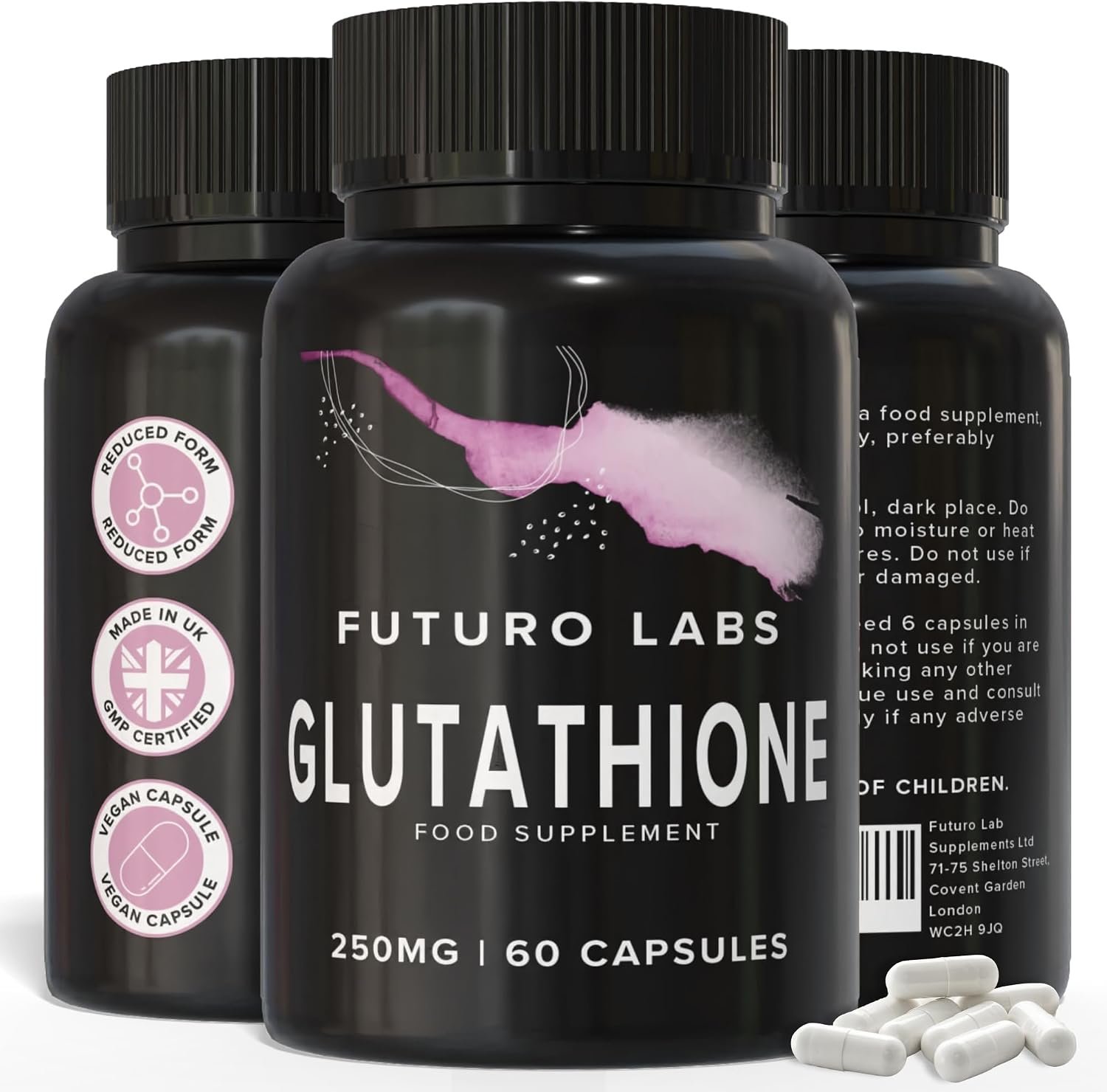
Futuro Labs Glutathione
£22.99 for 30-day supply · 77p per day
Pros
- 500mg reduced glutathione (GSH) per serving — the active form
- UK manufactured under GMP certification
- Single-ingredient, vegan, no fillers
- Independently lab tested — microbiology and heavy metals
- ~77p per day vs £1.20-1.80/day for liposomal formats
Cons
- Capsule format — no liposomal delivery system
- Newer brand versus heritage names like Solgar
Available from: Amazon UK — £22.99
Switching, stacking timings, and the close
The residual questions, answered at their honest size: switching timing — free, anytime: stores are built by months of daily pattern, not clock loyalty, so a new shift or routine just means a new anchor, with the one transition rule being one serving per day still (never a catch-up double on the changeover — the map's standing rule); coordinating with other supplements — glutathione needs no separation choreography from a vitamin C tablet, a multivitamin or the morning coffee (the stack page), so co-anchoring everything to one meal is the adherence-maximising move, not a compromise; and the judging clock unmoved by any of it — 8-12 weeks minimum, the full curve at 3-6 months, quiet expected throughout (the timeline). The product this page's verdict was built around: Futuro Labs Glutathione — 500mg reduced GSH in one clock-indifferent daily serving, single-ingredient, independently tested, £22.99/30 days at ~77p (the record) — because when timing isn't a variable, the label shouldn't pretend it is. Gates as ever: pregnancy/breastfeeding → medical advice; prescription medication → pharmacist minute. Morning or night, answered: yes — whichever one is yours.
Frequently asked questions
Should I take glutathione in the morning or at night?
Whichever anchor you'll never skip — that's the whole evidence-honest answer: the foundational trial specified daily dosing, not clock position; no timing study crowns morning or night; and consistency dwarfs any circadian speculation. Most people land on breakfast (the with-food default meets the day's most reliable meal); genuine night-anchored routines work identically.
Is there any circadian case for either time?
Nothing decision-grade: glutathione biology has circadian rhythms like most physiology, and the internet spins that into timing rules — but no trial shows outcome differences by dose timing, and rhythm trivia isn't protocol. The honest hierarchy stays: daily pattern first, food-buffering second, clock position nowhere.
Can I switch my timing later?
Freely — stores are built by the daily pattern across months, not by clock loyalty, so moving from breakfast to dinner (new shift, new routine) costs nothing as long as the daily line holds. The one rule during any switch: one serving per day still, never a double on transition days.