Tripeptide: The Label Word That Was the Whole Story
Biology's multitool drawn plainly — the gamma-bond quirk, the rate-limiting middle residue, and the sceptics' reasonable objection retold honestly before its endpoint answer.
At a glance
- The structure: glutamate–cysteine–glycine — three residues, one working chain
- The business end: cysteine's thiol — electron donor, disulfide former, rate-limiter
- The assembly: two enzyme steps, running in your cells continuously
- Why it matters: the tripeptide fact powers both the absorption history and the inputs hierarchy
The structure, drawn in words
'Tripeptide' is one of those label words that reads as garnish and is actually the whole story: glutathione is three amino acids in a chain — glutamate, cysteine, glycine — with one structural quirk worth a sentence (the glutamate links through an unusual gamma bond, part of why the molecule resists casual breakdown) and one residue doing most of the work: cysteine, whose thiol group — the sulfur-hydrogen handle — is the business end of everything this cluster describes: it donates the electrons in antioxidant chemistry, and when two spent glutathiones pair up through their sulfurs, the disulfide-bridged result is GSSG, the oxidised form the recycling economy exists to restore (that cycle's page, the cofactor that powers the restoring enzyme). Small enough to be everywhere, structured enough to be specific: the tripeptide is biology's idea of a multitool.
The assembly line — and why cysteine limits it
Your cells build the molecule continuously in two enzyme steps — glutamate joined to cysteine first (the regulated, rate-setting step), glycine added second — which is the biochemical foundation of two things this cluster says constantly: first, nobody 'needs' supplemental glutathione, because the factory is native and always running (that page's corrected verb); second, the factory's throughput is limited by cysteine availability — the sulfur amino acid supplied by dietary protein — which is why protein sufficiency outranks every capsule in the inputs hierarchy (that hierarchy) and why the precursor aisle exists at all: NAC is simply stabilised cysteine delivery betting on this same assembly line (the two-doors comparison). The supplement fork in structural terms: feed the line (precursors) or deliver the finished chain (oral GSH) — two strategies this cluster prices by their evidence, not their poetry.
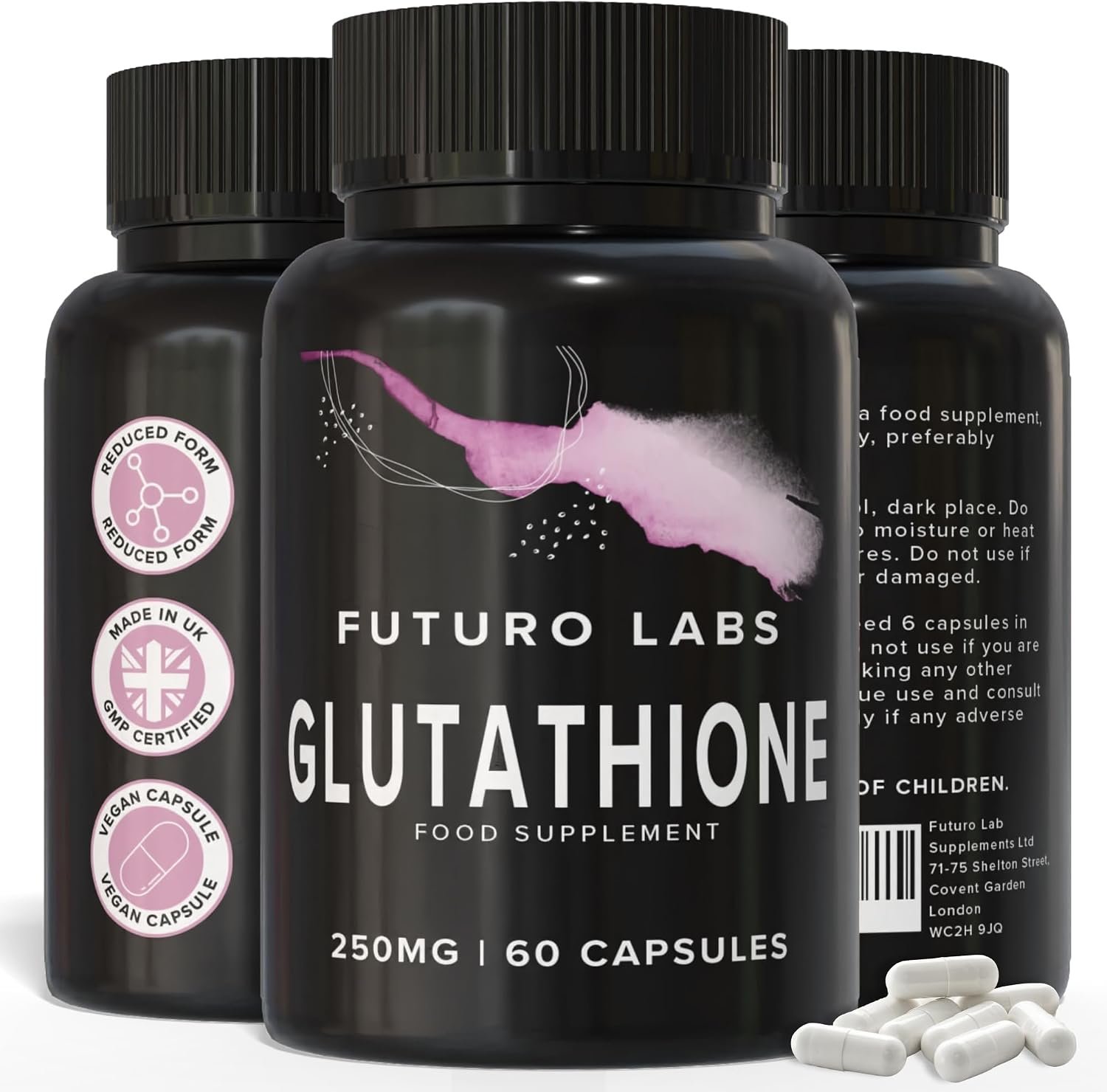
Futuro Labs Glutathione
£22.99 for 30-day supply · 77p per day
Pros
- 500mg reduced glutathione (GSH) per serving — the active form
- UK manufactured under GMP certification
- Single-ingredient, vegan, no fillers
- Independently lab tested — microbiology and heavy metals
- ~77p per day vs £1.20-1.80/day for liposomal formats
Cons
- Capsule format — no liposomal delivery system
- Newer brand versus heritage names like Solgar
Available from: Amazon UK — £22.99
The digestion objection — reasonable, historic, answered
The tripeptide fact also powers the category's best sceptical argument, which deserves its honest retelling: peptides generally meet proteases — the gut dismantles protein chains into amino acids as core business — so 'oral glutathione just gets digested' was a reasonable structural objection, held by serious people, for years; early studies measuring plasma shortly after single doses seemed to confirm it, and the wrong-endpoint lesson was born (that history in full). The measured answer: the six-month trial dosed the intact tripeptide daily and found body stores rising progressively — the practical question settled at the endpoint that matters, even while transport-mechanism details (intact uptake versus local breakdown-and-resynthesis versus both) stay genuinely debated in the literature (the finding's honest shape). Which is the calibration this educational page closes on: structure explained the doubt, measurement answered it, and neither licenses the marketing layer — the tripeptide holds zero authorised claims however elegantly assembled (the spine). For readers who want the chain in a capsule: Futuro Labs Glutathione delivers the finished tripeptide at 500mg reduced GSH — single-ingredient, independently tested, £22.99/30 days at ~77p (the record) — on the usual clock (3-6 months, quiet), behind the usual gates: pregnancy/breastfeeding → medical advice; prescription medication → pharmacist minute. Tripeptide, explained: three residues, one thiol, two enzyme steps — and a structural word that turned out to be the whole plot.
Frequently asked questions
What does 'tripeptide' mean for glutathione?
Three amino acids, one chain: glutathione is glutamate + cysteine + glycine, assembled by your cells in two enzyme steps — small enough to be biology's workhorse, structured enough that the middle residue's sulfur does the actual chemistry. 'Tripeptide' isn't marketing garnish; it's the structural fact behind both the absorption debate and the synthesis story.
Why does the cysteine in the middle matter most?
The thiol group — cysteine's sulfur-hydrogen handle — is the business end: it donates the electrons in antioxidant work and forms the disulfide bridge when two spent glutathiones pair into GSSG. Cysteine is also the synthesis pathway's rate-limiter, which is why protein sufficiency features in every inputs list this cluster prints.
Does being a peptide mean it just gets digested?
That was the sceptics' entirely reasonable argument for years — peptides generally meet proteases — and it's why the six-month stores trial mattered: dosing the intact tripeptide daily still raised body stores, settling the practical question even while transport-mechanism details stay debated. Reasonable objection, wrong-endpoint history, measured answer.