GSH + B2: The Enzyme's Own Cofactor, 80p All-In
Each molecule's paperwork kept on its own side of the table — the actual claims-neighbour paired legitimately, megadosing declined, and the recycling economy quietly supplied.
At a glance
- The mechanism: glutathione reductase runs on FAD — a riboflavin-derived cofactor
- The claims: B2 holds authorised sentences (oxidative-stress protection, tiredness reduction) at pennies
- The honest frame: coherence, not correction — UK deficiency is uncommon
- The stack: ~80p/day, one anchor, ordinary doses, separate reviews
The pairing with an actual mechanism — for once
Most supplement pairings are adjacency dressed as synergy; this one has enzyme-level architecture worth explaining properly: the recycling step this entire cluster keeps referencing — spent, oxidised GSSG converted back to active, reduced GSH (the cycle's page) — is catalysed by glutathione reductase, and glutathione reductase runs on FAD, a cofactor your body builds from riboflavin: vitamin B2 literally powers the regeneration machinery a stores strategy depends on. That's a genuine biochemical dependency, not marketing poetry — riboflavin status is one of the quiet determinants of how well the recycling economy turns — and it makes B2 the most mechanistically coherent companion this cluster has audited: not another door to the same pool (that verdict), not an unrelated colleague sharing a breakfast, but the cofactor of the strategy's own enzyme.
The claims alignment — and the frame kept honest
The regulatory layer completes the case: riboflavin holds authorised UK sentences — contribution to the protection of cells from oxidative stress, to the reduction of tiredness and fatigue, to normal energy-yielding metabolism among others — real register language at pennies from any ordinary label, which means this stack pairs glutathione's measured-but-claimless strategy (the trial, the zero claims) with a claims-holding partner whose sentences sit exactly in the territory glutathione marketing keeps borrowing illegitimately (the neighbour's-deed audit — B2 is one of the actual neighbours). The frame that keeps this honest rather than salesy: coherence, not correction — riboflavin deficiency is uncommon in the UK, ordinary diets and any standard multivitamin cover it, and nobody needs extra B2 for glutathione to 'work'; the pairing case is simply that if you're running the stores strategy, keeping its enzyme's cofactor unremarkably supplied is the cheapest coherent insurance on this site, and megadosing B2 adds nothing the enzyme can use.
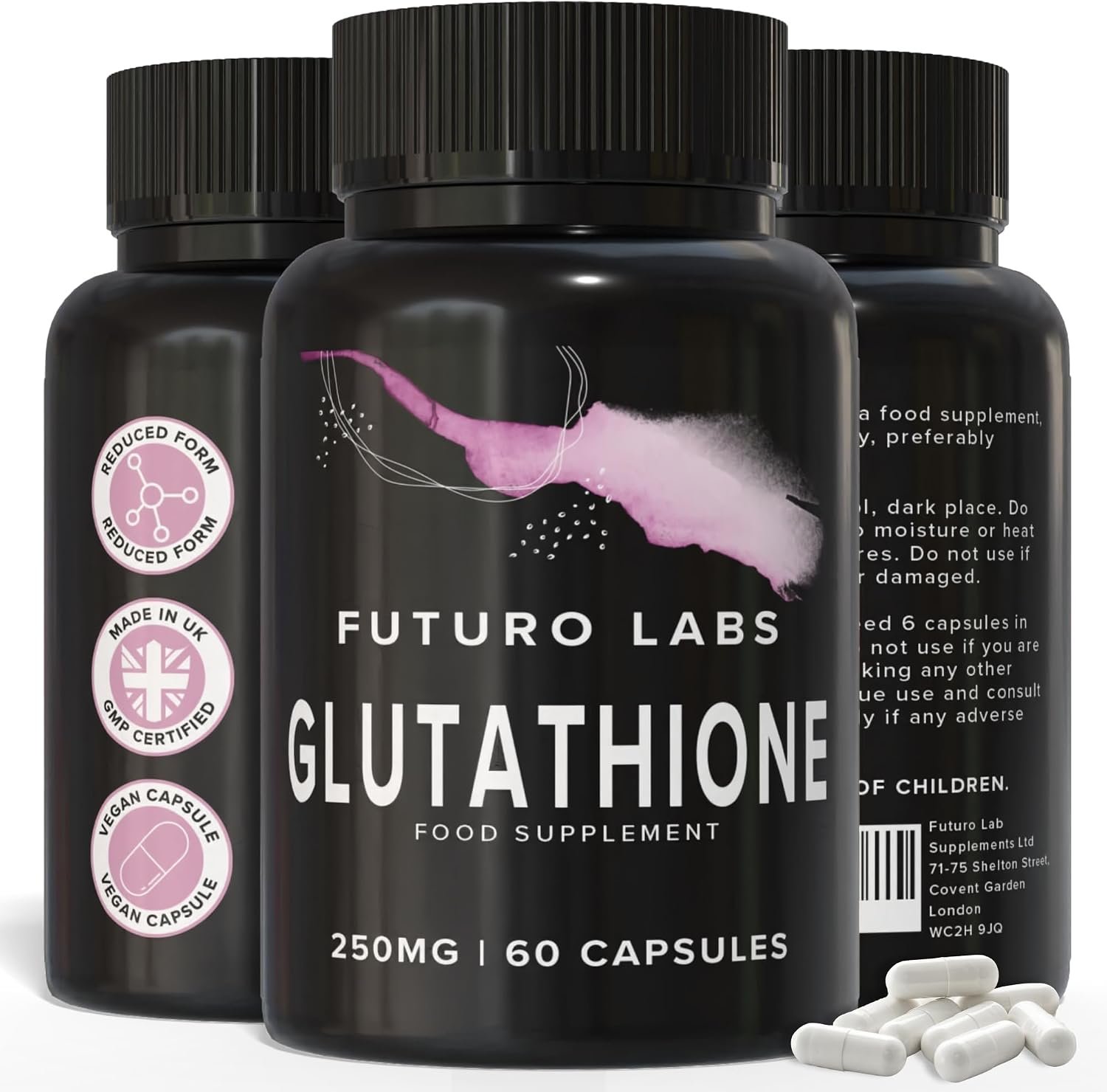
Futuro Labs Glutathione
£22.99 for 30-day supply · 77p per day
Pros
- 500mg reduced glutathione (GSH) per serving — the active form
- UK manufactured under GMP certification
- Single-ingredient, vegan, no fillers
- Independently lab tested — microbiology and heavy metals
- ~77p per day vs £1.20-1.80/day for liposomal formats
Cons
- Capsule format — no liposomal delivery system
- Newer brand versus heritage names like Solgar
Available from: Amazon UK — £22.99
The protocol, the borrowing audit reversed, and the close
Running the pair: Futuro Labs Glutathione at 500mg reduced glutathione with the anchor meal (single-ingredient, independently tested, £22.99/30 days at ~77p — the record) beside an ordinary riboflavin source — a standard B2 tablet or the B-complex/multivitamin most stacks already contain — at label doses, same meal, no choreography (the same easy architecture as the C pairing): roughly 80p/day all-in, staggered starts if attribution matters, each line facing its own 12-week review (the review). The borrowing audit, run in reverse for once: this page can say 'oxidative-stress protection' and 'tiredness reduction' — because its B2 half actually holds those sentences — while the glutathione half stays sold on its own file alone: stores repletion, 3-6 months, quiet (the clock); the discipline that makes claim-holder pairings honest is keeping each molecule's paperwork on its own side of the table. Constants as ever: inputs above the stack (riboflavin-rich foods — dairy, eggs, fortified cereals, almonds — arrive before any tablet — the hierarchy); gates always — pregnancy/breastfeeding → medical advice; prescription medication → pharmacist minute (the routing). GSH and B2, closed: the one pairing where the mechanism is real, the claims are native, and the whole thing costs 80p — coherence, priced like it.
Frequently asked questions
Why pair glutathione with riboflavin (B2)?
The most mechanistically coherent pairing in this cluster: glutathione reductase — the enzyme that recycles spent GSSG back to active GSH — runs on FAD, a riboflavin-derived cofactor, so B2 status literally powers the recycling step this whole strategy depends on. Add that B2 holds authorised UK claims (protection of cells from oxidative stress, reduction of tiredness and fatigue among them) at pennies, and the stack is claims, mechanism and economics aligned.
Do I need extra B2 for glutathione to work?
No — ordinary diets and any standard multivitamin cover riboflavin comfortably, and deficiency is uncommon in the UK; the pairing case is coherence, not correction. The practical version for most people: check you're not running an unusual restriction, and if supplementing B2 at all, ordinary label doses complete the logic — no megadosing required or rewarded.
What does the stack cost and how is it run?
Roughly 80p/day all-in: Futuro Labs Glutathione at ~77p plus an ordinary B2 (or B-complex) at pennies — same anchor meal, no choreography, staggered starts if attribution matters, each line at its own 12-week review. The recycling enzyme was always going to run; you're just keeping its cofactor unremarkably supplied.