Focus: Supply-Side Support, Honestly Quiet
A real door opening onto maintenance — and a category selling the door it doesn't have. The evidence-ranked levers, the GP loop that makes a blood panel the best focus product here, and the router.
At a glance
- The one honest door: iodine's authorised cognitive-function claim — supply-side, not stimulant
- Felt sharpness: not the offer — adequacy is quiet by nature
- What owns focus: sleep, exercise, caffeine craft, single-tasking, treating the treatable
- The GP loop: persistent brain fog has checkable causes — thyroid among them
The claim, and the door it actually opens
Iodine holds an authorised cognitive claim — contribution to normal cognitive function — and the biology behind it is the same axis this cluster keeps mapping: thyroid hormones govern cellular energy metabolism brain-wide, developing and adult brains both depend on adequate supply, and population iodine status is a genuine public-health cognition topic (the reason pregnancy iodine guidance exists at all). That's a real door, opening onto supply-side support: a measured serving helping secure the adequacy that normal cognition runs on, most relevantly for the under-supplied patterns this cluster keeps naming (the constituency). What the door doesn't open onto — and the category sells relentlessly — is felt sharpness: no nootropic action exists here, no on-demand focus, no brain-boost; sea moss is pantry, not pharmacology, and the grammar lesson from the metabolism page repeats verbatim: contributes to normal is maintenance language, honestly quiet.
What focus actually answers to — the honest hierarchy
For the reader who arrived wanting sharper afternoons, the levers ranked by evidence rather than aisle: sleep — the largest single cognitive variable, no supplement adjacent; exercise — the reliable same-day and long-run brain intervention; caffeine craft — timing and dose of the stimulant most people already run, badly; environment — single-tasking blocks beating multitasking heroics every trial they meet; and treating the treatable — persistent brain fog has checkable medical drivers (sleep disorders, low iron and B12, mood, and yes, thyroid function — the loop back to this mineral that makes a GP blood panel the highest-value 'focus supplement' on this page). Where nutrition honestly sits: the floor — adequacy across the boring essentials, iodine included, keeping the machinery supplied so the levers above have something to move (the map's maintenance territory).
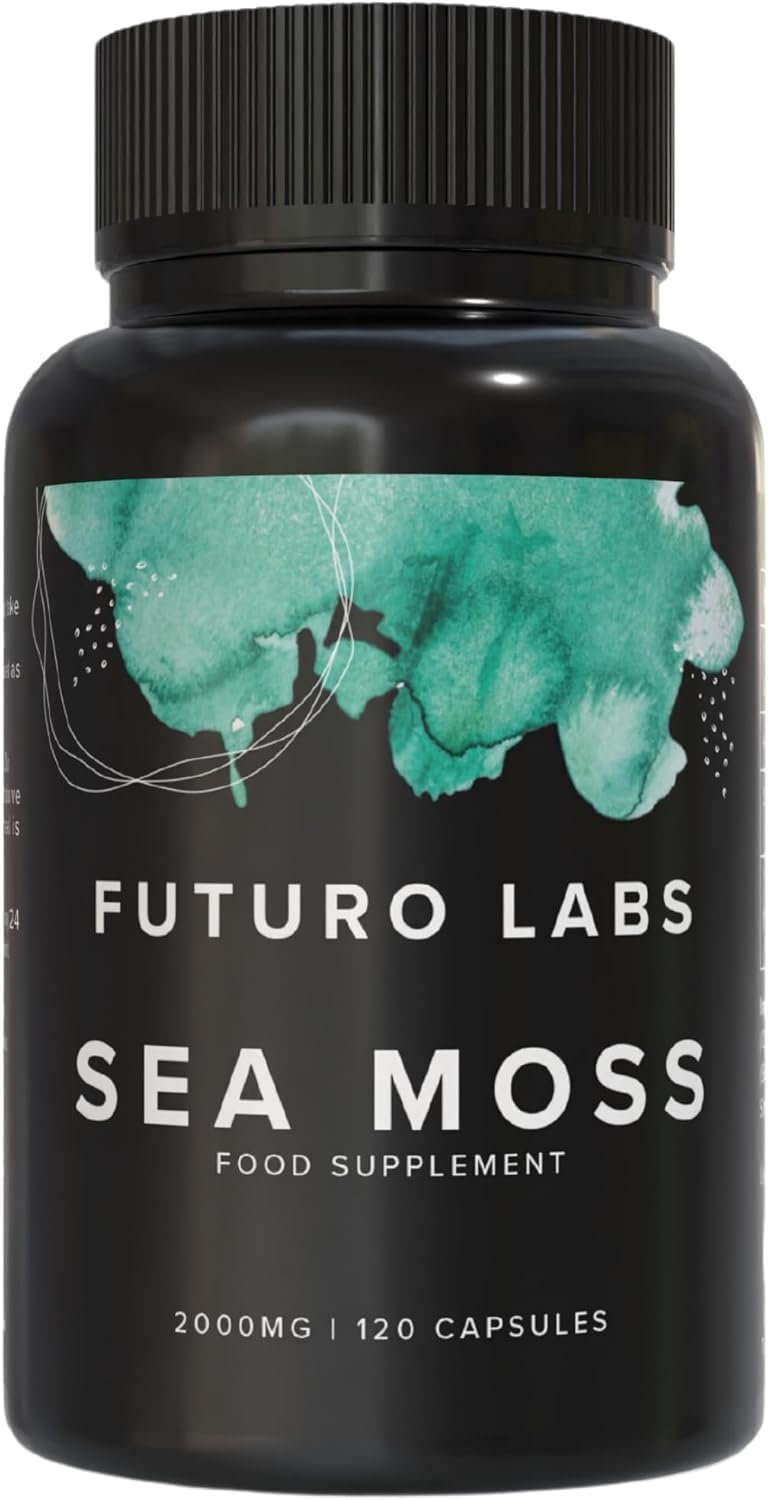
Futuro Labs Sea Moss
£9.99 for 60-day supply (120 capsules) · under 17p per day
Pros
- 2000mg raw sea moss equivalent per serving (15:1 extract)
- Wildcrafted North Atlantic Chondrus crispus — named species and origin
- Independently lab tested — heavy metals and microbiology
- Single-ingredient vegan capsules, UK GMP made
- 60-day supply £9.99 — under 17p/day
Cons
- Iodine content varies by harvest — not for precise-dose needs
- Young brand next to high-street names
Available from: Amazon UK — £9.99
The router — and the nootropic shelf named fairly
Routing the search honestly: under-supplied and wanting the floor secured — this product's actual offer: measured iodine contribution inside the frame, one serving daily, judged over 8-12 quiet weeks (the clock, gates as ever — the routing); wanting felt cognitive effects — a different aisle with its own standards, and this site's parent range includes it honestly (our Lion's Mane and nootropic lines live under Sharper Human's roof with their own evidence pages) — the point being that supply-nutrition and felt-effect products shouldn't wear each other's marketing, and sea moss listings promising laser focus have confused the shelves; brain fog that persists — the GP panel before any purchase, because checkable beats supplementable every time this cluster meets the choice. The closing sentence for the search: sea moss supports the cognition you have by supplying what it runs on — a floor worth 17p, sold without a ceiling it never had.
Frequently asked questions
Is sea moss good for focus and brain function?
Through one honest door: iodine contributes to normal cognitive function — an authorised claim reflecting the thyroid axis's role in brain metabolism — so adequate supply supports the cognition you have, especially where diet under-provides. What no door opens onto: nootropic effects, sharpened focus on demand, or brain-boosting — sea moss is supply-side nutrition, not a stimulant or a smart drug, and the felt-focus market belongs to other aisles entirely.
Will I feel sharper taking sea moss?
Probably not, and that's honest: adequacy is maintenance, maintenance is quiet, and the under-supplied correcting a genuine gap have the only realistic path to noticing anything (steadier function over the 8-12 week window). Anyone wanting felt cognitive effects is shopping a different category — caffeine, sleep, exercise and, for the supplement-curious, the nootropic shelf with its own evidence standards.
What actually improves focus?
The unglamorous champions: sleep (the single largest lever), regular exercise, managed caffeine, single-tasking environments, and treating the treatable (screening for the medical drivers of persistent brain fog via a GP — thyroid included, which loops back to this mineral honestly). Nutrition's role is foundational adequacy — the floor, not the ceiling.