Metabolism: The Verb Discipline the Category Skips
The connection is real and specific, and the claim's grammar does honest work marketing undoes. The regulated-axis truth, the edge case that belongs to a GP, and who this page actually serves.
At a glance
- The authorised sentence: iodine contributes to normal energy-yielding metabolism
- The verb discipline: supply, not boost — adequacy keeps normal, excess revs nothing
- Weight loss: no honest yes — the claim stretched past its wording
- The real constituency: the under-supplied — everyone else maintains
The biology behind the claim — read at its actual size
The metabolism connection is real and specific: thyroid hormones set metabolic rate — the pace at which cells convert fuel to energy — and iodine is their non-negotiable raw material, which is why 'iodine contributes to normal energy-yielding metabolism' sits among the mineral's authorised claims and why chronic deficiency genuinely slows people down (the fatigue, cold-sensitivity and sluggishness of an under-supplied thyroid are textbook). Read the claim's grammar carefully, though, because it does the honest work marketing undoes: contributes to normal — supply keeping a system at its set point — not accelerates, boosts or fires up; the thyroid is a regulated axis, not a throttle, and surplus iodine doesn't rev it (sustained excess disturbs it instead, in either direction — the serious lever). Supply is the verb; the category sells the other one.
The weight-loss stretch — where the claim gets abused
From 'supports metabolism' the marketing slides to 'burns fat', and the slide has no floor: no trial shows sea moss driving weight loss, normal metabolism is not accelerated metabolism, and the authorised wording was never a fat-burning licence — the dedicated truth page runs the full autopsy when it lands, and the three-layer spine files the burn-talk in layer three meanwhile. The one honest edge case, stated precisely: someone with genuine iodine deficiency whose thyroid output was consequently low can see normal function restored by adequate intake — a correction of pathology, felt as energy returning — and that scenario is medical territory: unexplained weight or energy shifts in either direction are GP conversations about the thyroid itself (blood tests exist; guessing doesn't help), never a signal to self-dose seaweed (the routing's logic generalises).
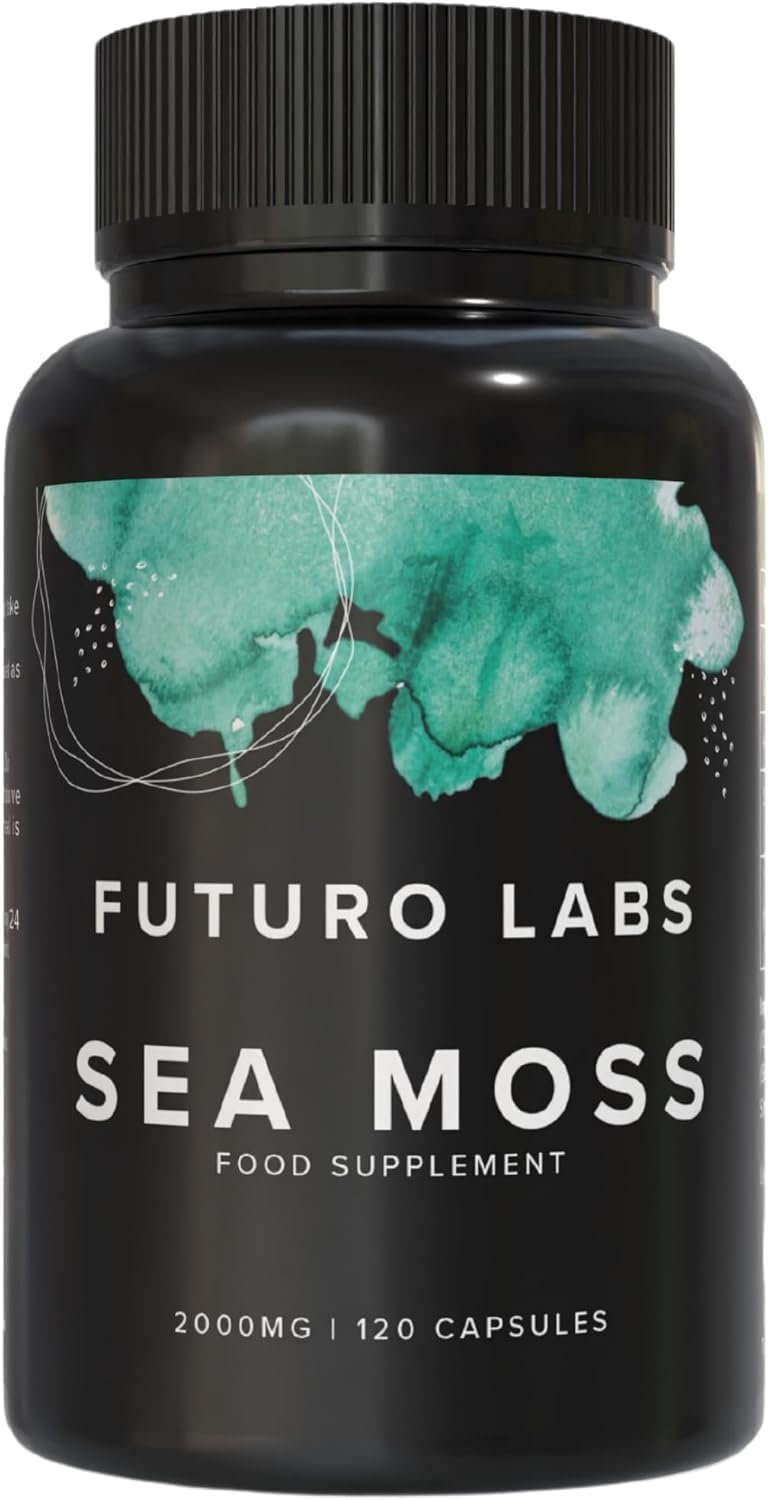
Futuro Labs Sea Moss
£9.99 for 60-day supply (120 capsules) · under 17p per day
Pros
- 2000mg raw sea moss equivalent per serving (15:1 extract)
- Wildcrafted North Atlantic Chondrus crispus — named species and origin
- Independently lab tested — heavy metals and microbiology
- Single-ingredient vegan capsules, UK GMP made
- 60-day supply £9.99 — under 17p/day
Cons
- Iodine content varies by harvest — not for precise-dose needs
- Young brand next to high-street names
Available from: Amazon UK — £9.99
Who this page honestly serves — and the daily shape
The constituency logic that runs this whole cluster applies cleanly here: the under-supplied — fish-free, dairy-light, plant-based weeks whose iodine genuinely under-runs the ~140mcg frame (the map) — are the readers for whom the metabolism claim describes something their diet isn't currently securing, and a measured serving addresses it at 17p; the already-supplied maintain a system that was never the problem, which is fine and worth knowing pre-purchase (margin, not rescue). The daily shape as everywhere: one serving with food, inside the frame, never stacked (the arithmetic), judged over 8-12 weeks against maintenance expectations (the clock) — and the closing verb lesson for the whole search: metabolism wanted supplying, not boosting, and the products promising the second were never describing the first.
Frequently asked questions
Does sea moss boost metabolism?
'Boost' is the wrong verb; 'supply' is the right one: iodine contributes to normal energy-yielding metabolism — an authorised claim — because thyroid hormones run metabolic rate and iodine is their raw material. Adequate supply keeps the system normal; extra supply doesn't rev it higher, and marketing that promises acceleration is selling physiology that doesn't exist. Deficiency-territory readers get the real benefit; the already-supplied get maintenance.
Can sea moss help with weight loss?
No honest yes exists: normal metabolism is not accelerated metabolism, no trial shows sea moss driving fat loss, and the weight-loss framing is the metabolism claim stretched past its authorised wording. The one true edge case: corrected iodine deficiency restoring normal thyroid output in someone who was genuinely low — a medical situation belonging to a GP, not a capsule aisle.
Who actually benefits from the metabolism angle?
The under-supplied: fish-free, dairy-light patterns whose iodine intake genuinely under-runs the frame — for them, a measured serving supports the normal metabolic function the claim describes. Everyone else maintains what already works. Warning territory stands either way: unexplained weight or energy shifts in either direction are GP conversations about the thyroid itself, not supplement adjustments.