Capsules vs Liquid: The Format Changes Handling, Not Biology
Milligrams and meals do the absorbing — with the freshness split structural: ninety independent clocks against one breathing bottle.
At a glance
- Capsules: sealed per-dose freshness · taste-invisible · portable · fixed honest dosing
- Liquids: dose flexibility · gram-class teaspoons · the capsule-averse household's format
- The freshness split is structural: ninety sealed doses vs one breathing bottle
- The router: everyday condition → capsule · flexible grams → liquid, knowingly
Two formats, two engineering philosophies
Capsule-versus-liquid is really a choice between two answers to the same oxidation problem: the capsule's answer — seal every dose separately: a softgel's oil meets air only at swallowing, making a 90-count bottle ninety independently protected doses whose freshness clock runs slowest of any format (why the cupboard suffices, the war this wins), with taste-invisibility (the palate never meets the oil — the fish-averse case), pocketable portability and fixed honest dosing riding along; the liquid's answer — protect one bottle well and empty it fast: nitrogen flushing, dark glass and fridge discipline defending a volume that breathes at every opening, in exchange for the format's genuine cards: dose flexibility by the teaspoon and gram-class servings without capsule-counting — the high-target household's format (where such targets live).
The absorption question, retired — and the honest cards dealt
The comparison's persistent myth first: liquid does not meaningfully out-absorb capsules at matched doses with food — absorption rides the meal-triggered fat cascade in both cases (bile, lipases, micelles processing the oil once freed — that cascade), gelatin shells dissolve in minutes, and the format changes handling rather than biology: milligrams and meals do the absorbing (the unit either format answers to). The honest cards, dealt to each: capsules — the everyday-condition buyer's format by construction: one sealed softgel meeting the 250mg benchmark, no taste, no fridge, no pouring judgement at 6am, travel-proof (the format's full case); liquids — the flexible-gram format: households running professionally-set multi-gram intakes, dose-splitting across family members under professional guidance, and the genuinely capsule-averse for whom a teaspoon beats any softgel (the swallow-difficulty page first, though) — paid for with the taste management, the fridge admin and the faster clock the structure imposes.
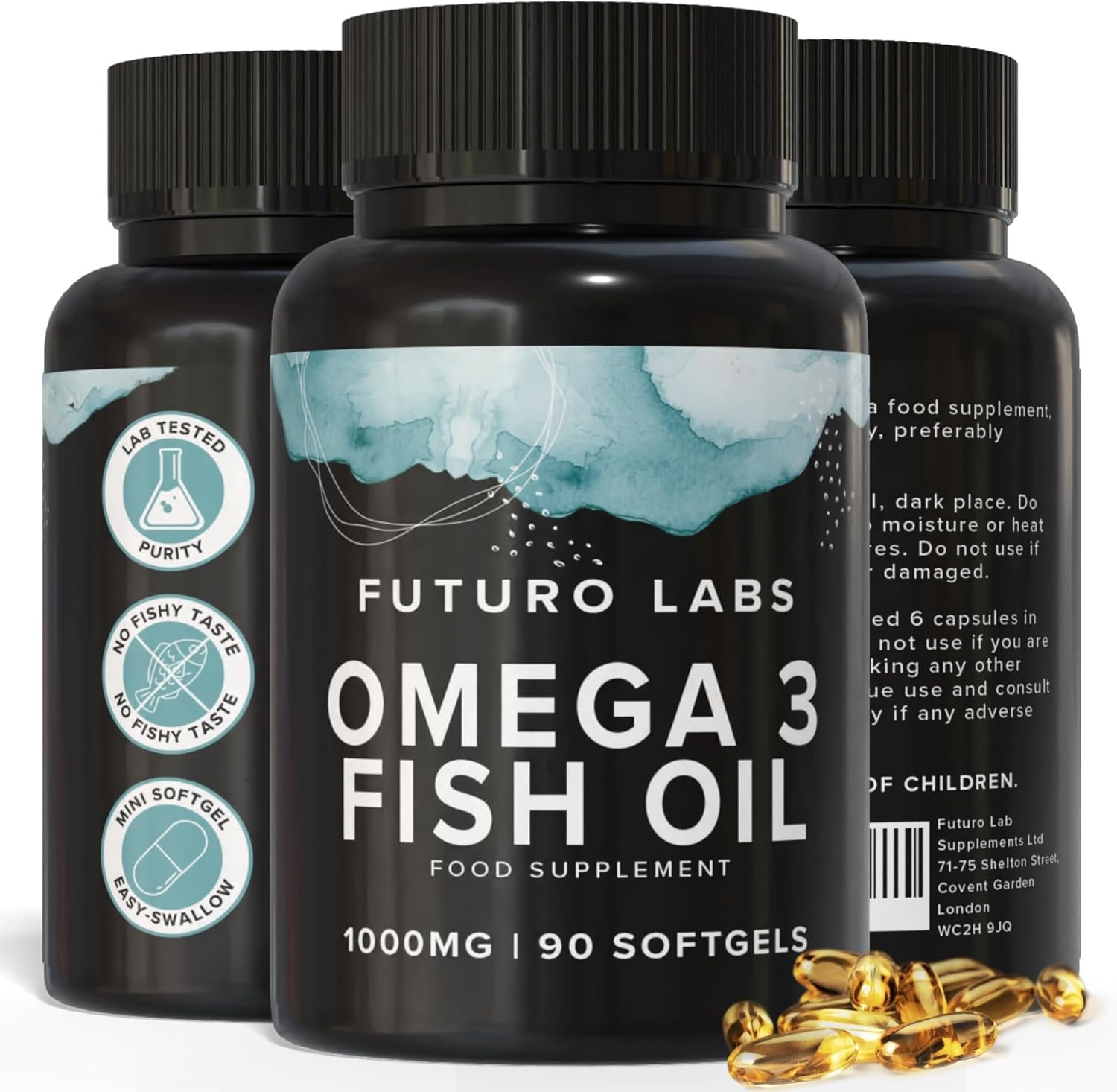
Futuro Labs Omega 3 Fish Oil
£14.99 for 90-day supply (90 softgels) · ~17p per day
Pros
- 1000mg fish oil per softgel — 180mg EPA + 120mg DHA stated
- Mini softgel, no fishy taste, lab tested
- 90-day supply at £14.99 (~17p/day), UK made
Cons
- Fish-derived, bovine-gelatin softgel — not vegan or vegetarian (algal DHA is that route)
- Ethyl-ester form — take with a meal; DHA brain/vision register claims need 250mg DHA daily, above the one-a-day serving
Available from: Amazon UK — £14.99
The router, and the close
The decision, run as this cluster runs everything: the everyday-condition buyer — 250mg met daily is the brief, and the capsule serves it whole: Futuro Labs Omega 3's sealed mini softgel at 300mg, one a day with a meal, ~17p, no format admin whatsoever (the record); the flexible-gram household — liquid earns its admin where teaspoon-dosing is the actual requirement, chosen with the same six checks plus fridge discipline (the checks); and the mixed reality — plenty of households run both: capsules for the daily adults, liquid where a professional has set something specific: no contradiction, just formats doing their jobs. Constants across both: the panel read (payload per dose, whatever the dose vehicle — the habit); freshness vigilance scaling with the format's exposure (first-opening smell test on every liquid bottle especially); gates as ever — pregnancy, nursing or any medication → doctor first per the label (the conversation). Capsules versus liquid, closed by structure: ninety sealed doses or one well-defended bottle — the everyday condition takes the seals, the flexible grams take the teaspoon, and both take the meal.
Frequently asked questions
Are fish oil capsules or liquid better?
By job: capsules win sealed per-dose freshness (oil meets air only when swallowed), taste-invisibility, portability and fixed honest dosing — the everyday-condition format; liquids win dose flexibility and gram-class servings in a teaspoon — the high-target and capsule-averse format, paid for with whole-bottle air exposure, taste management and fridge admin. The everyday 250mg buyer lands on capsules; the flexible-gram household earns the liquid.
Doesn't liquid fish oil absorb better?
Not meaningfully at matched doses with food — absorption rides the meal-triggered fat cascade either way, and the liquid's real advantages are logistical (big flexible doses) rather than biological. The format changes handling; the milligrams and the meal do the absorbing.
What's the freshness difference in practice?
Structural: a capsule bottle is ninety sealed doses — each softgel's oil untouched until swallowed; a liquid bottle is one dose's worth of air exposure repeated at every opening across the whole remaining volume, which is why opened liquids earn the fridge and shorter use-by windows while capsules live happily in the cupboard.