Runners: Quench Modestly at Breakfast, or Not at All
Straight talk for the reader the caution literature practically addresses — recovery's unbeaten levers ranked, the meal-side hedge built in, the abstainer respected.
At a glance
- The runner's proximity: the blunting trials were endurance trials — this audience sits closest to the debate
- GSH's honest status: untested on adaptation endpoints — distance from protocols ≠ clearance
- Two defensible runners: modest-meal-anchored, or abstainer — both printed
- Recovery's real levers: carbs · protein · sleep · programming — capsules are rounding error
Why runners specifically need the adaptation paragraph
Every athlete page this cluster writes prices in the adaptation debate; runners get it first and largest because the literature is practically addressed to them: the best-known antioxidant-blunting trials ran endurance protocols — high-dose vitamin C (around a gram) plus E, timed around aerobic training — and observed dampened markers of exactly what runners train for: mitochondrial-biogenesis signalling, endurance-adaptation measures (the debate's full page: signal real, replication mixed). The transient oxidative pulse of a hard session is partly the stimulus — hormesis, plainly (the athletes' page) — so the runner reflexively 'mopping up' post-run oxidation with aggressive antioxidant stacks is the one reader most directly described by the caution literature's indicted protocol. GSH's own honest position, restated for this audience: untested either way on adaptation endpoints — a 500mg meal-anchored serving differs from the studied protocols in molecule, dose and timing, and that distance is reassurance without being clearance.
The two defensible runners — and recovery's real levers
The open question converts to two printed positions: the modest user — one product at label dose, meal-anchored away from sessions (breakfast serving, evening run: the hedge is already built in — the costless version), unstacked, run as the everyday stores strategy it is (stores, quietly) — defensible on current evidence, provided this page was read first; the abstainer — the adaptation-maximalist concluding food-first-no-antioxidant-supplements: fully coherent, costs nothing proven, printed on a commercial page because runners respect straight talk and so does this site. Above both positions, the levers no capsule approaches: carbohydrate replenishment scaled to actual volume (the endurance recovery mechanism, full stop), protein spread through the day, sleep as the consolidation window everything else serves, programming sanity (easy days easy, load progressed not lurched — the variable most 'recovery product' shoppers actually need adjusted), and sodium-inclusive hydration for the long sweaty ones.
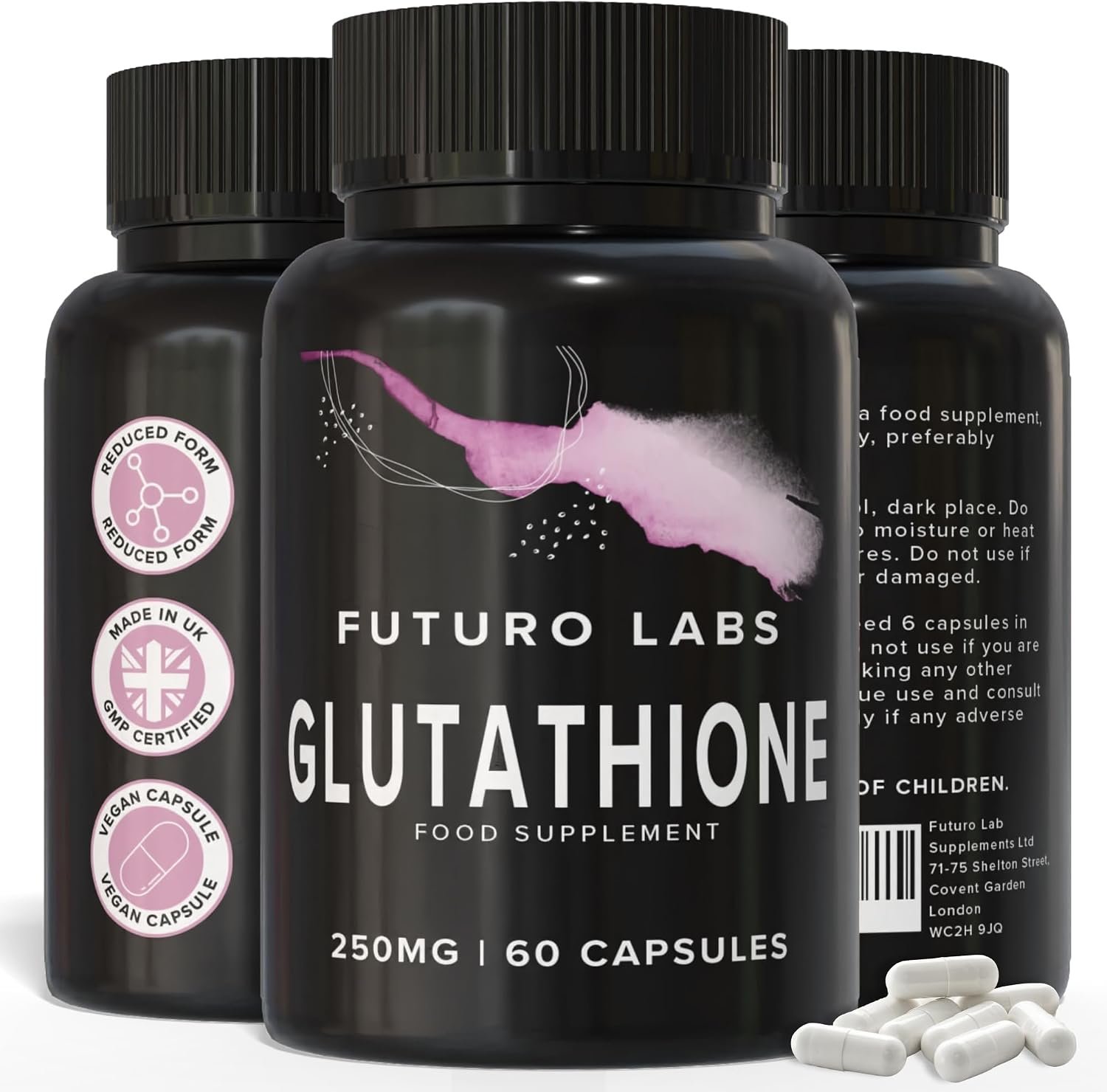
Futuro Labs Glutathione
£22.99 for 30-day supply · 77p per day
Pros
- 500mg reduced glutathione (GSH) per serving — the active form
- UK manufactured under GMP certification
- Single-ingredient, vegan, no fillers
- Independently lab tested — microbiology and heavy metals
- ~77p per day vs £1.20-1.80/day for liposomal formats
Cons
- Capsule format — no liposomal delivery system
- Newer brand versus heritage names like Solgar
Available from: Amazon UK — £22.99
The protocol, the marketing translated, and the close
Running weeks, specified: training days identical to rest days — one Futuro Labs Glutathione serving with the anchor meal (500mg reduced glutathione, single-ingredient, independently tested, £22.99/30 days at ~77p — the record), sessions whenever the plan says, refuelling by actual food in the window that's real (that page's category-error sort), the stores clock untouched by mileage (3-6 months, quiet). The marketing translation runners deserve: 'post-run recovery antioxidant blend, take within 30 minutes' is the indicted protocol wearing kit — high-dose, multi-antioxidant, session-timed — and the debate's clearest practical output remains don't run that one (the two defensible athletes, one indicted protocol). Constants at every distance: symptoms and injuries belong to professionals, not aisles; gates always — pregnancy/breastfeeding → medical advice; prescription medication → pharmacist minute (the routing). Runners and glutathione, closed in the register the sport respects: the adaptation you're logging miles for is partly built from the stress you're tempted to quench — so quench modestly at breakfast, or not at all, and let the carbs and the pillow do the actual recovering.
Frequently asked questions
Is glutathione good for runners?
The endurance-honest answer: recovery's real levers stay carbohydrate, protein, sleep and programming — and runners specifically sit closest to the adaptation debate, because the best-known antioxidant-blunting trials used endurance training and high-dose C/E. GSH itself is untested on those endpoints; the practical read is modest-single-product-meal-anchored, or the abstainer position — both defensible, both printed here.
Will glutathione blunt my aerobic gains?
Unknown at honest resolution — the blunting signals come from high-dose vitamin C/E protocols timed around endurance training, aren't universal, and haven't been tested for 500mg oral GSH. What the open question buys a runner: keep any antioxidant modest and meal-side, never stack high doses around sessions, and treat 'recovery stack' marketing as the indicted protocol wearing kit.
What actually speeds running recovery?
The unbeaten list: carbohydrate replenishment scaled to volume, protein spread through the day, sleep (where the adaptation you trained for consolidates), and programming sanity — easy days actually easy, load progressed not lurched. Hydration with sodium for the long, sweaty ones. Everything in a capsule is rounding error behind those.