Immunity: A Regulated Network, Not a Dial
Role described, promise declined, launder named — and a winter page whose working paragraph sells nothing, which is the paragraph working.
At a glance
- The double borrow: immune claims belong to C/D/zinc — and 'boost' isn't even the register's grammar
- The real biology: immune cells use glutathione — role, not product outcome
- The honest shelf: the claims-holders at pennies · foundations doing the heavy lifting
- The routing: frequent/unusual infections → GP — a pattern worth investigating, not supplementing
The double borrow — audited against register and grammar
'Immune-boosting glutathione' fails twice before evidence is even consulted. Borrow one, the deed: the authorised immune sentences on the UK register — contribution to normal function of the immune system — belong to specific nutrients: vitamin C, vitamin D, zinc, selenium, folate, B6 and B12 among them; glutathione holds none at any dose, consistent with its zero claims everywhere (the spine, the identical audit, energy edition). Borrow two, the verb: 'boost' isn't the register's grammar at all — authorised language speaks in maintenance ('contributes to normal function'), because immune systems are regulated networks where more-is-better framing misdescribes the biology; a listing promising a boosted immune system has failed the claims check and the concept check in three words. The mechanism garnish arrives on schedule — immune cells genuinely maintain glutathione pools, lymphocyte function features in real immunology literature — and gets the same treatment as everywhere in this cluster: role described, promise declined, the launder named (the pattern's anatomy).
The honest immune page — shelf and foundations, correctly ordered
What a winter-minded reader can actually act on: the claims-holding shelf — vitamin C and zinc carry the authorised immune sentences at pennies from any ordinary label, and vitamin D holds them too, with UK guidance widely suggesting the 10mcg autumn-winter consideration for most people (the one supplement conversation general guidance actually volunteers); the foundations that dwarf the shelf — sleep (immune function's best-documented everyday lever), not smoking, alcohol kept moderate, and ordinary sufficient eating — the portfolio no capsule combination matches and every honest immune page ends on; and the routing that outranks both — frequent, unusual or hard-to-shake infections are a GP conversation: a pattern worth investigating with real diagnostics, never a signal to upgrade a stack (the routing culture, applied seasonally). Nothing in that paragraph sells this cluster's molecule, which is the paragraph working.
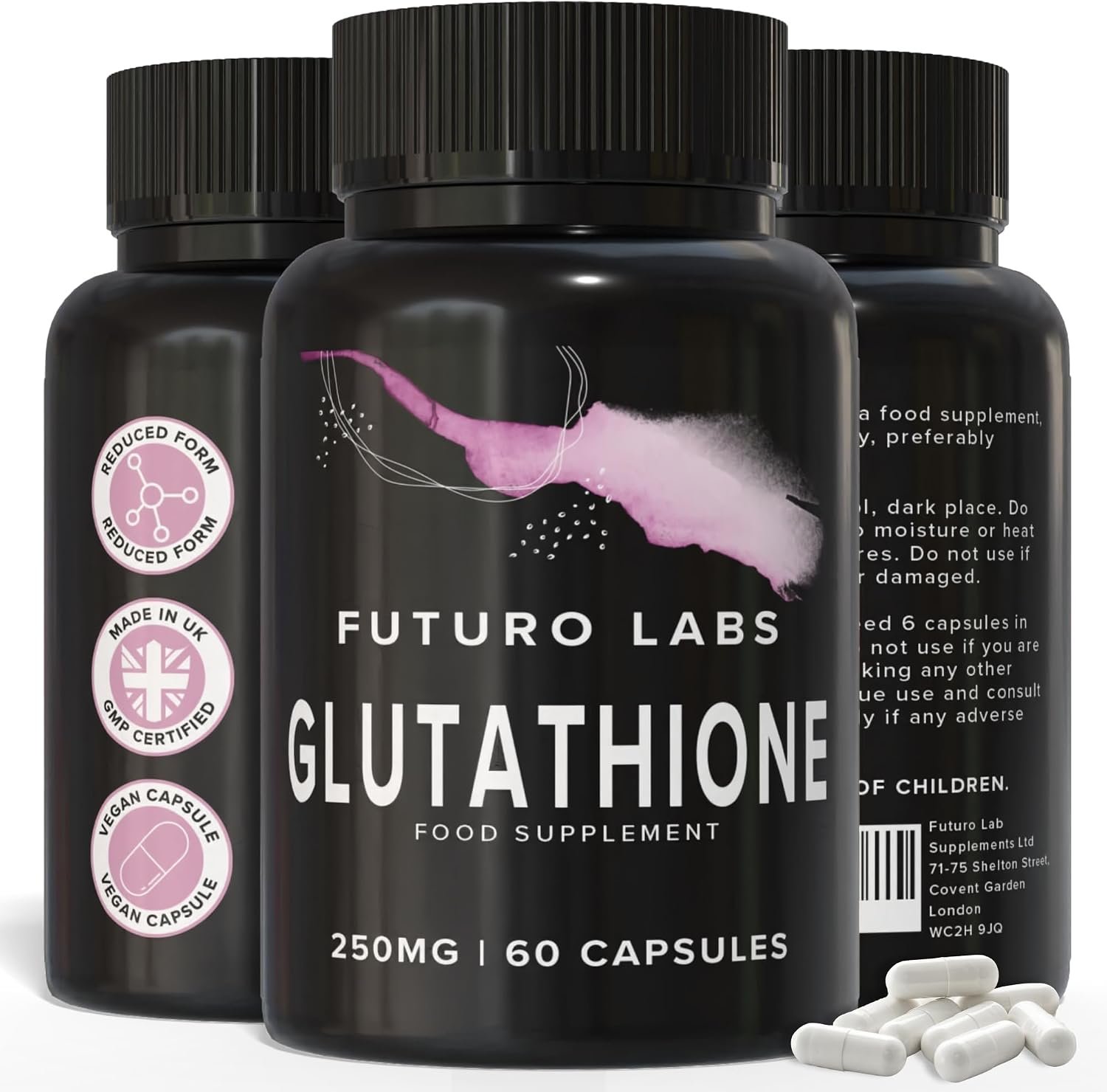
Futuro Labs Glutathione
£22.99 for 30-day supply · 77p per day
Pros
- 500mg reduced glutathione (GSH) per serving — the active form
- UK manufactured under GMP certification
- Single-ingredient, vegan, no fillers
- Independently lab tested — microbiology and heavy metals
- ~77p per day vs £1.20-1.80/day for liposomal formats
Cons
- Capsule format — no liposomal delivery system
- Newer brand versus heritage names like Solgar
Available from: Amazon UK — £22.99
Where glutathione honestly stands in winter — and the close
The lane-keeping this cluster repeats until it's boring: Futuro Labs Glutathione makes no immune offer because none exists to make — it remains the stores strategy on identical terms in December as in June: 500mg reduced glutathione daily, the six-month repletion trial as its single evidence item (stores, quietly), the 3-6 month clock unmoved by cold season (the timeline), single-ingredient, independently tested, £22.99/30 days at ~77p (the record) — a line item for the eyes-open strategist, never winter armour, and any glutathione listing wearing snowflakes and shields has self-identified its layer (the sort). Gates unchanged by season: pregnancy/breastfeeding → medical advice; prescription medication → pharmacist minute (the routing). The close, at the truth's actual size: your immune system is a regulated network, not a dial — the register's grammar knew it, the foundations serve it, the claims-holders support it at pennies — and the molecule this cluster sells was never in that sentence, which is exactly why you can trust the pages where it is (the inputs, the honest stack with an actual claims-holder).
Frequently asked questions
Does glutathione boost the immune system?
No — 'immune-boosting' glutathione is a double borrow: the authorised immune sentences on the UK register belong to vitamin C, vitamin D, zinc and company (glutathione holds none), and 'boost' itself isn't even how the authorised language works (the register speaks in 'contributes to normal function'). The real biology — immune cells do use glutathione — describes where the molecule works, not what a capsule does to your winter.
But don't immune cells need glutathione?
They do — lymphocytes and other immune cells maintain glutathione pools and the molecule features genuinely in immunology literature — and that's a role description, the exact raw material the laundering pattern converts into promises. The honest sentence stops at the role: real biology, no supplementation-to-outcome trial in healthy adults, no claims.
What honestly supports immune function?
The claims-holding shelf plus the boring foundations: vitamin C, vitamin D (the autumn-winter consideration widely suggested in UK guidance) and zinc hold the authorised immune sentences at pennies; sleep, not smoking, moderate alcohol and ordinary nutrition do the heavy lifting no capsule matches. Frequent or unusual infections are a GP conversation, not a stack upgrade.