Testing: The Adjective Verifies Nothing
Numbers against limits, batch linkage, named labs — and the honest boundary: purity verified is not efficacy proven; the strategy's case still rests on the trial.
At a glance
- The adjective problem: 'lab tested' verifies nothing until a document appears
- The two panels that matter: heavy metals (Pb/As/Cd/Hg vs limits) · microbiology (counts + pathogens)
- Certificate literacy: named lab · batch linkage · analytes with numbers · date
- 'Independent': the word doing real work — tested by someone other than the seller
From adjective to document — the whole distinction
Supplement testing claims run on a gradient this page makes legible: at the bottom, the floating adjective — 'lab tested', 'quality assured', 'premium purity' — verifying nothing, because every product on earth has met a lab at some point and the words commit to no analyte, no batch, no retrievability; at the top, the retrievable certificate — a document from an identified laboratory, tied to a batch you can match against your bottle, naming what was measured with results against stated limits — the artefact the whole phrase was borrowing credibility from. Between them, the word that does real structural work: independent — testing performed by a laboratory other than the seller, removing the obvious conflict — which is why this cluster's framework phrases question four as 'retrievable, independent certificates' rather than 'testing mentioned' (the five questions), and why the same literacy travels to every shelf this site audits (where 'lab tested' floats most freely).
The two panels — what each actually screens
What competent finished-product testing covers for a fermentation-derived capsule, decoded: the heavy-metals panel — lead, arsenic, cadmium and mercury quantified against recognised limits: the contaminants that concentrate through biological raw materials and processing chains, screened because chronic low-level exposure is the realistic supplement risk worth engineering out (numbers against limits, note — a bare 'pass' asks you to trust the very judgement you're auditing); the microbiology screen — total viable counts within specification plus named pathogens (the salmonella-and-friends roster) absent: the panel a biological production route makes non-negotiable, since fermentation's honesty is demonstrated per batch rather than assumed from the method (why the route sets this checklist). What finished testing doesn't cover, kept honest: potency-through-shelf-life is the expiry system's territory (that page), and no certificate audits the label's dose honesty — that's the form-and-milligrams check doing its separate job (the form test).
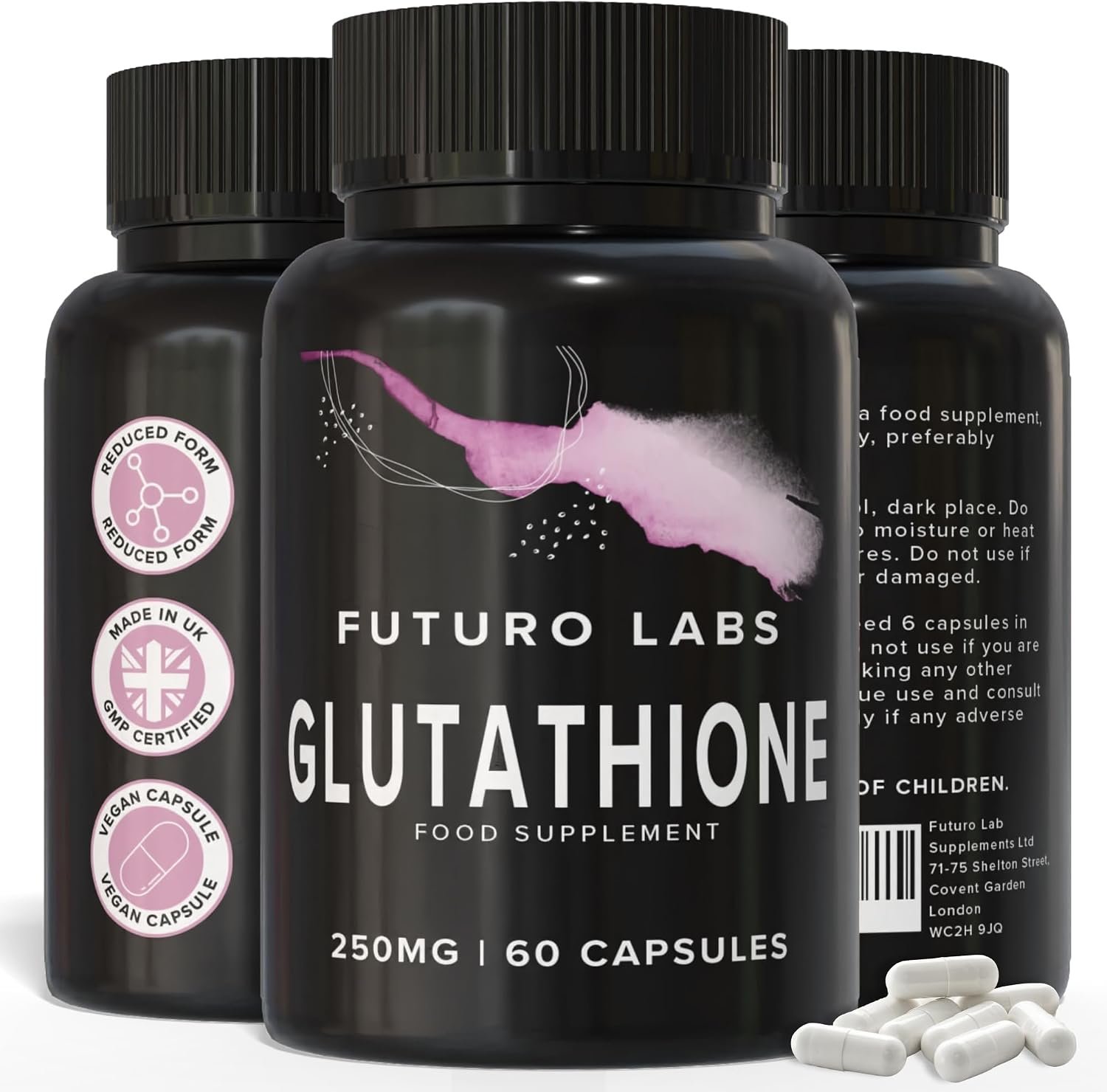
Futuro Labs Glutathione
£22.99 for 30-day supply · 77p per day
Pros
- 500mg reduced glutathione (GSH) per serving — the active form
- UK manufactured under GMP certification
- Single-ingredient, vegan, no fillers
- Independently lab tested — microbiology and heavy metals
- ~77p per day vs £1.20-1.80/day for liposomal formats
Cons
- Capsule format — no liposomal delivery system
- Newer brand versus heritage names like Solgar
Available from: Amazon UK — £22.99
The literacy checklist — then the practice named
Reading any certificate in sixty seconds: an identified laboratory (a name that exists beyond the seller's website); batch linkage (a lot reference matchable to the bottle in your hand — without it the document is a brochure about some batch, once); analytes with numbers (what was measured, the result, the limit — the three columns that make 'pass' auditable); and a date (testing ages like everything else). Fail any two and the testing claim reverts to adjective status — the same two-miss scoring the whole framework runs. The practice this site holds itself to, stated as the worked example: Futuro Labs Glutathione shows independent heavy-metals and microbiology certificates per batch — retrievable, batch-linked, analytes numbered — behind a label whose other four questions pass in the same read: 500mg reduced glutathione stated, single-ingredient, £22.99/30 days at ~77p (the record). What testing never changes, closing honestly: verified purity is not evidence of efficacy — the certificates say the capsule contains what it claims and nothing it shouldn't, while the strategy's case rests where it always did, on the stores trial and its quiet clock (the spine, the timeline). Gates as ever: pregnancy/breastfeeding → medical advice; prescription medication → pharmacist minute (the routing). Lab testing, explained: two panels, four checklist lines, one working word — and adjectives left where they float.
Frequently asked questions
What does 'lab tested' mean on a glutathione label?
By itself, nothing verifiable — it's an adjective until a document appears. The certificates that mean something: heavy-metals panels (lead, arsenic, cadmium, mercury against recognised limits) and microbiology screens (total counts plus named pathogens absent) on the finished batch, from an identified lab, retrievable by you. 'Independent' adds the layer that matters: tested by someone other than the seller.
What should a real certificate show?
The literacy checklist: an identified laboratory, a batch or lot reference you can match to your bottle, the analytes named with results against stated limits (not just 'pass'), and a date. A certificate missing the batch linkage is a brochure; one you can't retrieve at all was never a certificate for you.
Why does testing matter more for fermentation products?
Because the process is biological: yeast-derived material makes finished-batch verification the honest final step rather than a flourish — purity is demonstrated per batch, not assumed from the method. It's why this cluster's framework makes retrievable testing question four of five, and why Futuro Labs Glutathione shows heavy-metals and microbiology certificates per batch.