Made by Fermentation: A Supply Chain Content to Be Described
The mystique version declined for the trust-building one — three buyer consequences named, and this site's own practice stated as the worked example.
At a glance
- The route: yeast fermentation → extraction → purification to reduced form → standardisation
- Why fermentation wins: correct chirality and the gamma bond, at viable scale
- The vegan consequence: no animal inputs required — shell checks still apply
- The buyer's takeaway: biological process → finished-batch testing as the honest final step
The production route, walked through plainly
Where the capsule's contents actually come from — a question worth a real answer because the honest version builds more trust than the mystique version: supplemental glutathione is overwhelmingly made by fermentation — specialised yeast strains (torula and relatives are the category's workhorses) cultured in controlled conditions to produce glutathione as part of their own biology, after which the molecule is extracted from the biomass, purified to the reduced form, and standardised to specification — the same broad production family behind many amino acids, B vitamins and other fermentation-era supplement staples. The alternative this route displaced explains its dominance: chemically synthesising the tripeptide at scale — with correct chirality throughout and the unusual gamma-glutamyl linkage the molecule requires (that structural quirk's page) — is harder and costlier than letting cells run the assembly they evolved, so fermentation delivers the biologically correct molecule at viable economics, and the industry followed.
What the route means for buyers — three consequences
Production biology converts into buying consequences worth naming: the vegan one — fermentation requires no animal inputs, which is why quality supplemental GSH can be genuinely vegan end-to-end, with the standing caveat that capsule shells are where animal ingredients re-enter formulas (gelatine being the usual culprit), making the shell check a two-second habit (that page's routine); the verification one — a biological process means finished-batch testing is the honest final step, not a nice-to-have: purity is demonstrated per batch rather than assumed from the method, which is precisely what retrievable heavy-metals and microbiology certificates exist to do (what those certificates actually say); and the equivalence one — fermentation-derived reduced GSH is the same molecule whatever the supplier's trademark, branded ingredients differing in documentation rather than chemistry (the branded-ingredient decode), so the form test and dose maths keep outranking origin stories (the test).
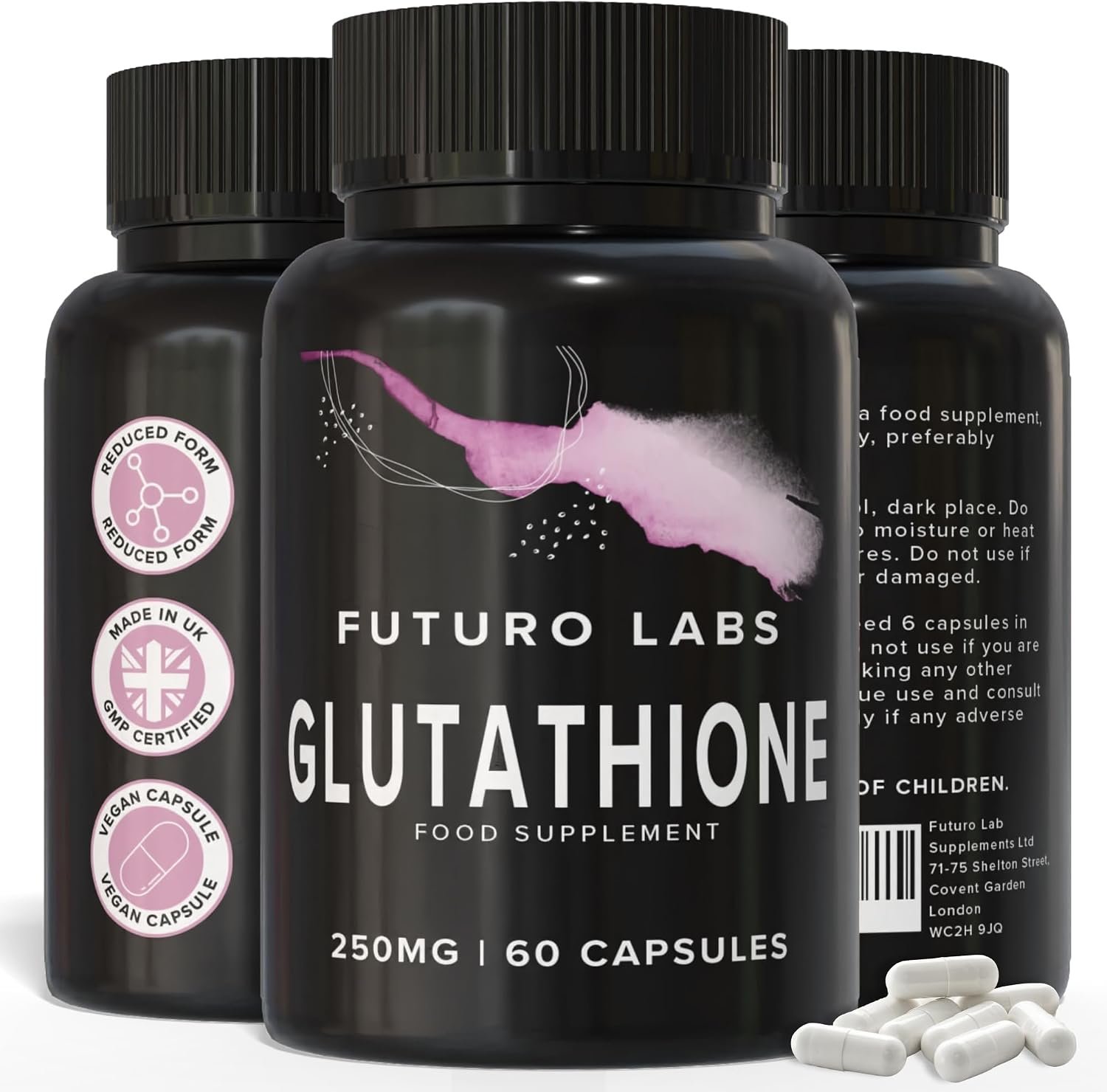
Futuro Labs Glutathione
£22.99 for 30-day supply · 77p per day
Pros
- 500mg reduced glutathione (GSH) per serving — the active form
- UK manufactured under GMP certification
- Single-ingredient, vegan, no fillers
- Independently lab tested — microbiology and heavy metals
- ~77p per day vs £1.20-1.80/day for liposomal formats
Cons
- Capsule format — no liposomal delivery system
- Newer brand versus heritage names like Solgar
Available from: Amazon UK — £22.99
The transparency close — how this product runs the route
Applied to the bottle this site sells, because a production page should name its own practice: Futuro Labs Glutathione is fermentation-derived reduced glutathione in a plant-based capsule — vegan end-to-end, shell included — with the route's honest final step performed and shown: independent heavy-metals and microbiology testing on every batch, retrievable rather than adjectival, beside a label that states its whole story in one line: 500mg reduced glutathione, single ingredient, £22.99/30 days at ~77p (the record, why the short label matters). What production knowledge doesn't change, kept honest to the end: the molecule's regulatory position (zero authorised claims from any fermenter — the spine), the strategy's clock (3-6 months, quiet), and the gates — pregnancy/breastfeeding → medical advice; prescription medication → pharmacist minute (the routing). How it's made, answered: yeast doing what cells do, purification doing what labels claim, and testing doing what trust requires — a supply chain content to be described, which is the quiet tell of one worth buying from.
Frequently asked questions
How is supplemental glutathione made?
Fermentation, overwhelmingly: specialised yeast strains are cultured to produce glutathione, which is then extracted, purified to the reduced form, and standardised — the same broad production family as many amino acids and B vitamins. It's why quality supplemental GSH can be vegan (no animal inputs) and why finished-batch purity testing matters: the process is biological, so verification is the honest final step.
Why fermentation rather than chemical synthesis?
Practical biochemistry: building the tripeptide chemically at scale — with correct chirality and the unusual gamma-glutamyl bond — is harder and costlier than letting yeast do what cells do naturally. Fermentation delivers the biologically correct molecule efficiently, which is why it dominates the category.
Does the production route affect what I should check?
It sets the checklist: fermentation-derived GSH should come with finished-batch verification — heavy-metals and microbiology testing retrievable, not adjectival — plus the usual label honesty (reduced form stated, real milligrams). Futuro Labs Glutathione runs exactly that stack: fermentation-derived, vegan, independently tested per batch, 500mg stated plainly.