Rich Foods: The Famous Lists Are Half a Story
Ordinary good eating as the genuine, undramatic answer — the digestive caveat printed, the factory fed, and the capsule kept as its own separate decision.
At a glance
- Two tiers: preformed-GSH foods (mostly dismantled) vs synthesis inputs (the real lever)
- The inputs list: protein for cysteine · sulfur veg (alliums, brassicas) · selenium for enzymes
- The honest verdict: ordinary good eating feeds the factory — undramatic and true
- The supplement's place: a separate, trial-evidenced strategy — never food's replacement
The two tiers — and why the famous lists mislead
'Glutathione-rich foods' content usually serves one list and skips the caveat that halves it, so this page runs both tiers honestly: tier one, preformed glutathione — foods genuinely containing the molecule (asparagus, avocado and spinach lead the produce tables; fresh meats carry meaningful amounts; levels fall with processing and storage) — attached to the digestive reality the lists omit: dietary GSH is substantially dismantled by the gut's protein-processing machinery, the same structural fact that powered the supplement absorption debate for years (the tripeptide story, how standardised daily dosing answered it at the stores endpoint — an answer that doesn't transfer to variable food amounts); tier two, synthesis inputs — the tier that actually moves the system, because your cells build their own glutathione continuously and the eating pattern that matters is the one feeding that factory (the hierarchy this page details).
The inputs plate — the UK version, specifically
Feeding the factory, itemised for a British kitchen: protein sufficiency first — cysteine is the synthesis rate-limiter and arrives via dietary protein, so meat, fish, eggs, dairy, and for plant-based plates the legume-grain-soya spread (that page's calm nuance) — the single most consequential line here, and the one midlife intake most commonly lets slide; sulfur vegetables second — the alliums (onions, garlic, leeks) and brassicas (broccoli, cabbage, sprouts, cauliflower) supply sulfur compounds the pathway uses, and a UK week that includes both families regularly has covered this tier without a single superfood purchase; selenium third — the glutathione-peroxidase enzyme family is selenium-dependent, Brazil nuts famously dense (a couple covers a day; more isn't better — selenium has an upper ceiling worth respecting), fish and eggs contributing steadily; and riboflavin's quiet role — the recycling enzyme's cofactor, covered by dairy, eggs and fortified cereals (that pairing's mechanism). The verdict this tier earns: ordinary, varied, sufficient eating — undramatic, cheap, and the genuine answer.
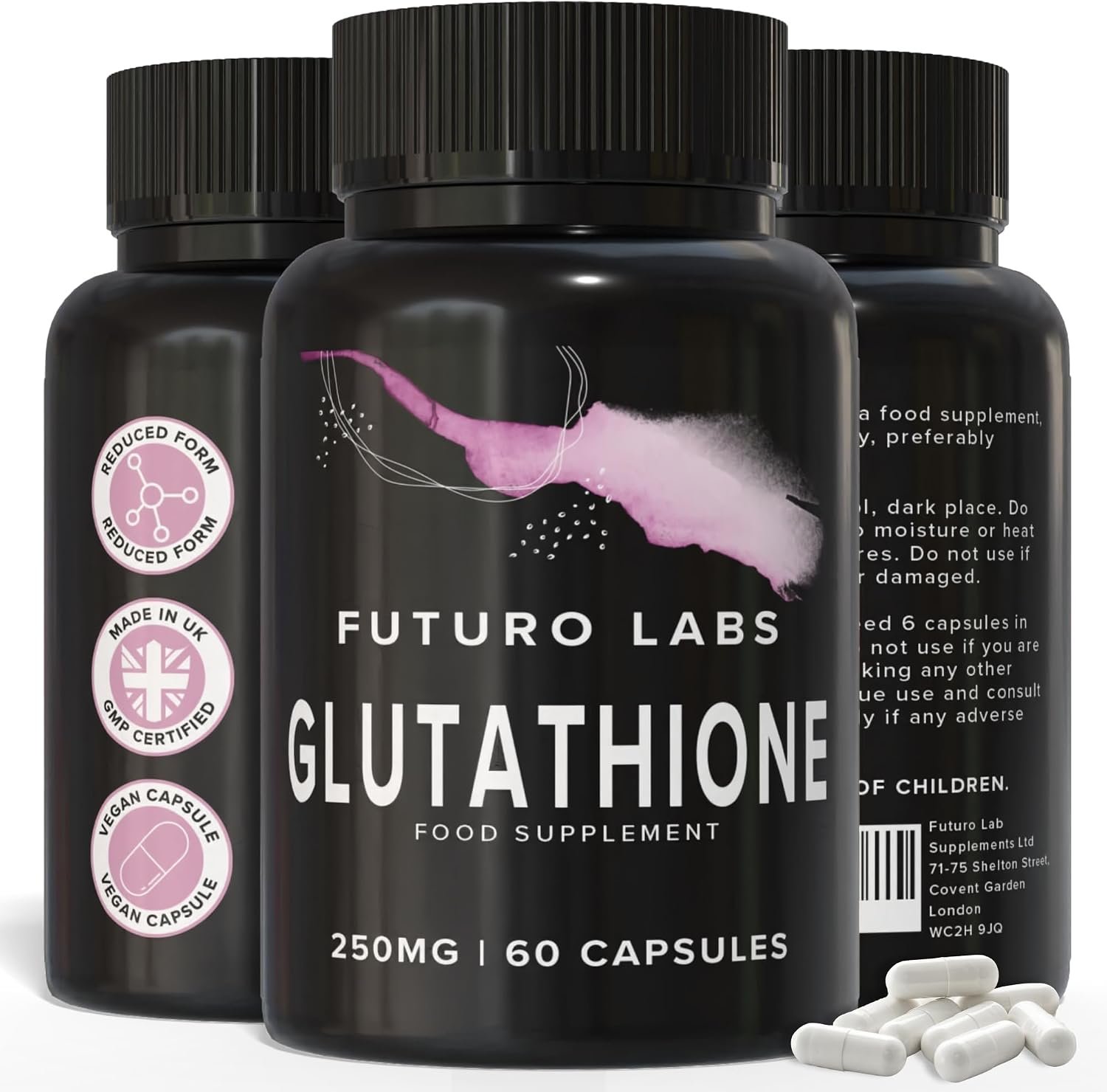
Futuro Labs Glutathione
£22.99 for 30-day supply · 77p per day
Pros
- 500mg reduced glutathione (GSH) per serving — the active form
- UK manufactured under GMP certification
- Single-ingredient, vegan, no fillers
- Independently lab tested — microbiology and heavy metals
- ~77p per day vs £1.20-1.80/day for liposomal formats
Cons
- Capsule format — no liposomal delivery system
- Newer brand versus heritage names like Solgar
Available from: Amazon UK — £22.99
The honest sort — food, supplement, and the marketing between
Keeping the three things distinct, because the marketing blends them deliberately: food's job — supplying the inputs above, first and always, with no capsule substituting for a protein-sufficient, vegetable-regular pattern (the free levers ranked); the supplement's job — a separate strategy with separate evidence: the six-month trial's stores finding came from standardised daily capsule doses, and Futuro Labs Glutathione runs that intervention as tested — 500mg reduced glutathione daily, single-ingredient, independently tested, £22.99/30 days at ~77p (the record, the clock) — added on top for those who want the measured play, never sold as eating's replacement; and the marketing between — 'glutathione superfood' lists implying dietary GSH survives digestion intact, and 'food-based glutathione complexes' pricing produce extracts at supplement premiums: both trading on the tier confusion this page exists to end (the sort). Gates as ever: pregnancy/breastfeeding → medical advice; prescription medication → pharmacist minute (the routing). Glutathione-rich foods, answered honestly: the famous lists are half a story — feed the factory, and let the capsule be its own separate decision.
Frequently asked questions
What foods are rich in glutathione in the UK?
The honest two-tier answer: foods containing preformed glutathione exist (asparagus, avocado, spinach, fresh meats lead most lists) — but dietary GSH is substantially dismantled in digestion, so those lists matter less than the marketing implies. The tier that actually moves your system is the inputs one: protein for cysteine (the rate-limiter), sulfur vegetables (onions, garlic, leeks, broccoli and the brassicas), and selenium (Brazil nuts famously) for the enzymes.
Can you eat your way to higher glutathione?
You feed the factory rather than deliver the product: sufficient varied protein plus regular sulfur vegetables supplies the synthesis machinery — the eating pattern that genuinely supports the system — while 'glutathione superfoods' framing oversells preformed-GSH lists digestion mostly dismantles. Ordinary good eating is the answer; it just isn't a dramatic one.
Where does a supplement fit beside food?
As the separate strategy it is: the six-month trial's stores finding came from standardised daily capsule doses, not from asparagus — a different intervention with its own evidence. Food covers the inputs first and always; Futuro Labs Glutathione adds the measured repletion play on top for those who want it, at 77p.