Glutathione vs Vitamin C: Claims Breadth or Stores Strategy
The axis is regulatory, not biochemical — the test-tube 'more powerful' genre declined, the network colleagues explained, and the vitamin-C-is-enough position respected in print.
At a glance
- The regulatory split: vitamin C holds the authorised sentences · glutathione holds none
- The network truth: colleagues, not duplicates — different positions, one recycling economy
- The honest default: vitamin C at pennies for most intentions
- Glutathione's case: the stores-repletion trial, for the eyes-open strategist at 77p
The comparison's real axis — claims economics
This pairing gets compared constantly and the honest axis is regulatory, not biochemical: vitamin C is one of the most claims-rich nutrients on the register — authorised UK sentences covering contribution to normal immune function, protection of cells from oxidative stress, reduction of tiredness and fatigue, normal collagen formation, and the regeneration of the reduced form of vitamin E — all purchasable for pennies a day from any honest label; glutathione carries zero authorised claims at any dose, this cluster's opening truth (the spine), and sells instead on one specific evidence item: the six-month trial showing daily oral GSH progressively raising body stores (the finding). Framed that way, the choice stops being 'which antioxidant is stronger' — marketing's question — and becomes the buyer-honest one: claims-backed breadth at pennies, or a claims-free stores strategy at 77p?
The biology — colleagues in one recycling economy
The network picture that dissolves the either/or: both molecules donate electrons, but at different posts — vitamin C operates heavily in water-phase and extracellular environments (plasma, the aqueous cell interior) and famously recharges spent vitamin E at lipid membranes; glutathione is the intracellular hub — the most abundant cellular antioxidant, the one the others settle accounts with (spent vitamin C is recycled back to active form through glutathione-dependent pathways), and the co-substrate for the liver's phase-two conjugation work besides (the cycle's page). Colleagues, not duplicates: the system needs both posts staffed, your body arranges that regardless of which you supplement, and 'X is 100 times more powerful than Y' comparisons — the genre's favourite — measure test-tube reactivity, not human outcomes, and belong to the marketing layer this site declines (the pairing page runs the together case).
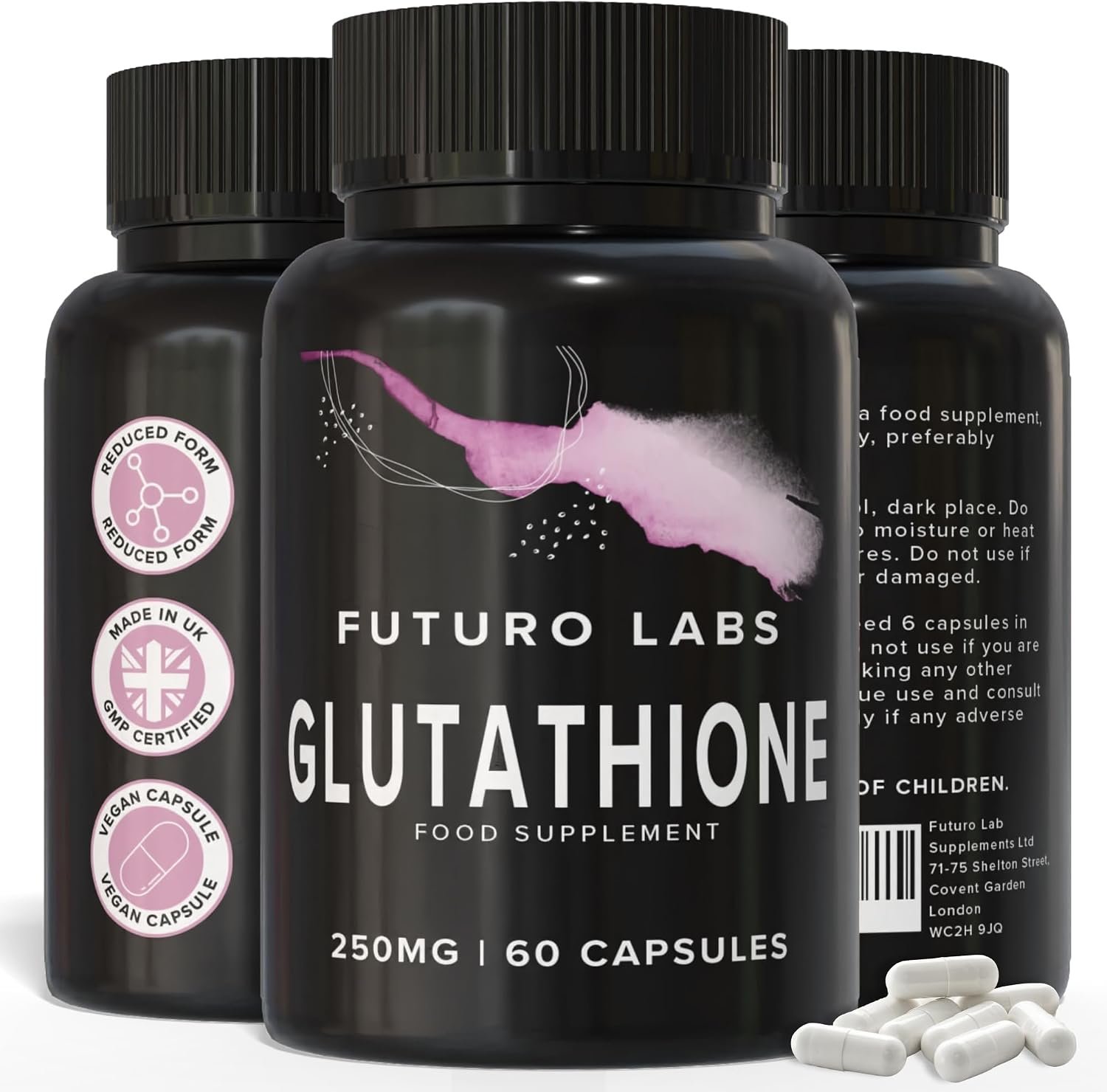
Futuro Labs Glutathione
£22.99 for 30-day supply · 77p per day
Pros
- 500mg reduced glutathione (GSH) per serving — the active form
- UK manufactured under GMP certification
- Single-ingredient, vegan, no fillers
- Independently lab tested — microbiology and heavy metals
- ~77p per day vs £1.20-1.80/day for liposomal formats
Cons
- Capsule format — no liposomal delivery system
- Newer brand versus heritage names like Solgar
Available from: Amazon UK — £22.99
The router — three honest outcomes
Sorted by actual buyer: the claims-first or budget-first reader — vitamin C is your answer and this glutathione cluster says so plainly: authorised sentences, pennies, available everywhere, sufficient for most antioxidant-support intentions; the stores-strategist — glutathione's specific case is yours: the repletion trial, the 3-6 month clock, quiet expected, Futuro Labs Glutathione running the evidence-matched version (500mg reduced GSH, single-ingredient, independently tested, £22.99/30 days at ~77p — the record, the timeline); the both reader — a legitimate stack with its own page (the together case), cheap to run since the C side costs pennies. Constants across all three: the felt-effect refusal (neither molecule is a felt product at label doses — the same honesty), the production inputs ranked above both bottles (that hierarchy), and the gates — pregnancy/breastfeeding → medical advice, prescription medication → pharmacist minute (the file). Two good molecules, one honest axis — and now the choice is actually yours.
Frequently asked questions
Glutathione or vitamin C — which is better?
Different tools entirely: vitamin C is the claims-holder (authorised UK sentences for immune function, protection of cells from oxidative stress, reduction of tiredness and fatigue, collagen formation) at pennies per day; glutathione is the endogenous master molecule with zero authorised claims but the stores-repletion trial behind it at 77p. Budget-first or claims-first buyers take vitamin C; stores-strategy buyers with eyes open take glutathione; many sensibly run both.
Don't they do the same antioxidant job?
They're colleagues, not duplicates: both donate electrons, but they occupy different network positions — vitamin C works heavily in water-phase and extracellular spaces and hands spent molecules back through glutathione's recycling system; glutathione is the intracellular hub that settles those accounts and runs liver conjugation besides. The network needs both roles filled, which the body arranges regardless of which you supplement.
Should I just take vitamin C and skip glutathione?
A defensible position this page respects: vitamin C is cheap, claims-backed and sufficient for most people's antioxidant-support intentions — the honest default. Glutathione earns its 77p for the specific buyer: the stores-repletion strategist comfortable with a claims-free, months-long, quiet play. Neither choice is wrong; pretending they're the same product is.