Sea Moss + Ashwagandha: Coherent Stack, Doubled Ask
The trend content skips the exception; this page leads with it. The stack shape, the staggered protocol, the separate clocks, and the supply half at 17p.
At a glance
- Compatible for most: no direct interaction — supply (iodine) beside signal (adaptogen)
- The doubled gate: both touch the thyroid axis — conditions/medication/pregnancy → ask first, twice over
- Stack discipline: label doses · staggered starts · separate judging clocks
- Neither doubles: one sea moss product, one ashwagandha product, ever
Two different tools — why the pairing makes sense on paper
The combination trends because the tools genuinely don't overlap: sea moss works in supply — dietary iodine contribution inside the UK frame, holding the authorised territory this cluster maps (thyroid function and hormone production, energy-yielding metabolism, cognition, nervous system, skin — the regulated list) — while ashwagandha works in signal: a traditional adaptogen (Withania somnifera, centuries of Ayurvedic use) with a modern research file around stress and sleep that's genuinely more interesting than most botanicals', though still short of any authorised UK claim (the full comparison's honest card). Supply beside signal is a coherent stack shape — a mineral baseline under an evening adaptogen — and for most healthy adults no interaction file complicates it. The reason this page exists is the exception the trend content skips, and it gets its own section because it matters.
The doubled gate — the thyroid axis touched twice
Printed at full weight: both halves of this stack touch the thyroid axis — sea moss directly, as an iodine source feeding hormone production (the frame), and ashwagandha more subtly, with some studies signalling increased thyroid hormone activity — which means the ask-first gate this cluster applies to sea moss alone applies with doubled force to the combination: anyone with any thyroid condition (either direction), anyone on thyroid medication (levothyroxine above all — that page's whole logic), and anyone pregnant or breastfeeding speaks to a GP or pharmacist before starting either product, let alone both. For everyone else, the doubled gate is simply awareness: two axis-adjacent products running together is a reason for label-dose discipline and the staggered-start protocol below, not a reason for alarm — and any new symptoms in the early weeks (racing heart, unusual anxiety, sleep changes beyond the expected) are a pause-and-ask, not a push-through (the warning tier).
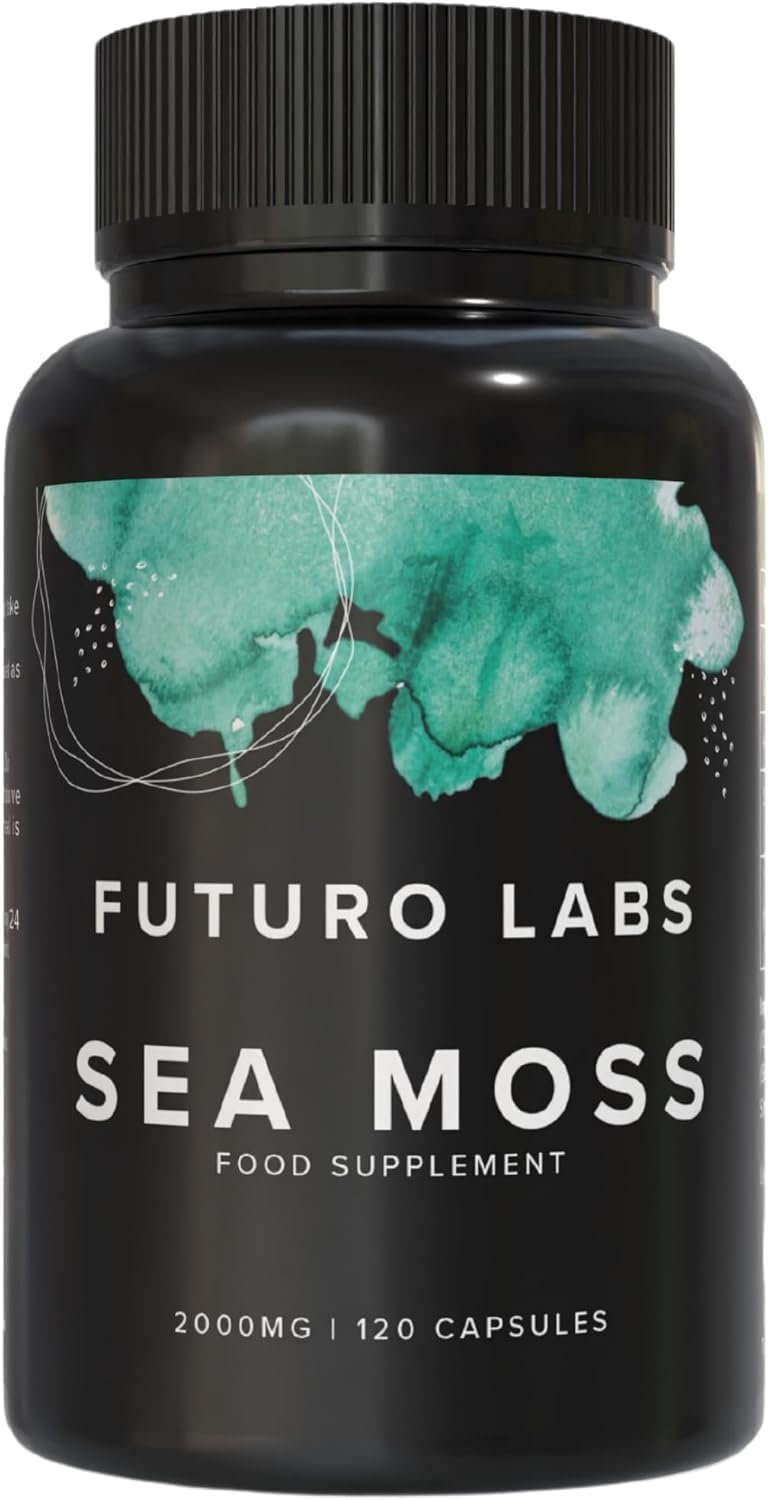
Futuro Labs Sea Moss
£9.99 for 60-day supply (120 capsules) · under 17p per day
Pros
- 2000mg raw sea moss equivalent per serving (15:1 extract)
- Wildcrafted North Atlantic Chondrus crispus — named species and origin
- Independently lab tested — heavy metals and microbiology
- Single-ingredient vegan capsules, UK GMP made
- 60-day supply £9.99 — under 17p/day
Cons
- Iodine content varies by harvest — not for precise-dose needs
- Young brand next to high-street names
Available from: Amazon UK — £9.99
The sensible protocol — and the close
Stack discipline as this cluster always writes it: each product at its own label dose — one sea moss product (Futuro Labs Sea Moss's single serving delivering 2000mg raw Irish sea moss equivalent, £9.99/60 days, keeps the iodine side to one clean line — the ledger logic) and one ashwagandha product, never doubles of either; staggered starts — two weeks apart so week-one digestive settling or sleep shifts attribute to the right bottle (the attribution clock); food as default for the seaweed (the anchor), the ashwagandha per its own label (evening commonly); and separate judging windows — 8-12 weeks for the mineral line, the adaptogen on its own product's guidance. The close this pairing deserves: a coherent stack for the healthy adult who clears the gate, a professional conversation first for anyone the gate names — and Futuro Labs Sea Moss holding the supply half at 17p either way, sold as supply and nothing louder (the record, the framework).
Frequently asked questions
Can you take sea moss and ashwagandha together?
Generally yes for most healthy adults — no direct interaction file exists — but this pairing earns a doubled ask-first: both touch the thyroid axis (sea moss via iodine supply, ashwagandha via signals in some studies of increased thyroid hormone activity), so anyone with any thyroid condition, on thyroid medication, or pregnant should speak to a GP or pharmacist before combining them — a gate this cluster applies to each alone and applies twice here.
What does each one actually do?
Different jobs entirely: sea moss supplies — iodine's authorised territory (thyroid function, metabolism, cognition, nerves, skin) as dietary contribution; ashwagandha signals — a traditional adaptogen with a modern research file around stress and sleep that's genuinely interesting but carries no authorised UK claims. Supply versus signal: they don't overlap, which is why they can coexist.
How should I combine them sensibly?
The standard stack discipline: each at its own label dose (one sea moss product, one ashwagandha product — never doubles of either), staggered starts two weeks apart so attribution stays possible, with food as defaults suggest, and judged on separate clocks — sea moss over 8-12 weeks, ashwagandha per its own product guidance. And the doubled gate above before anything opens.