Detox Pathways: A Job Description, Not a Category
The elegant biology given its honest telling — then the conversion refused: no idle capacity, no enhancement trials, and the three boring supports ranked above every kit.
At a glance
- The real chemistry: two-phase liver processing — GSH conjugation as a major phase-two route
- The famous proof: the paracetamol-antidote story runs on exactly this pathway
- The product truth: no trial shows supplementation enhancing detox outcomes — capacity isn't idle
- 'Detox': an organ's job description, sold back as a category
The two phases — the textbook chapter the marketing strip-mines
The biology deserves its honest telling because it's genuinely elegant: your liver processes compounds — drugs, metabolic byproducts, ingested chemistry of every kind — through a continuous two-phase system: phase one transforms molecules (oxidation, reduction, hydrolysis — often creating intermediates more reactive than what arrived), and phase two conjugates them — attaching water-soluble handles that route the results toward excretion — with glutathione conjugation standing as one of phase two's major pathways: the tripeptide's thiol grabs reactive intermediates and escorts them out (the business end doing this exact work, alongside its redox duties). The chemistry's famous credential, told properly: paracetamol overdose overwhelms precisely this pathway — the drug's reactive intermediate outpaces glutathione supply — and the hospital antidote works by restoring it: real, dramatic, clinical proof that the pathway matters (and the fact NAC's entire supplement pitch borrows — kept in its lane there).
From chapter to checkout — the conversion this page refuses
The marketing move, named precisely: take the true chapter above, print 'supports the body's natural detoxification pathways' on a label, and let the reader infer that supplementation enhances the process — an inference no trial supports: phase-two capacity in healthy adults isn't sitting idle awaiting a capsule, no study shows oral glutathione improving detox outcomes in ordinary people, and the pathway's clinical drama (overdose medicine, at hospital doses, in emergencies) doesn't transfer to Tuesday wellness any more than IV contexts transfer to capsules (that firewall, the liver aisle's parallel audit). What genuinely supports the system, ranked as ever: alcohol kept moderate — the pathway's heaviest routine customer (the acetaldehyde file); protein sufficiency — supplying the conjugation chemistry's raw materials (the hierarchy); and not adding unnecessary compound load — the support the supplement aisle never mentions about itself.
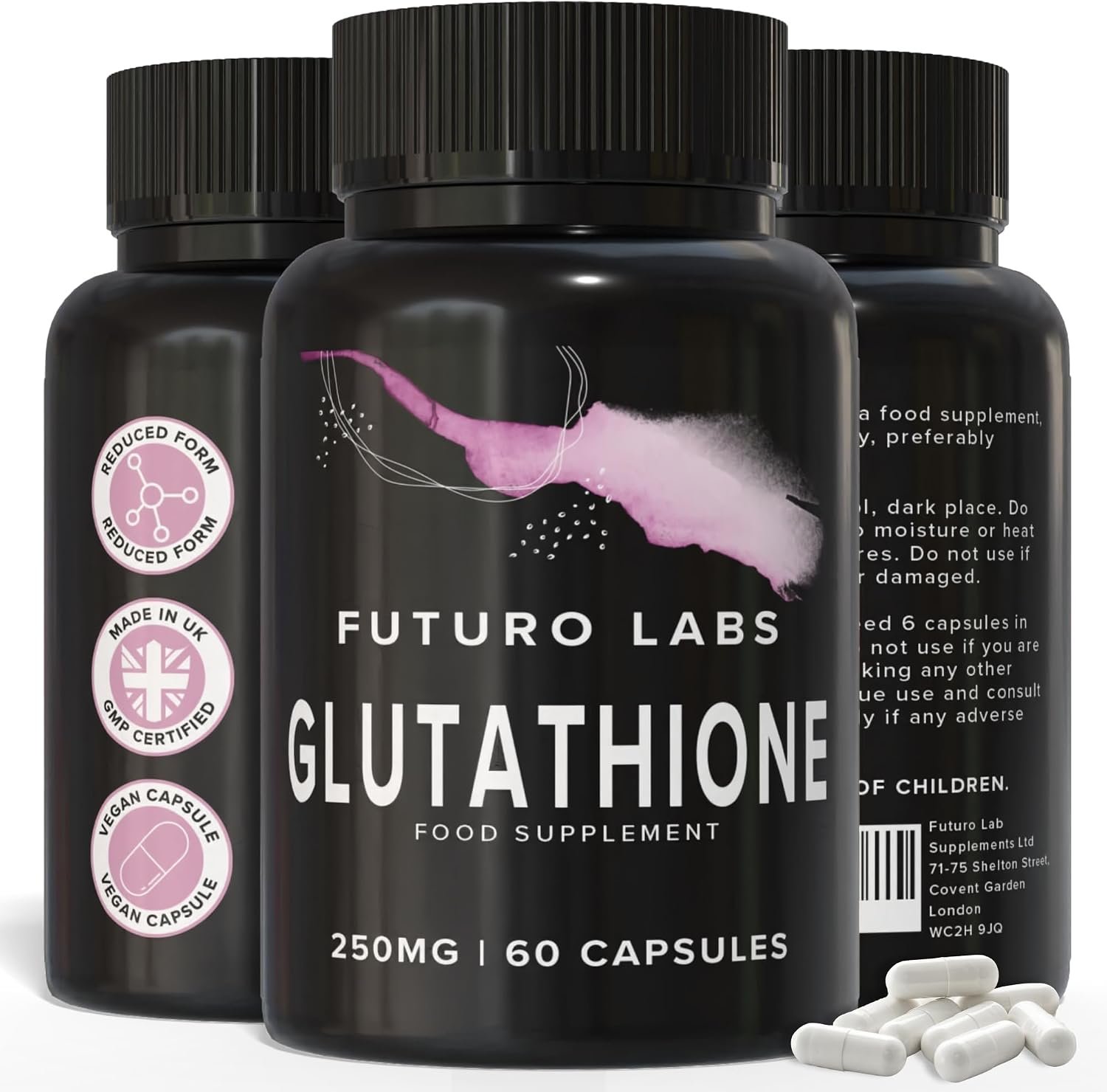
Futuro Labs Glutathione
£22.99 for 30-day supply · 77p per day
Pros
- 500mg reduced glutathione (GSH) per serving — the active form
- UK manufactured under GMP certification
- Single-ingredient, vegan, no fillers
- Independently lab tested — microbiology and heavy metals
- ~77p per day vs £1.20-1.80/day for liposomal formats
Cons
- Capsule format — no liposomal delivery system
- Newer brand versus heritage names like Solgar
Available from: Amazon UK — £22.99
The honest residue — and where the capsule actually stands
What survives the audit, kept distinct: the biology — real, always-on, worth understanding (this page's whole first half); the supports — the three boring inputs above, free and evidenced; medicine's actual detox contexts — clinical toxicology, dependency treatment, occupational exposure: serious territory with real protocols, none of it adjacent to teas, kits or capsule 'cleanses'; and the supplement's honest position — Futuro Labs Glutathione is sold on this cluster's one evidence item, stores repletion (the trial), and explicitly not on pathway-enhancement promises: 500mg reduced glutathione daily, single-ingredient, independently tested, £22.99/30 days at ~77p, quiet on the 3-6 month clock (the record, the timeline) — a page like this being exactly why the distinction stays printable. Routing where it matters: anything suggesting the system is actually struggling — persistent symptoms, medication concerns, the jaundice-adjacent signs the liver page lists — is GP territory promptly; gates always — pregnancy/breastfeeding → medical advice; prescription medication → pharmacist minute (the routing). Detox pathways, explained: two phases, one famous antidote, zero idle capacity — and a job description your liver never posted for hire.
Frequently asked questions
What are the detox pathways glutathione is involved in?
The real biology: your liver runs continuous two-phase processing — phase one transforms compounds (often into reactive intermediates), phase two conjugates them for excretion — and glutathione conjugation is one of phase two's major routes, the chemistry behind its paracetamol-antidote fame. That's core, always-on physiology: 'detox' as an organ's job description, not a product category.
Does taking glutathione boost detoxification?
No trial shows supplementation enhancing detox outcomes in healthy adults — the pathways are real, the product promise isn't: your phase-two capacity isn't sitting idle awaiting a capsule, and 'supports detox pathways' listings are converting a textbook chapter into a checkout. The system's genuine supports are the boring ones: moderate alcohol, adequate protein, no unnecessary compound load.
So is all detox marketing false?
The category, as sold, describes nothing your body needs bought: no supplement flushes, cleanses or resets an organ that never stops working. What's real underneath: the biology this page explains, the handful of inputs that support it, and medicine's actual detox contexts (clinical, serious, nothing to do with teas).