Precursors: The Factory's Already Fed by Dinner
Blend labels made legible — padded lines exposed, whey's reputation explained, and the two doors priced by their separate evidence with the one-door default held.
At a glance
- The materials: cysteine (rate-limiter) · glycine · glutamate — plus selenium and B2 in support
- The food truth: protein sufficiency is the precursor strategy — whey's reputation rests on it
- The doors: feed the factory (precursors) vs deliver the product (oral GSH) — separately evidenced
- The default: one door, chosen knowingly — never both by reflex
The parts list — what the assembly line actually needs
The synthesis line this cluster keeps referencing (glutamate + cysteine + glycine, two enzyme steps) has a parts list worth knowing precisely, because the precursor market prices its members very differently: cysteine — the rate-limiter, the residue whose availability sets the factory's throughput, supplied by dietary protein's sulfur amino acids and supplemented as NAC (stabilised cysteine delivery — its honest card); glycine — abundant in ordinary diets and interestingly dense in collagen peptides (a fair footnote for readers already on that stack), rarely limiting though occasionally co-marketed as if it were; glutamate — effectively never the bottleneck on any adequate diet, whatever the blend labels imply; and the supporting cast that isn't structurally part of the chain but keeps the system turning — selenium for the glutathione-peroxidase enzyme family, riboflavin for the recycling step's cofactor (that mechanism). Parts sorted, the market's blends become legible: products stacking glycine and glutamate beside token cysteine have padded the one line that mattered.
The food-first precursor strategy — already running
The honest headline of any precursor page: most readers are already running the strategy, because dietary protein is precursor supplementation at food prices — complete proteins supply the sulfur amino acids continuously, whey's supplement-era reputation partly rests on exactly its cysteine density, and a protein-sufficient week has fed the factory before any branded product enters the conversation (the inputs plate, where protein ranks and why). Which sizes the branded-precursor market correctly: NAC and its kin serve the gap cases — intakes genuinely short of sufficiency, or the deliberate precursor-logic buyer who prefers that door's mechanism story — while for everyone else the tier is already covered by dinner, and 'glutathione precursor complex' pricing is charging supplement margins for what the weekly shop supplies (the sort, applied to raw materials).
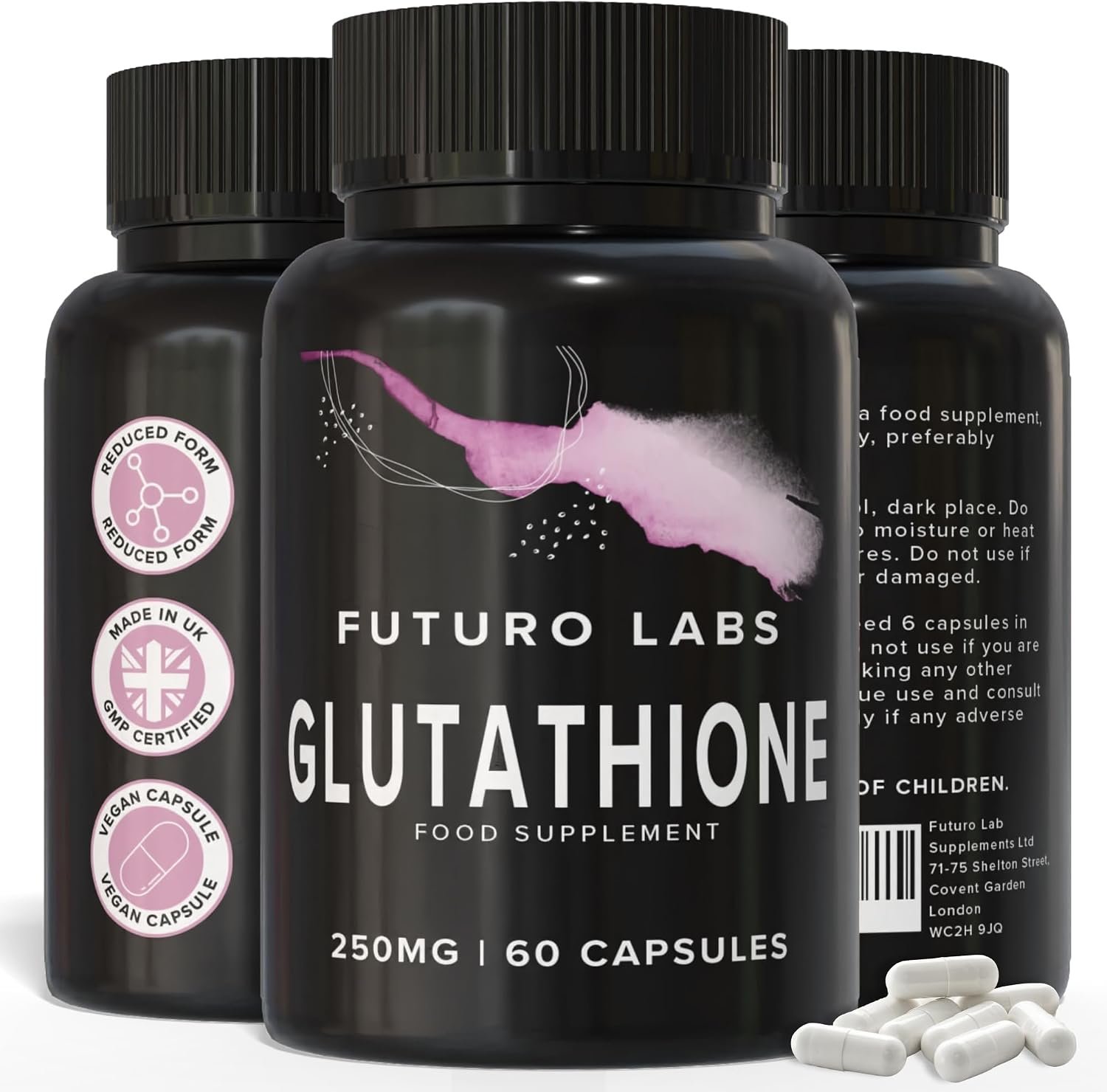
Futuro Labs Glutathione
£22.99 for 30-day supply · 77p per day
Pros
- 500mg reduced glutathione (GSH) per serving — the active form
- UK manufactured under GMP certification
- Single-ingredient, vegan, no fillers
- Independently lab tested — microbiology and heavy metals
- ~77p per day vs £1.20-1.80/day for liposomal formats
Cons
- Capsule format — no liposomal delivery system
- Newer brand versus heritage names like Solgar
Available from: Amazon UK — £22.99
The doors compared — and the one-door default
The strategic fork this page completes: feed the factory — precursor supplementation bets on your assembly line converting inputs to stores: mechanistically sound (the line is real and rate-limited), evidenced for healthy adults mostly by inference (cysteine sufficiency reasoning plus scattered studies), NAC being the door's flagship with its clinical pedigree kept honestly in its lane (the dose-level comparison); deliver the product — oral GSH supplies the finished tripeptide, the route the six-month stores trial tested directly and found repleting (that history), which is Futuro Labs Glutathione's whole design: 500mg reduced glutathione daily, single-ingredient, independently tested, £22.99/30 days at ~77p (the record). The default this cluster holds at every fork: one door, chosen knowingly — evidence-first buyers take the measured route, precursor-logic buyers take theirs with the inferential gap owned, and running both is redundancy with a second receipt (that verdict). Constants as ever: the 3-6 month clock behind either door (the timeline), gates always — pregnancy/breastfeeding → medical advice; prescription medication → pharmacist minute (the routing). Precursors, explained: a parts list, a factory already fed by dinner, and two doors that never needed opening together.
Frequently asked questions
What are glutathione precursors?
The raw materials your synthesis line runs on: cysteine above all (the rate-limiter — supplied by protein, supplemented as NAC), plus glycine and glutamate (rarely limiting on adequate diets), with supporting cast (selenium for the enzyme family, B2 for recycling). Precursor supplementation is the feed-the-factory strategy; finished-molecule GSH is the deliver-the-product one — two doors this cluster prices by their separate evidence.
Is whey protein a glutathione precursor?
Effectively, and honestly: whey is cysteine-rich (its supplement-era reputation partly rests on exactly this), so sufficient whey — or any complete protein pattern — feeds the same pathway NAC targets, at food prices. The sort: protein sufficiency is the precursor strategy most people should run first; branded precursor products are for gaps that varied eating hasn't already closed.
Precursors or finished glutathione — which door?
The cluster's standing comparison: precursors bet on your assembly line (mechanistically sound, evidenced mostly by inference for healthy adults); oral GSH delivers the finished chain the six-month stores trial actually tested. Evidence-first buyers take the measured door; precursor-logic buyers choose knowingly — and nobody needs both doors at once.