GSH vs ALA: Posts, Not Rankings
One genuine axis under the marketing: how each route's glutathione story is evidenced — inferred versus measured. Clinical-context readers routed to GPs, the thin-stack default held.
At a glance
- ALA's identity: the both-phases recycler — water and lipid, with mitochondrial chemistry besides
- The shared truth: zero authorised claims on either side — evidence items decide
- The evidence split: ALA infers the glutathione destination · oral GSH measured arriving
- Together: tolerated, thin — the pick-one default holds
ALA's honest card — the recycler with range
Alpha-lipoic acid earns a fair card before any comparison: a molecule your body also makes (in small amounts, for mitochondrial enzyme chemistry), notable among antioxidant-adjacent compounds for working in both water and lipid phases — the amphipathic range most colleagues lack — and appearing throughout the mechanism literature as a network recycler: participating in regenerating vitamins C and E and in pathways that restore glutathione pools and supply cysteine. Its research file concentrates where this page won't overreach: specific clinical contexts (notably nerve-related endpoints in diabetic populations, studied at prescription-adjacent doses in some countries) rather than general-wellness outcomes in healthy adults — and its UK regulatory position matches glutathione's exactly: zero authorised claims at any dose, which puts both molecules on the same honest footing this cluster keeps insisting on: role and evidence, never promises (the spine).
The comparison's real content — inference versus measurement
Strip the 'universal antioxidant versus master antioxidant' marketing and one genuine axis remains: how each route's glutathione story is evidenced. ALA's is inferential-plus-signals — the regeneration mechanisms are real literature, and some studies observe raised glutathione markers with ALA supplementation: supportive, coherent, indirect; oral GSH's is direct — the six-month trial measured body stores rising on the supplemented molecule itself: the category's one on-point repletion finding (that trial, its absorption context). Neither file licenses felt-effect promises, both molecules run quiet at label doses, and the test-tube potency genre ('ALA regenerates everything!' / 'glutathione is the master!') stays declined in both directions — network biology assigns posts, not rankings (the economy those posts serve, the same sorting applied to C).
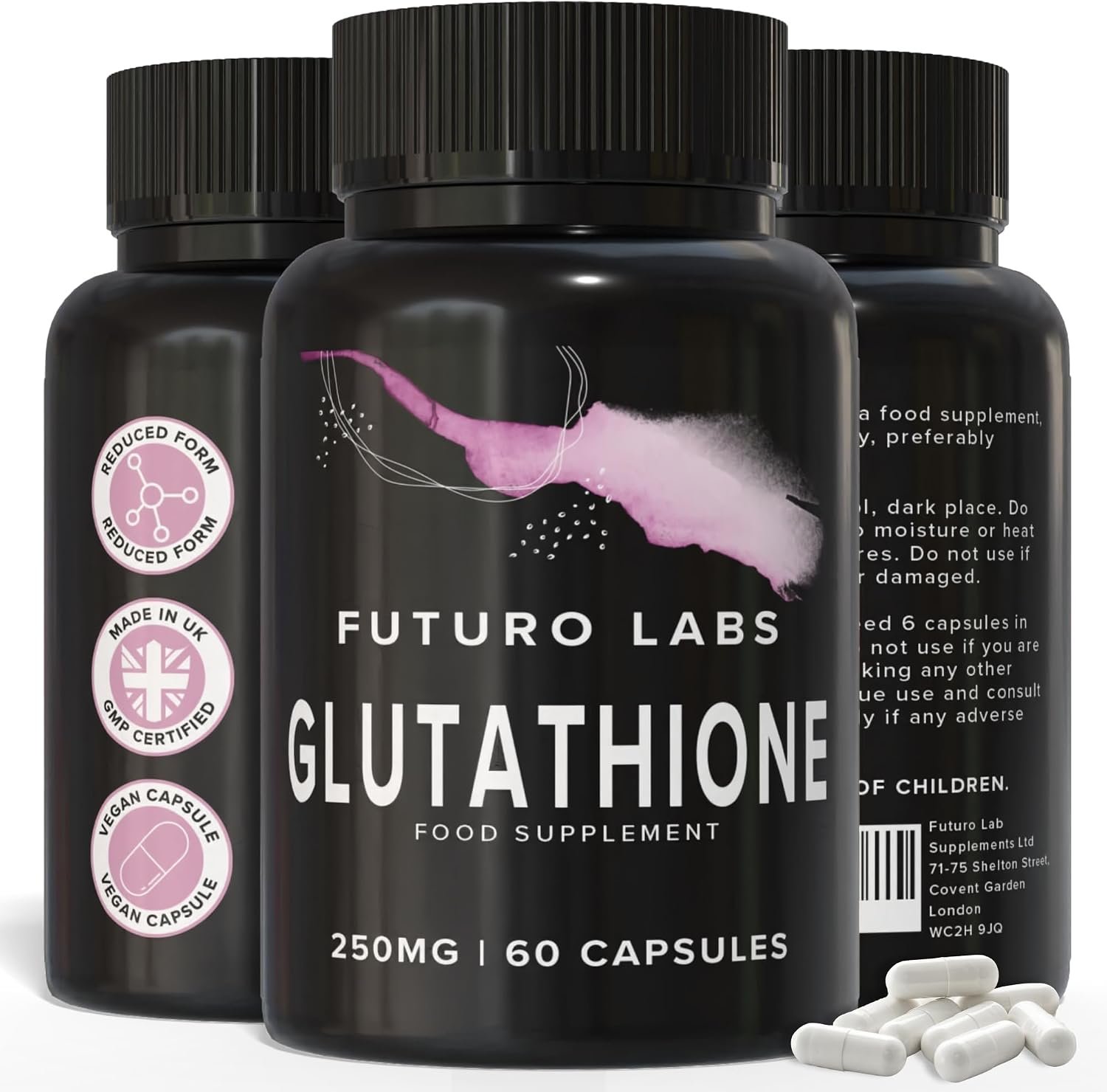
Futuro Labs Glutathione
£22.99 for 30-day supply · 77p per day
Pros
- 500mg reduced glutathione (GSH) per serving — the active form
- UK manufactured under GMP certification
- Single-ingredient, vegan, no fillers
- Independently lab tested — microbiology and heavy metals
- ~77p per day vs £1.20-1.80/day for liposomal formats
Cons
- Capsule format — no liposomal delivery system
- Newer brand versus heritage names like Solgar
Available from: Amazon UK — £22.99
The router — and the multi-antioxidant honesty
Sorted by purpose: the general stores-strategist — oral GSH's direct trial is the closest evidence to your intention, and Futuro Labs Glutathione runs it as tested: 500mg reduced GSH daily, single-ingredient vegan capsules, independent heavy-metals and microbiology testing, £22.99/30 days at ~77p on the 3-6 month clock (the timeline, the record); the clinical-context reader — anyone drawn to ALA by nerve-related or metabolic literature is reading about managed medical territory: that conversation belongs with a GP, not a supplement page, full stop; the together question — no interaction concern and the network tolerates it, but the thin-stack economics this cluster applied to NAC apply identically here (overlapping destination, separate evidence, doubled cost, wrecked attribution — that verdict), with the one honest exception: a knowing multi-antioxidant protocol run deliberately, budgeted, and reviewed like everything else at 12 weeks (the review). Constants unchanged: production inputs above every bottle (the hierarchy), gates always — pregnancy/breastfeeding → medical advice, prescription medication → pharmacist minute (the routing) — and the close: two claim-free molecules, one measured route, and a comparison finally about evidence instead of adjectives.
Frequently asked questions
Glutathione or alpha-lipoic acid — which should I take?
Two network molecules with different portfolios: ALA is the amphipathic recycler — working in both water and lipid phases, participating in regenerating other antioxidants (glutathione's pool included in the mechanism literature) and in mitochondrial energy chemistry — with a research file concentrated in specific clinical contexts and no authorised UK claims; glutathione is the intracellular hub with its direct stores trial. Neither holds claims; the choice follows which evidence item speaks to your purpose.
Does ALA raise glutathione levels?
The mechanism literature supports it — ALA participates in pathways that regenerate glutathione and supply cysteine — and some studies observe raised glutathione markers with ALA. Honest sizing: supportive mechanism-plus-signals, versus oral GSH's direct six-month repletion trial: one route infers the destination, the other measured arriving at it.
Can you take ALA and glutathione together?
No interaction concern, and the network logic tolerates it — but the same thin-stack economics apply as with NAC: overlapping destinations, separate evidence bases, doubled cost, muddied attribution. Default remains pick-one-run-properly; the exception is a knowing buyer running a deliberate multi-antioxidant protocol with the budget and patience it implies.