GSH vs Astaxanthin: Multipliers Aren't a Currency
The signature move named without malice, the human-trial currency enforced both directions, and each purchase sold only as itself.
At a glance
- Astaxanthin's card: lipid-phase carotenoid, glassware-famous, human-file modest, zero claims
- The signature move declined: '6000× stronger' measures test tubes, not outcomes
- GSH's card: the hub with a direct human stores trial
- Together: permitted, separately-owned rationales — pick-one default holds
Astaxanthin's honest card — the glassware celebrity
Astaxanthin gets the fair read its pink-hued marketing rarely does: a genuinely interesting molecule — the carotenoid that colours salmon and flamingos, sourced for supplements mainly from Haematococcus algae, lipid-phase resident with structural features that make it a striking performer in laboratory antioxidant assays — attached to a human evidence file that runs modest and scattered: small trials across skin-parameter, eye-fatigue and exercise endpoints with mixed replication, no large confirmatory programme, and zero authorised UK claims at any dose. The aisle's signature move, named for what it is: the potency multiplier ('6,000 times stronger than vitamin C!') describes singlet-oxygen quenching in glassware — a real chemistry measurement with no established translation to human outcomes at supplement doses — and it's the marketing layer's favourite unit precisely because it sounds like efficacy while measuring test tubes (the three-layer sort this cluster runs on everything, its own molecule included).
The comparison — currencies, not multipliers
Priced in the currency this site actually accepts — human trials — the comparison resolves cleanly: glutathione's file holds a direct repletion finding (the six-month trial: body stores rising progressively on daily oral GSH — the route's evidence), narrow but measured; astaxanthin's holds scattered small-trial signals without a confirmatory anchor — broader aspirations, thinner confirmation. Network position adds the usual dissolution: lipid-phase carotenoid and water-phase hub occupy different posts in an economy that runs both regardless (the cycle, the same posts logic at the E comparison), so 'which is stronger' was never a human question — and the honest sort becomes the familiar one: a measured stores strategy versus a speculative small-file bet, each purchasable knowingly, neither purchasable as the other.
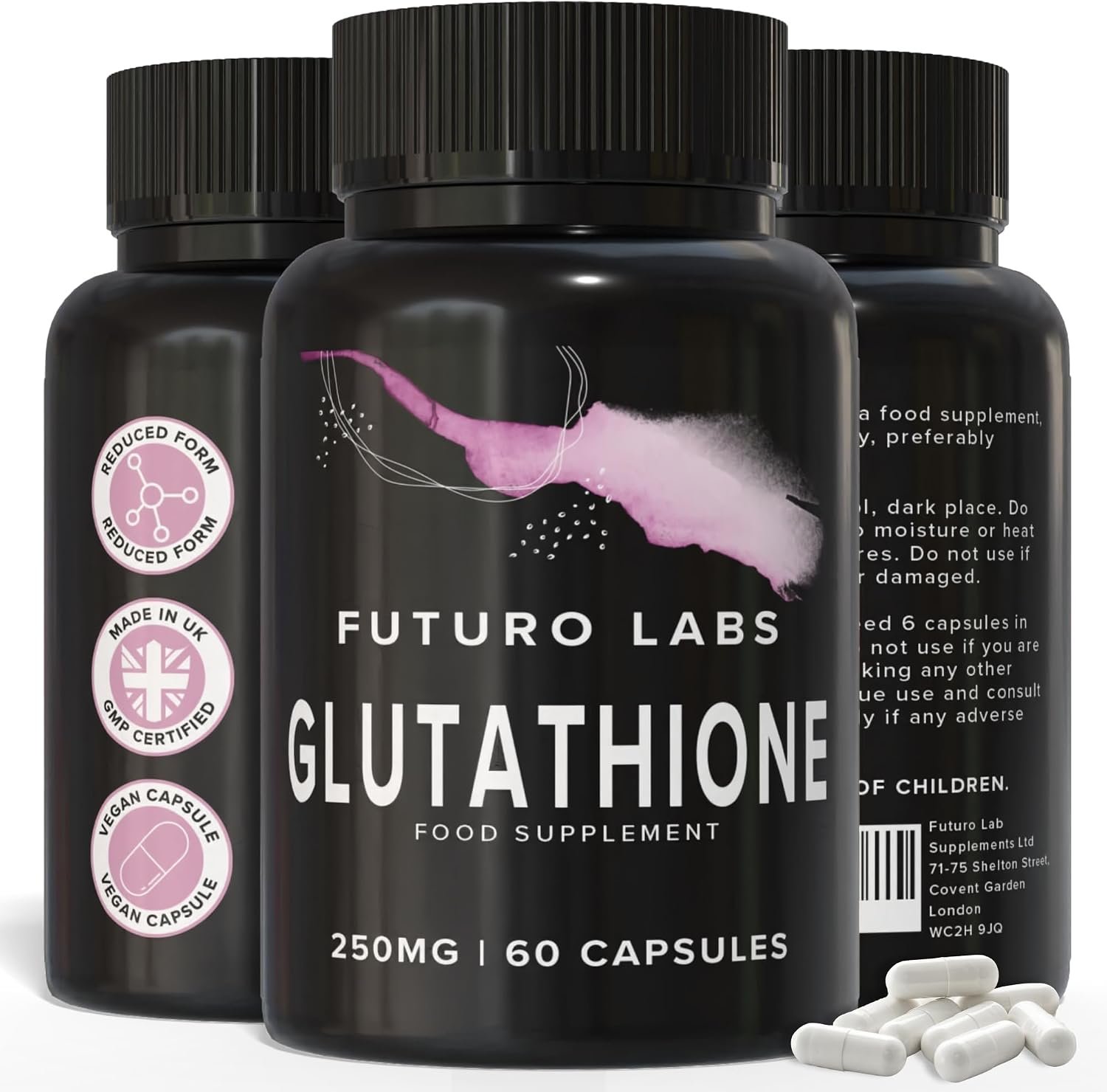
Futuro Labs Glutathione
£22.99 for 30-day supply · 77p per day
Pros
- 500mg reduced glutathione (GSH) per serving — the active form
- UK manufactured under GMP certification
- Single-ingredient, vegan, no fillers
- Independently lab tested — microbiology and heavy metals
- ~77p per day vs £1.20-1.80/day for liposomal formats
Cons
- Capsule format — no liposomal delivery system
- Newer brand versus heritage names like Solgar
Available from: Amazon UK — £22.99
The router — and the multiplier left in the glassware
Sorted by buyer: the evidence-first reader — the direct human finding decides, and Futuro Labs Glutathione runs it as tested: 500mg reduced glutathione daily, single-ingredient vegan, independent heavy-metals and microbiology testing, £22.99/30 days at ~77p on the 3-6 month clock (the record, the timeline); the astaxanthin-curious — a knowing small-file bet at typical £15-30/month tickets is defensible speculation, best taken with the multiplier left in the glassware and expectations sized to the actual trials; the stack builder — no interaction concern at label doses, two separately-owned rationales, staggered starts, and the exercise-timing caveat travelling with any multi-antioxidant protocol (that debate). Constants as ever: inputs above bottles (the hierarchy), quiet adequacy network-wide, gates always — pregnancy/breastfeeding → medical advice; prescription medication → pharmacist minute (the routing). The flamingo pigment and the hub, filed: one famous in glassware, one measured in humans — and multipliers were never a currency here.
Frequently asked questions
Glutathione or astaxanthin — which should I take?
Two different purchases: astaxanthin is the algae-derived carotenoid — lipid-phase, striking in test-tube potency demos, with a modest human file scattered across skin, eye and exercise endpoints and no authorised UK claims; glutathione is the endogenous hub with its direct stores trial. The potency-ranking genre ('6000× vitamin C!') is the astaxanthin aisle's signature move and exactly the layer this comparison declines.
Is astaxanthin's '6000 times stronger' claim real?
It describes test-tube singlet-oxygen quenching — a real laboratory measurement with no established translation to human outcomes at supplement doses. Potency-in-glassware is the marketing layer's favourite unit precisely because it sounds like efficacy while measuring chemistry; human trials, not multipliers, are the currency this site prices in.
Can you take both together?
No interaction concern at label doses — different phases, different sources — but the same stack economics as every pairing here: two claim-free molecules, two separate rationales to own, staggered starts if you do, and the pick-one default for everyone not deliberately running a multi-antioxidant protocol with its budget and its exercise-timing caveats.