GSH vs Vitamin E: One Economy, Three Posts
The rare comparison target with a real claim AND a real caution — both printed, food-first E defaulted, and the network's tidy relay explained.
At a glance
- The posts: E = lipid membranes (with a real authorised claim) · GSH = the intracellular hub
- The paperwork: E holds the oxidative-stress sentence at pennies · GSH holds the stores trial at 77p
- The E caution: high-dose supplementation's mixed history — food-first is the honest default
- The relay: E → C → GSH recycling — one economy, three posts
Vitamin E's honest card — resident, claimant, cautionary tale
Vitamin E earns a fuller card than most comparison targets because all three of its facets matter: the resident — E is the lipid-phase specialist, embedded in cell membranes where it intercepts oxidative chains that water-phase molecules can't reach, a genuinely distinct post in the network; the claimant — E holds an authorised UK sentence (contribution to the protection of cells from oxidative stress), real purchasable register language at pennies from ordinary labels, which puts it on the claims-holding shelf beside vitamin C (that comparison's axis); and the cautionary tale — high-dose E supplementation carries one of the supplement world's genuinely mixed research histories, including large trials with unfavourable outcome signals, making food-first E (nuts, seeds, oils cover most diets) the honest default and megadose E bottles a shelf this site routes past — with the sports-relevant footnote that E is half the C/E pairing behind the exercise-adaptation blunting literature (that debate's page).
The comparison — posts, paperwork, and the relay that dissolves it
Set against glutathione, the honest axes: post — E patrols membranes, glutathione hubs the water phase and the liver's conjugation chemistry (the cycle): colleagues at different stations, not rivals for one; paperwork — E's authorised sentence versus glutathione's zero claims but direct evidence (the six-month stores trial, the category's one on-point repletion finding — that file): claims-backed maintenance at pennies versus a claims-free measured strategy at 77p, the same economics the C page maps; and the relay that mostly dissolves the versus — biochemistry's tidy chain: E takes the membrane hit, spent E is regenerated by C, and C is restored through glutathione-dependent recycling — one electron economy the body staffs at all three posts regardless of your basket, which is why test-tube potency rankings between them stay declined here as everywhere (the same sorting).
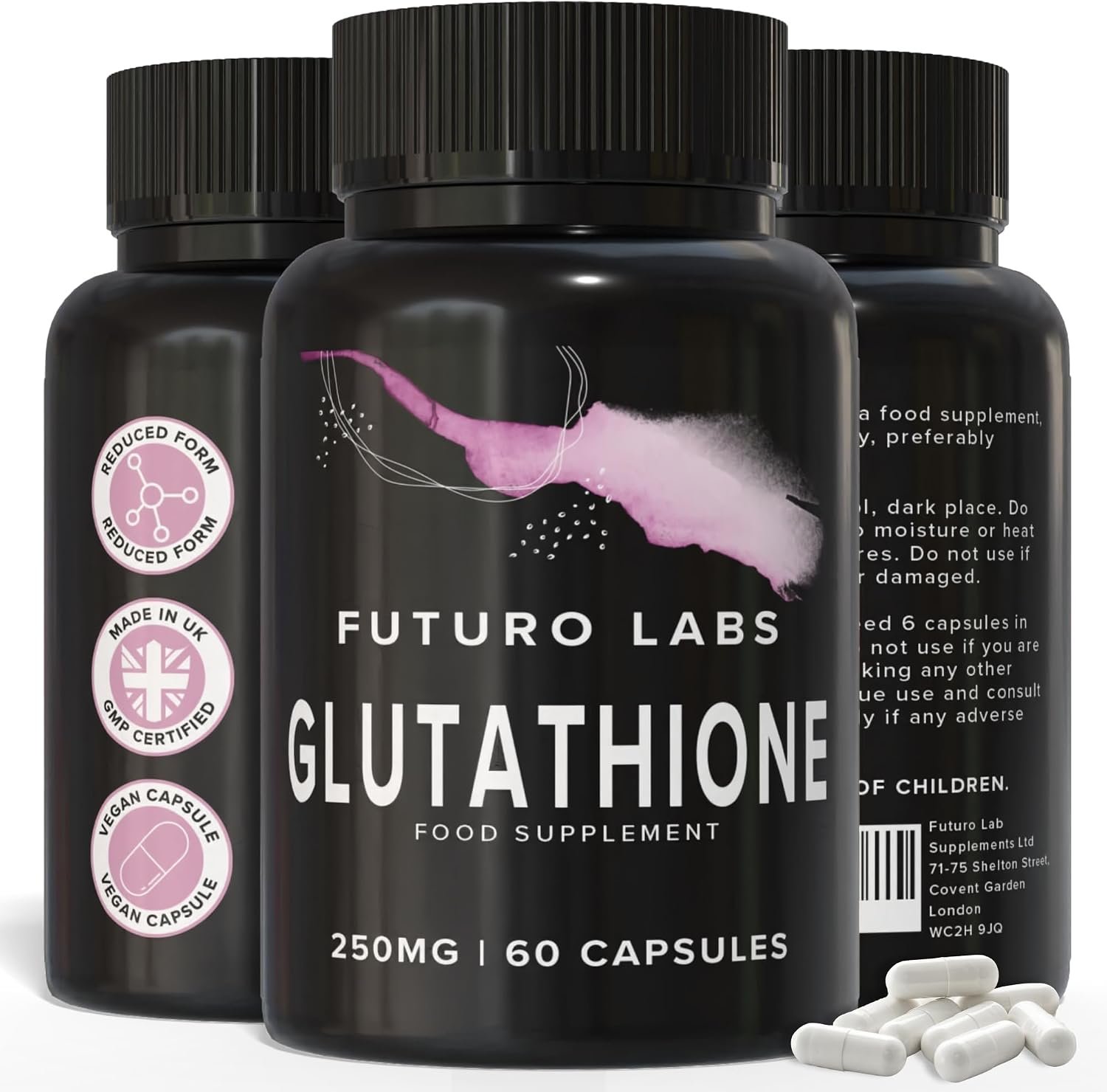
Futuro Labs Glutathione
£22.99 for 30-day supply · 77p per day
Pros
- 500mg reduced glutathione (GSH) per serving — the active form
- UK manufactured under GMP certification
- Single-ingredient, vegan, no fillers
- Independently lab tested — microbiology and heavy metals
- ~77p per day vs £1.20-1.80/day for liposomal formats
Cons
- Capsule format — no liposomal delivery system
- Newer brand versus heritage names like Solgar
Available from: Amazon UK — £22.99
The router — and the constants
Sorted by actual buyer: the claims-and-pennies reader — E's authorised sentence (or C's broader set) at ordinary-label prices is your honest shelf, food-first E preferred and megadoses declined; the stores-strategist — glutathione's direct trial is your evidence, and Futuro Labs Glutathione runs it as tested: 500mg reduced glutathione daily, single-ingredient vegan, independent heavy-metals and microbiology testing, £22.99/30 days at ~77p on the 3-6 month clock (the record, the timeline); the both reader — a coherent pairing at label doses (the network runs the relay anyway), with the C-inclusive version already mapped (that stack) and the same staggered-start attribution discipline. Constants across every basket: production inputs above all bottles (the hierarchy), the felt-effect refusal at every post (adequacy is quiet network-wide), and the gates — pregnancy/breastfeeding → medical advice; prescription medication → pharmacist minute (the routing). E versus GSH, closed: a resident with a sentence, a hub with a trial, and a relay that was always going to run whichever you bought.
Frequently asked questions
Glutathione or vitamin E — which antioxidant is better?
Different posts, different paperwork: vitamin E is the lipid-membrane resident and holds an authorised UK sentence — contribution to the protection of cells from oxidative stress — purchasable at pennies; glutathione is the water-phase intracellular hub with zero claims but the direct six-month stores trial. The network needs both posts staffed; your wallet only needs to know which file you're buying.
Should I take high-dose vitamin E?
The honest caution the E aisle earns: high-dose vitamin E supplementation carries a genuinely mixed research history — including trials where outcomes ran unfavourable — and the sensible consumer position is food-first E (nuts, seeds, oils cover most people) with supplementation modest if chosen at all. It's also half of the C/E pairing behind the exercise-adaptation blunting literature.
Do they work together in the body?
Directly — one of biochemistry's tidiest relays: vitamin E takes oxidative hits at lipid membranes, spent E is regenerated by vitamin C, and C is restored through glutathione-dependent recycling — three posts, one electron economy. Which is why 'versus' framing mostly dissolves: the system runs all three regardless of which bottle you buy.