Sea Moss + Bladderwrack: One Product or One Species — Never Two
The combination is many buyers' default picture of sea moss, and honouring it means accuracy: valued-not-verified heritage, modern concentration maths, and a router that respects both constituencies.
At a glance
- The tradition: a genuine Caribbean pairing (often with burdock) — heritage, not trials
- The arithmetic: both are iodine seaweeds — contributions stack against one ceiling
- The workable shapes: one combined product at label dose, OR one seaweed alone — never two products
- The gates rise: blends make the thyroid conversation more necessary, not less
The heritage, given its due
Sea moss and bladderwrack arrive paired from somewhere real: Caribbean herbal tradition combines Chondrus crispus with Fucus vesiculosus — frequently completing the trio with burdock root — as a nourishing, strengthening preparation, generations deep and culturally central enough that the combination is many buyers' default picture of what 'sea moss' means (the traditions page holds the wider story, and burdock gets its own file). This cluster's standing frame applies with full respect: tradition establishes valued, not verified — the pairing is heritage food culture whose original context was whole preparations in kitchens, and honouring it means describing it accurately rather than either dismissing the history or borrowing it as evidence (layer two, handled properly).
The arithmetic the tradition never had to run
The modern complication is concentration: bladderwrack is not a neutral partner — Fucus is an iodine-bearing brown seaweed, frequently a stronger accumulator than Chondrus crispus, which places any combination squarely inside this cluster's hardest rule: iodine counts across all sources against the 500mcg daily ceiling, and stacking seaweed products is arithmetic against your own thyroid (the same axis that settles the kelp page, the frame). The two workable shapes, stated cleanly: a single combined product — the traditional formula manufactured as one serving, its total iodine load the label's design responsibility, taken at label dose and nothing alongside; or one seaweed alone — single-ingredient sea moss with the cleanest arithmetic in the category. The shape with no defence: separate sea moss and separate bladderwrack products run together — two labels, two iodine loads, one ceiling, and enthusiasm doing the maths.
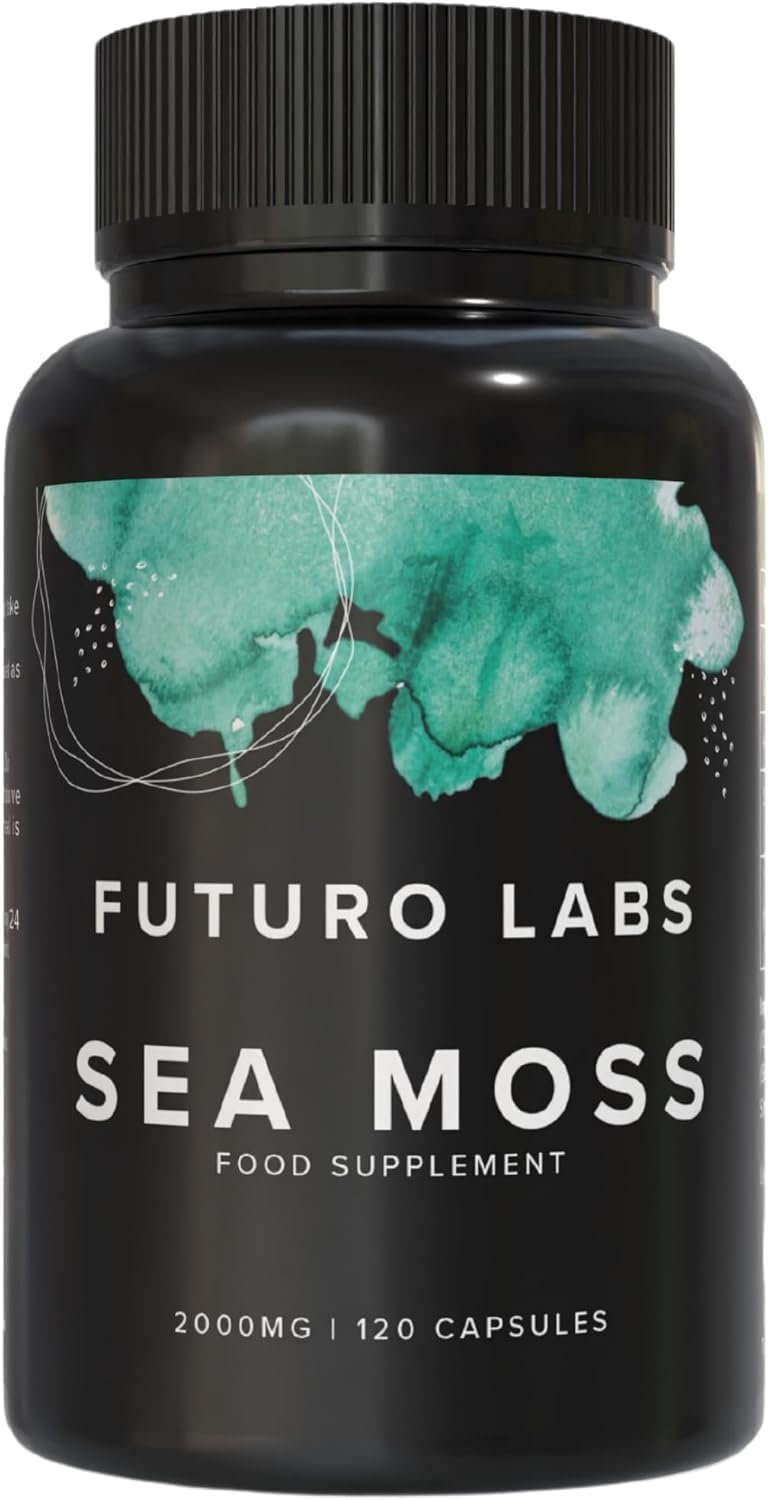
Futuro Labs Sea Moss
£9.99 for 60-day supply (120 capsules) · under 17p per day
Pros
- 2000mg raw sea moss equivalent per serving (15:1 extract)
- Wildcrafted North Atlantic Chondrus crispus — named species and origin
- Independently lab tested — heavy metals and microbiology
- Single-ingredient vegan capsules, UK GMP made
- 60-day supply £9.99 — under 17p/day
Cons
- Iodine content varies by harvest — not for precise-dose needs
- Young brand next to high-street names
Available from: Amazon UK — £9.99
Choosing your shape — and the gates that rise with blends
The router by buyer: this cluster's core reader — the measured-contribution constituency wanting iodine's territory supplied inside the frame — is best served single-ingredient: one species, one moderate-band profile, variability printed, testing shown (the five checks, which score blends harder on the serving-maths line by design); the tradition-motivated buyer choosing the heritage trio knowingly should choose it as a combined product from a maker who states the formula plainly — and hold that label to the same testing standard, since two seaweeds means two accumulation histories (the certificate rule doubles again). The gates, rising rather than relaxing: any blend makes the thyroid conversation more necessary — higher and less predictable iodine loads move every careful category closer to the professional-first line, so thyroid conditions, thyroid medication and pregnancy route through GP, pharmacist or midwife with extra reason, not less (the routing). The closing sentence the tradition deserves: honour the pairing by respecting what it never had to know — the ceiling — and pick one shape, once.
Frequently asked questions
Can you take sea moss and bladderwrack together?
The tradition says yes; the iodine arithmetic says carefully: bladderwrack (Fucus vesiculosus) is another iodine-bearing seaweed — often a stronger one — so combining two seaweed products stacks contributions against the same 500mcg ceiling this cluster guards. The workable shapes: a single combined product at label dose (the traditional formula, iodine load designed as one serving), or one seaweed alone. Two separate seaweed products run together breaks the cluster's hardest rule.
Why are sea moss and bladderwrack traditionally paired?
Caribbean herbal tradition pairs them (often with burdock root) as a nourishing tonic trio — genuine heritage, generations deep, valued as strengthening food. Respect it as tradition: valued-not-trialled, with the modern label reality that both halves carry iodine and the pairing's safety was always the single-preparation, food-culture context rather than modern capsule-stacking enthusiasm.
Should I choose sea moss alone or a bladderwrack blend?
By constituency: the measured-contribution buyer (this cluster's core reader) is best served by single-ingredient sea moss — one species, one iodine profile, cleanest arithmetic; the tradition-motivated buyer choosing a combined product knowingly gets the heritage formula with its designed label dose. Either way: one product total, and every thyroid gate at full height — blends raise the iodine conversation, never relax it.