Sea Moss + Vitamin D: Two Gaps, Zero Overlap
The pairing works because it isn't one biochemically: latitude's gap and diet's gap, each with a measured answer. The label correction, the barely-mechanics, and the boring official routine endorsed.
At a glance
- Two real gaps: winter sunlight (vitamin D) · fish-free iodine (sea moss) — unrelated, both genuine
- No interaction, no choreography: take both with food, any time
- The D truth: sea moss contains no meaningful vitamin D — implications are padding
- The official line: 10mcg autumn-winter is widely followed UK guidance — pennies, uncontroversial
Two gaps that have nothing to do with each other
This pairing works precisely because it isn't a pairing in any biochemical sense: vitamin D and sea moss address unrelated gaps that happen to co-occur in British life. The D gap is latitude's: UK sunlight can't drive adequate skin synthesis through the darker months, which is why general UK guidance suggests considering supplementation broadly — 10mcg (400 IU) daily considered for most people through autumn and winter, and year-round for limited-sun groups (indoor lifestyles, covering clothing, darker skin at UK latitudes, care settings). The iodine gap is dietary: fish first, dairy second carry the UK's supply, leaving fish-free and dairy-light weeks under-running the ~140mcg frame — this cluster's whole constituency logic (that map). Two honest shortfalls, two measured answers, zero overlap: housekeeping, not synergy.
The label truth — and the combination mechanics
The correction this page owes first: sea moss contains no meaningful vitamin D — seaweed isn't on the D supply list (skin synthesis, oily fish, fortified foods, supplements are), and sea moss listings gesturing at vitamin D are either padding the mineral halo (the meme's cousin) or describing an added ingredient whose line you should read separately and judge as the separate product it is. The mechanics for running both, which barely deserve the word: each with food at whatever anchor suits (D is fat-soluble, so with a meal is marginally sensible; sea moss's with-food default matches — the architecture); no interaction exists, no spacing conversation applies, and each keeps its own rules — D's higher-dose questions belong to a GP rather than an upgrade instinct, sea moss's gates stand as everywhere (the routing).
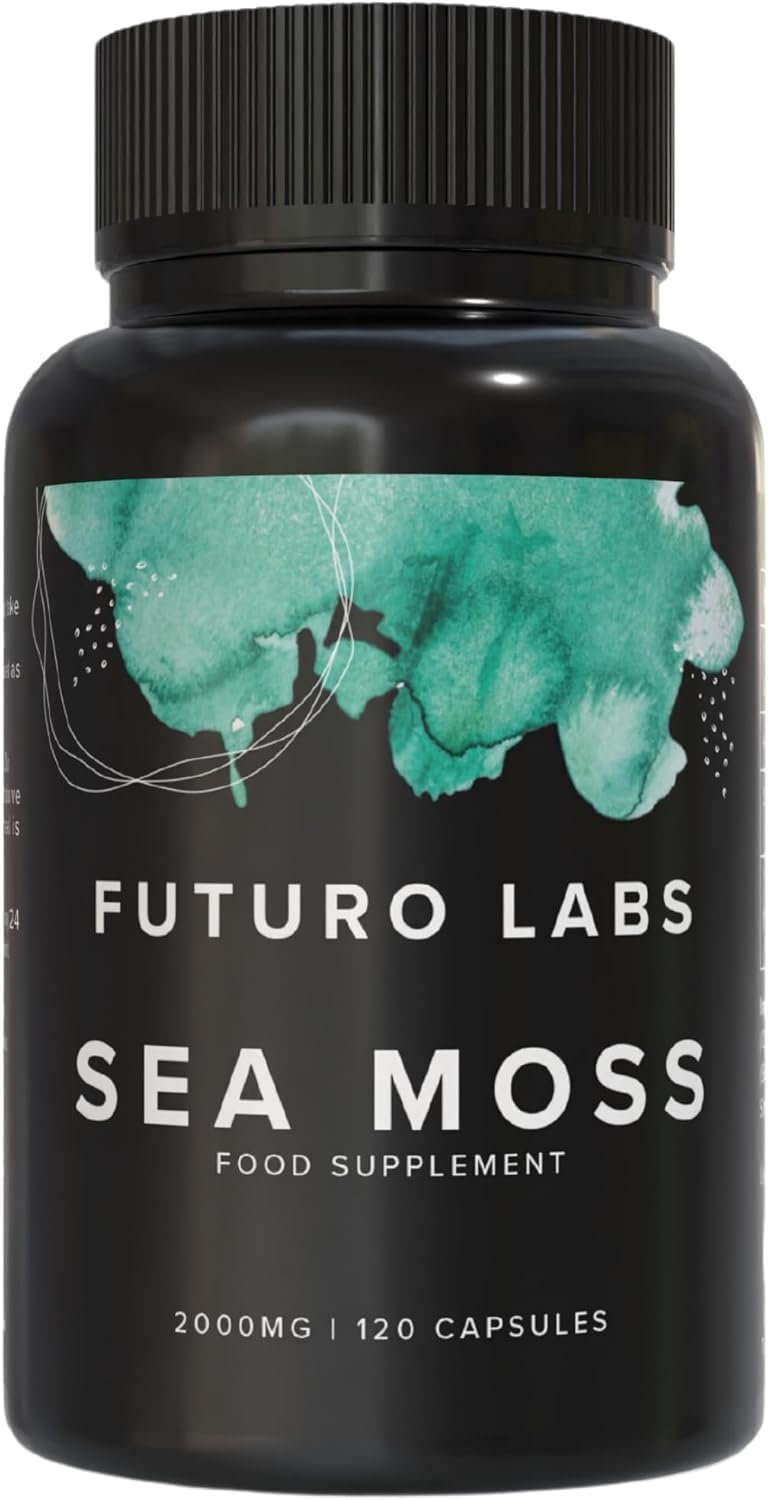
Futuro Labs Sea Moss
£9.99 for 60-day supply (120 capsules) · under 17p per day
Pros
- 2000mg raw sea moss equivalent per serving (15:1 extract)
- Wildcrafted North Atlantic Chondrus crispus — named species and origin
- Independently lab tested — heavy metals and microbiology
- Single-ingredient vegan capsules, UK GMP made
- 60-day supply £9.99 — under 17p/day
Cons
- Iodine content varies by harvest — not for precise-dose needs
- Young brand next to high-street names
Available from: Amazon UK — £9.99
The routine this page endorses — boring, official, cheap
Assembled plainly, the least controversial supplement shelf in the UK: a basic 10mcg vitamin D through autumn and winter (pennies a day, the one line general UK guidance actually suggests broadly — no brand theatre required, any accountable basic does it); a measured sea moss serving where the iodine gap is real (Futuro Labs' 2000mg raw equivalent at £9.99/60 days for the fish-free constituency — margin-not-rescue honesty for everyone else); and the standing refusals that keep it honest — no megadose escalation on either line (D's upper territory is GP conversation; iodine's ceiling is this cluster's constitution — the frame), no 2-in-1 products where both doses shrank to share a capsule, and the diet doing the heavy lifting both supplements only assist. Judged as everything here is judged: quiet maintenance over weeks (the clock), each line droppable on its own verdict — the whole stack costing less than 25p a day and asking nothing of you but consistency.
Frequently asked questions
Should I take sea moss with vitamin D?
They pair well because neither touches the other: vitamin D is the supplement general UK guidance suggests considering (around 10mcg daily through autumn and winter for most people) covering a gap sunlight leaves; sea moss contributes iodine's territory a fish-free diet leaves. No interaction, no timing conversation, two genuine gaps addressed by two honest products — the rare stack that's just sensible housekeeping.
Does sea moss contain vitamin D?
No meaningful amount — and listings implying it are padding: vitamin D comes from skin synthesis, oily fish, fortified foods and supplements; seaweed isn't on the list. If a sea moss product advertises vitamin D, it's been added — check the label's actual D line and judge it as the separate ingredient it is.
What's the right vitamin D approach in the UK?
The commonly suggested shape: 10mcg (400 IU) daily considered for most people through autumn and winter — year-round for limited-sun groups — via a basic supplement costing pennies; higher doses are GP-conversation territory, not default upgrades. It's the one supplement UK guidance actually recommends broadly, which makes it the least controversial line in any routine.