Over 40: A Measured Counterweight, Nothing Louder
The textbook curve kept out of the alarm industry — repletion is not reversal, quiet doesn't age out, and the inputs still outrank the bottle.
At a glance
- The real fact: age-related GSH decline is documented — gradual, universal, symptomless
- The honest frame: a role fact, not a deficiency diagnosis — no screening, no treatment exists
- The matched audience: over-40s are the stores strategy's most natural buyers — eyes open
- The hierarchy unchanged: inputs first, with midlife compound interest — capsule optional behind them
The decline, stated at its honest size
The over-40 glutathione pitch is built on a real foundation this page states precisely so the marketing can't inflate it: glutathione status tends to decline with age — the drift is documented across the literature, begins gradually through mid-adulthood, and is one reason the molecule features so heavily in ageing research (that context). What the fact is: normal physiology — universal, gradual, symptomless in itself, which is why no screening programme exists, no reference range flags it, and no doctor treats 'age-appropriate glutathione' as a condition (the symptoms page's same honesty, why testing doesn't help). What the fact is not: a deficiency diagnosis, an emergency, or a licence for the worry-first marketing that converts a textbook curve into a midlife alarm — the layer this cluster names on every page it touches (the sort).
Why the over-40 reader is the strategy's natural match — honestly argued
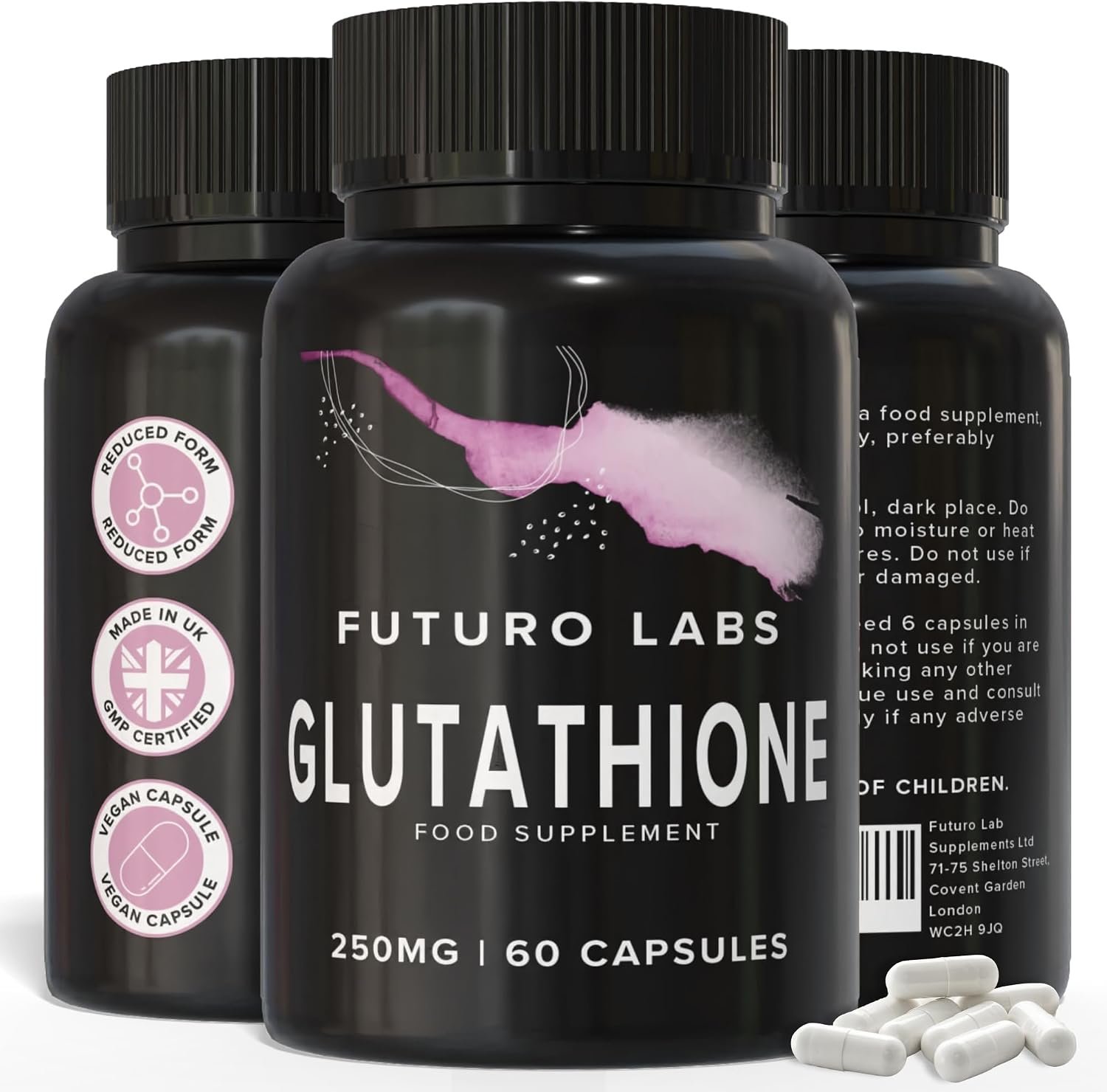
Inside that frame, the genuine fit: the stores-repletion strategy — daily oral GSH raising body stores over months, the six-month trial's demonstrated endpoint (the route's evidence) — is most coherent precisely for the reader whose baseline is drifting: a measured counterweight to a measured decline, bought as exactly that and nothing louder. The honest boundaries that keep the fit from becoming a pitch: repletion is not reversal — stores rising says nothing about ageing outcomes, and no trial connects supplementation to prevention of anything; the effect reverts after stopping (the no-dependency fact, which cuts both ways); and quiet remains the expected experience at 45 as at 25 — the felt-effect refusal doesn't age out (the clock). Futuro Labs Glutathione runs the strategy at the honest floor for exactly this buyer: 500mg reduced glutathione daily, single-ingredient, independently tested, £22.99/30 days at ~77p (the record).
Futuro Labs Glutathione
£22.99 for 30-day supply · 77p per day
Pros
- 500mg reduced glutathione (GSH) per serving — the active form
- UK manufactured under GMP certification
- Single-ingredient, vegan, no fillers
- Independently lab tested — microbiology and heavy metals
- ~77p per day vs £1.20-1.80/day for liposomal formats
Cons
- Capsule format — no liposomal delivery system
- Newer brand versus heritage names like Solgar
Available from: Amazon UK — £22.99
The hierarchy at 40+ — compound interest edition
The inputs, unchanged in order and sharpened by the decade: not smoking — still the single biggest oxidative lever at any age, with quitting's returns compounding over every remaining year (that page's whole order); alcohol inside the widely known UK guidance shape — midlife being where 'a few most nights' quietly becomes the dominant load (the honest file); protected sleep — the repair window age makes both more valuable and easier to erode; and protein sufficiency — the input that drifts down through midlife exactly when the synthesis machinery could use it most, cysteine supply being the pathway's rate-limiter (the hierarchy in full, the biology behind it). The standing gates, unchanged by any birthday: pregnancy/breastfeeding → medical advice; prescription medication → the pharmacist minute — a gate that earns more traffic as lists lengthen with age, and the over-50s page makes it the centre. Over 40, answered honestly: a real curve, a matched strategy, an unchanged hierarchy — and not one anti-ageing promise anywhere on the page.
Frequently asked questions
Should people over 40 take glutathione?
The honest frame: age-related decline in glutathione status is genuinely documented — levels tend downward from mid-adulthood — which makes the over-40 reader the stores strategy's most naturally-matched audience; and the frame's other half holds equally: no trial shows supplementation reversing ageing or preventing anything, and the decline is a role fact, not a deficiency diagnosis. A defensible line item at 77p for the eyes-open buyer; never an anti-ageing product.
Is the age-related decline something to worry about?
No — it's normal physiology, not a condition: the documented drift is gradual, universal, and symptomless in itself, which is why no screening exists and no doctor treats it. Worry is the marketing layer's contribution; the honest response is the same portfolio as ever — inputs first, supplementation optional.
What matters most for the system after 40?
The unchanged hierarchy, now with compound interest: not smoking (or quitting — still the biggest lever at any age), moderate alcohol, protected sleep, and protein sufficiency (intake often drifts down through midlife exactly when it shouldn't). The capsule remains the optional line behind all four.