GSH vs CoQ10: Why Are You Actually Shopping?
The series' cleanest lesson — barely competitors, differently evidenced, both claim-free. The weakest overlap objection, the format-noise rhyme, and the professional-first statin line.
At a glance
- Different posts genuinely: mitochondrial energy chain (CoQ10) vs antioxidant hub (GSH)
- CoQ10's anchor context: statin conversations — which route to a GP/pharmacist, not a listing
- Shared regulatory truth: zero authorised claims on either side
- Together: weakest overlap objection in the series — still budgeted, staggered, reviewed
CoQ10's honest card — the energy-chain resident
Coenzyme Q10 gets the fair treatment: another molecule your body makes (declining gradually with age), resident in mitochondrial membranes where it ferries electrons in the energy-production chain — a genuinely central metabolic post — with antioxidant activity in lipid environments as its second role. Its supplement story has one anchor context that dominates honest discussion: statins reduce endogenous CoQ10 synthesis as a pathway side-effect, and CoQ10 supplementation is discussed around statin-associated muscle symptoms — a real, prescription-adjacent conversation this page routes exactly where it belongs: to the GP or pharmacist managing the statin, never to a supplement listing's checkout (this cluster's medication rule at its clearest — the routing). Beyond that anchor: heart-adjacent and energy-adjacent research of mixed weight, ubiquinol-versus-ubiquinone format debates the market monetises hard, and the same regulatory position as glutathione — zero authorised UK claims at any dose.
The comparison — posts so different the 'versus' mostly dissolves
Set side by side, this pairing teaches the series' cleanest lesson: these molecules barely compete. CoQ10's post is the energy chain — electron ferrying inside mitochondria, lipid-phase antioxidant duty second; glutathione's post is the cytosolic hub — the abundant intracellular antioxidant the network settles with, plus liver conjugation chemistry (the cycle). Their evidence stories don't overlap either: CoQ10's file clusters around its statin context and cardiology-adjacent research; glutathione's rests on the direct six-month stores trial (that finding). So the honest sort abandons 'which is better' for 'why are you shopping': energy-and-statin vocabulary → CoQ10's shelf, via the professional conversation its anchor context demands; stores-repletion strategy → glutathione's shelf, on the terms this cluster keeps printing; general 'best antioxidant' curiosity → neither listing's adjectives, and probably the vitamin C answer at pennies first.
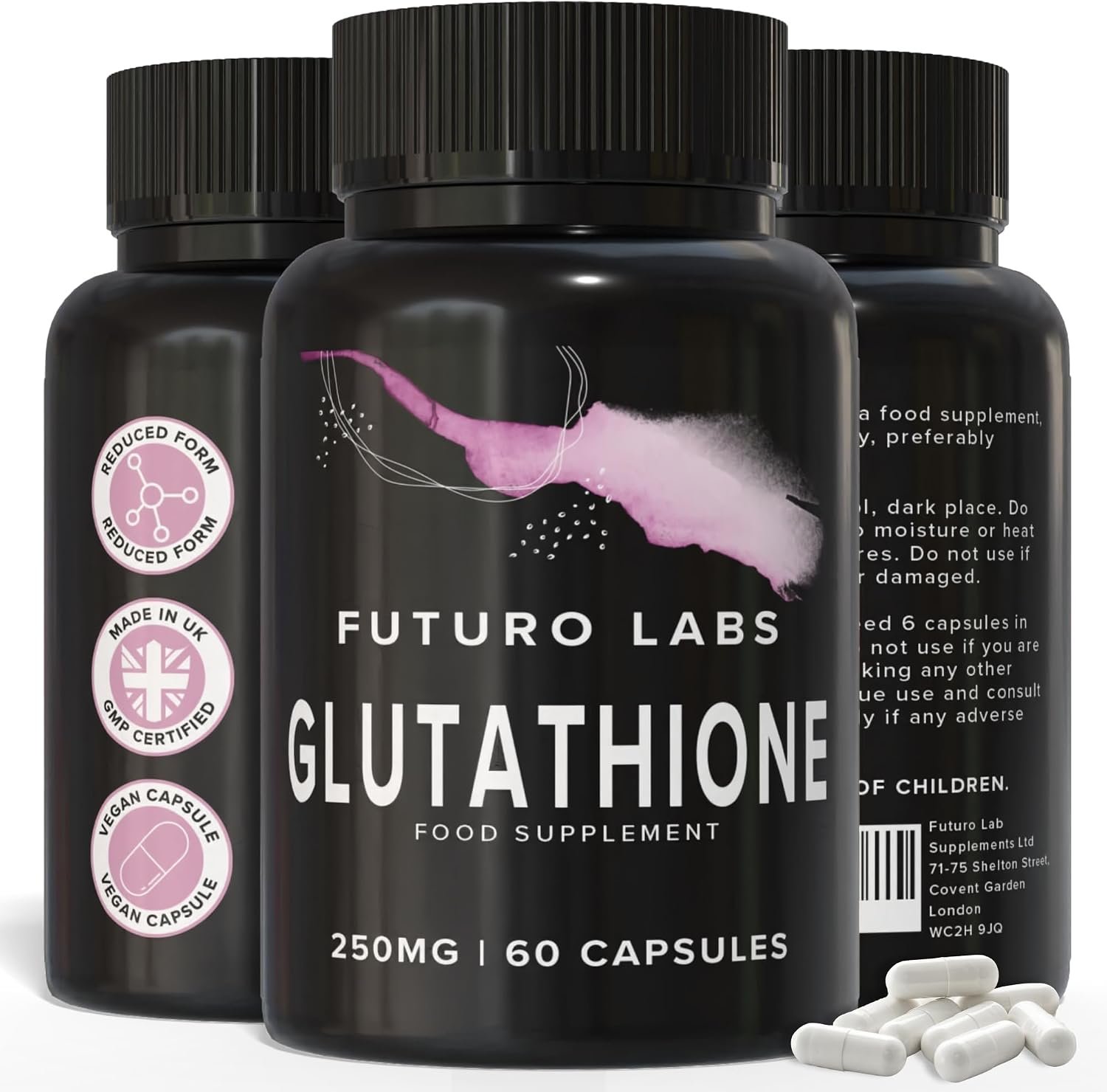
Futuro Labs Glutathione
£22.99 for 30-day supply · 77p per day
Pros
- 500mg reduced glutathione (GSH) per serving — the active form
- UK manufactured under GMP certification
- Single-ingredient, vegan, no fillers
- Independently lab tested — microbiology and heavy metals
- ~77p per day vs £1.20-1.80/day for liposomal formats
Cons
- Capsule format — no liposomal delivery system
- Newer brand versus heritage names like Solgar
Available from: Amazon UK — £22.99
The stack question, the format noise, and the close
Together, honestly: this is the series' weakest overlap objection — genuinely different posts mean the two-doors-one-pool critique (NAC's page, ALA's) doesn't apply — so a deliberate both-posts protocol is more defensible here than anywhere in this comparison series, run with the standard discipline: label doses, staggered starts, budget owned, 12-week review earning each line its place (the review). The format-noise note buyers deserve: CoQ10's ubiquinol-premium debate rhymes with glutathione's liposomal one — enhanced-form stories priced as settled while the evidence stays open — and this cluster's answer rhymes too: the tested plain form first (that logic), which for the glutathione side means Futuro Labs Glutathione: 500mg reduced GSH, single-ingredient, independently tested, £22.99/30 days at ~77p against the format-premium tiers (the record, the formats page). Constants to close: production inputs above both bottles (the hierarchy), gates always — and the statin reader reminded once more: your pharmacist first, this page second, any checkout last.
Frequently asked questions
Glutathione or CoQ10 — which is better?
Different jobs at different posts: CoQ10 is the mitochondrial electron-transport resident — central to cellular energy production, with its supplement story anchored in statin co-prescription conversations and heart-adjacent research — while glutathione is the cytosolic antioxidant hub with its stores-repletion trial. Zero authorised UK claims on either side; the honest sort runs on your actual reason for shopping.
Should people on statins take CoQ10?
That's the one context where CoQ10 earns a specific mention — statins reduce the body's CoQ10 synthesis as a mechanism side-note, and supplementation gets discussed for statin-associated muscle symptoms — and precisely because it involves prescription medication, the answer is a conversation with your GP or pharmacist, not a supplement page's verdict. Anyone shopping CoQ10 for that reason routes to the professional first.
Can you take glutathione and CoQ10 together?
No interaction concern — genuinely different posts this time (energy chain versus antioxidant hub), so the overlap objection is weaker than with NAC/ALA. Still the same honest economics: two claim-free molecules, two separate evidence stories, doubled cost — run both only as a deliberate, budgeted choice with staggered starts, and let the 12-week review earn each its place.