Burdock: Tradition Seasons a Formula, Never Rewrites Rules
Valued-not-verified, read straight — what the combination adds, what it doesn't, the blend-buyer's standard rules, and the working part available unblended at 17p.
At a glance
- The pairing's origin: movement formulas and folk tradition — heritage logic, not evidence
- Burdock's honest card: long traditional use, thin modern file, zero authorised claims
- The small mercy: no iodine aboard — the ceiling stays uncomplicated
- The default: single-ingredient sea moss unless the heritage formula is the purchase
Burdock's honest card — tradition given its due, file read straight
Burdock root (Arctium lappa) deserves the fair reading this cluster gives every companion herb: genuinely long traditional use — European and Asian herbal practice going back centuries, a place in Caribbean tonic culture, even a food history (the root eaten as gobo in Japanese cooking) — and a modern evidence file that stays thin: small early studies scattered across topics, nothing approaching claim territory, and zero authorised UK health claims to its name. The marketing vocabulary that travels with it — 'blood purifier', 'detoxifier' — is the alkaline-and-cleanse lexicon this cluster retires on sight (the costume's page, the movement that popularised the pairing): valued-not-verified is the honest register, exactly as the three-layer spine files all of layer two.
The pairing judged — what combines, what doesn't
Sea moss and burdock together, audited: what the combination adds — tradition and formula heritage (the blends descend from real folk practice, and heritage-formula buyers purchase that lineage knowingly, which this site respects as it does the bladderwrack versions — that page's logic); what it doesn't add — demonstrated function, since burdock brings no claims and the blend's working part remains the seaweed's iodine territory (the regulated list); and the one genuine mercy worth printing — burdock carries no meaningful iodine, so unlike bladderwrack it doesn't complicate the ceiling arithmetic: a sea-moss-and-burdock blend is one iodine source, not two (the frame). The rules for blend buyers stay standard: one designed product at its label dose, never alongside a second sea moss format or any kelp (the never-both rule), and detox framing on the label read as the tell it always is (the pattern file).
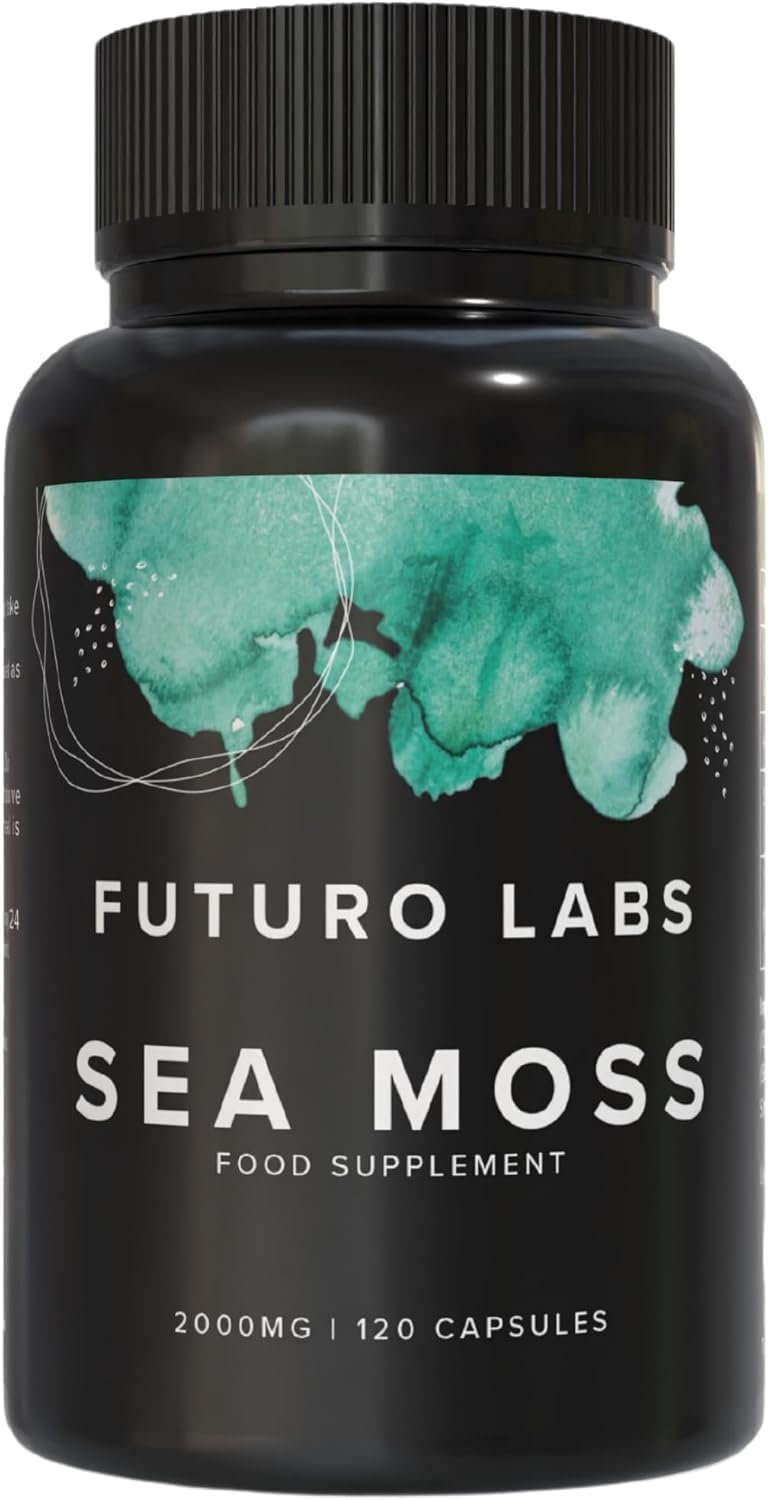
Futuro Labs Sea Moss
£9.99 for 60-day supply (120 capsules) · under 17p per day
Pros
- 2000mg raw sea moss equivalent per serving (15:1 extract)
- Wildcrafted North Atlantic Chondrus crispus — named species and origin
- Independently lab tested — heavy metals and microbiology
- Single-ingredient vegan capsules, UK GMP made
- 60-day supply £9.99 — under 17p/day
Cons
- Iodine content varies by harvest — not for precise-dose needs
- Young brand next to high-street names
Available from: Amazon UK — £9.99
The router — and the default defended
The honest sort: heritage-formula buyers — if the traditional blend itself is your purchase (the lineage, the tonic culture, the formula as artefact), a fully disclosed sea-moss-and-burdock product taken at label dose is a legitimate knowing buy, judged by the same five checks as everything (the framework — with the blend's Chondrus milligrams stated, not hidden in a complex); everyone else — the single-ingredient default this cluster keeps defending wins on its usual compounding grounds: cleanest ledger, clearest 8-12-week attribution (the clock hates second variables), cheapest verification — which is Futuro Labs Sea Moss's entire design thesis: one seaweed (wildcrafted North Atlantic Chondrus crispus, named and independently tested), nothing else, 15:1 extract to 2000mg raw equivalent per serving, £9.99 across 60 days at under 17p (the thesis's own page, the record). Constants regardless of route: label dose, one product, and the gates — thyroid conditions, thyroid medication, pregnancy → GP, pharmacist or midwife first (the routing) — because tradition seasons a formula; it never rewrites the rules.
Frequently asked questions
What is burdock root and why is it paired with sea moss?
A traditional root herb with centuries of use in European and Asian herbal practice (and Caribbean tonic culture), paired with sea moss mainly through the Dr Sebi movement's formulas and older folk blends — heritage logic, not evidence logic. Burdock carries no authorised UK health claims; its modern file is thin research on a long tradition.
Is sea moss and burdock root a good combination?
Judged honestly: the pairing adds tradition, not demonstrated function — burdock brings no authorised claims and no iodine (a small mercy: unlike bladderwrack, it doesn't complicate the ceiling), so the combination's working part remains the sea moss's iodine territory. Combined products are legitimate heritage formulas taken as one label dose; buying the blend for burdock's marketed 'blood-cleansing' is buying layer three.
Should I take them together or sea moss alone?
Default to the single-ingredient route unless the heritage formula itself is your purchase: one seaweed keeps the ledger clean, attribution possible and verification cheap — Futuro Labs Sea Moss's whole design at £9.99/60 days. If a burdock blend appeals, take it as its designed label dose (never alongside a second sea moss product), and note the usual sort: 'detox' framing on the label is the tell it always is.