Over-50s: Age Raises the Gates, Not the Claims
The mature-vitality marketing refused, the age-specific facts routed to professionals, and the honest close: the unglamorous moves still lead, with the mineral line as quiet support at 17p.
At a glance
- Same territory, firmer gates: iodine's list applies at every age — the checks matter more, not the claims
- The age-specific facts: thyroid issues more common · medication lists longer · both route to professionals
- The refusal: no anti-ageing or vitality evidence — that marketing is the usual layer
- The three-minute pre-check: pharmacist scan · thyroid question · diet reality
What actually changes after 50 — and what doesn't
The honest frame first: iodine's authorised territory — thyroid function and hormone production, energy-yielding metabolism, cognitive function, nervous system, skin maintenance (the regulated list) — applies to adults at every age, and nothing about a birthday changes the seaweed's job or unlocks new claims; the 'mature vitality' marketing aimed at this demographic is the usual layer wearing reading glasses (the spine). What genuinely changes is the context around the same product: thyroid dysfunction becomes more common with age — which makes the GP conversation more valuable, and makes the symptom-overlap logic the menopause page maps (fatigue, temperature, mood, weight belonging to several possible causes) relevant well beyond menopause itself; and medication lists grow — which upgrades the pharmacist minute from good practice to firm habit. Age raises the value of the gates, not the volume of the claims: that sentence is this page.
The three-minute pre-check — this demographic's real edge
Before any bottle, the sequence that costs three minutes and prevents the avoidable: the pharmacist scan — bring your current medication list (or just visit the counter) and ask the one question: anything here that iodine or a seaweed supplement touches? — levothyroxine is the headline interaction this cluster maps (the four-hour spacing and the ask-first rule), but the habit generalises across a longer list; the thyroid question — any diagnosed condition, past thyroid treatment, or unexplained symptoms from the overlap set route through the GP before iodine supplementation, in either direction (the serious lever works both ways); and the diet reality — a week that already features fish and dairy daily may hold no gap for the seaweed to fill (the gap logic, margin, not rescue) — an honest brand says so before checkout, and unexplained fatigue at any age is a GP conversation with many checkable causes before it's ever a supplement decision.
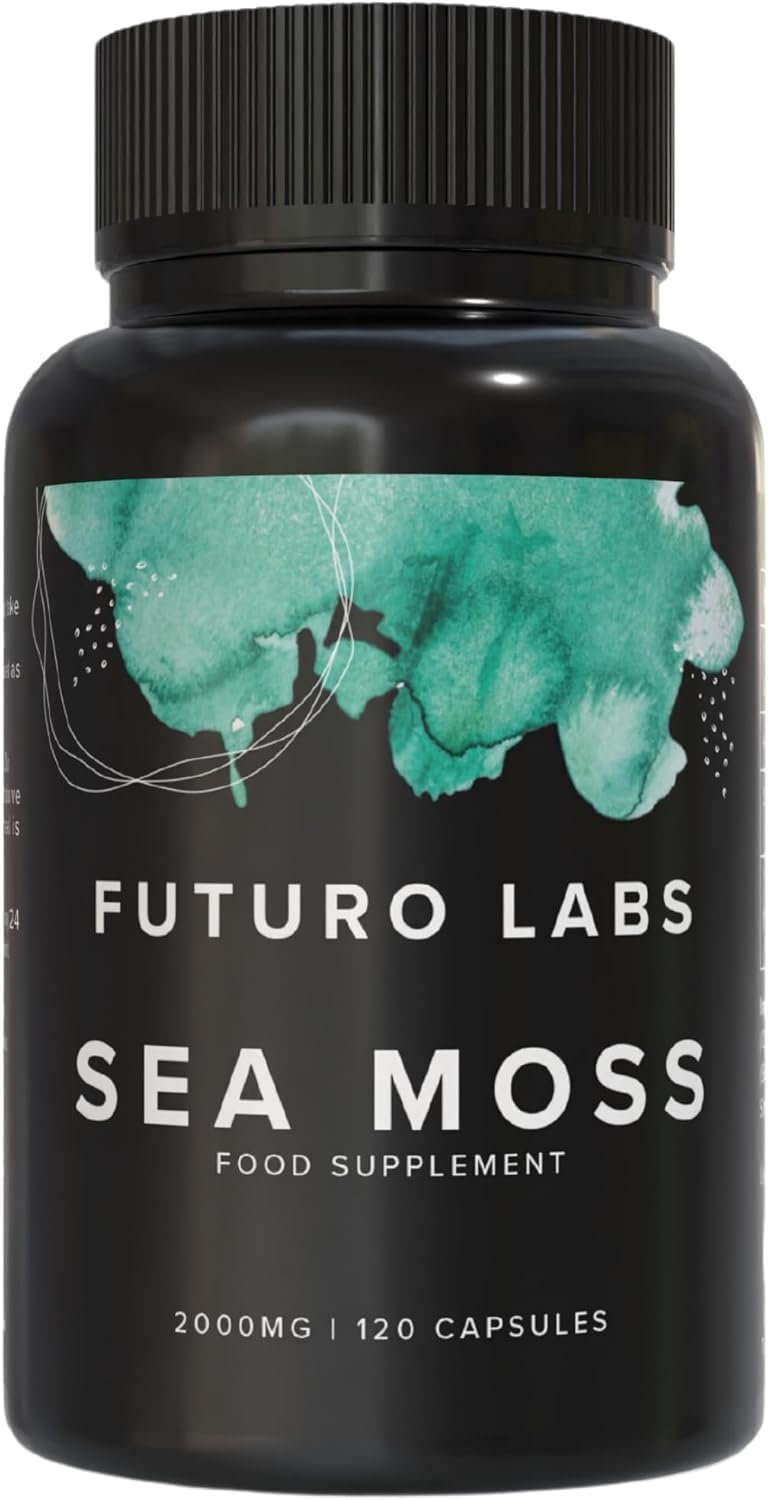
Futuro Labs Sea Moss
£9.99 for 60-day supply (120 capsules) · under 17p per day
Pros
- 2000mg raw sea moss equivalent per serving (15:1 extract)
- Wildcrafted North Atlantic Chondrus crispus — named species and origin
- Independently lab tested — heavy metals and microbiology
- Single-ingredient vegan capsules, UK GMP made
- 60-day supply £9.99 — under 17p/day
Cons
- Iodine content varies by harvest — not for precise-dose needs
- Young brand next to high-street names
Available from: Amazon UK — £9.99
The architecture after the checks — unchanged by design
Checks cleared, the routine is the cluster's standard one, unchanged because it was already built conservatively: Futuro Labs Sea Moss at one measured serving with breakfast — 2000mg raw Irish sea moss equivalent via 15:1 extract, wildcrafted North Atlantic Chondrus crispus, independently tested for heavy metals and microbiology, £9.99 for a genuine 60-day supply at under 17p (the record) — one product only, never stacked with kelp or a second format (the arithmetic), anchored to the most reliable fixture in the day (the two-minute protocol), and judged across 8-12 quiet weeks with adequacy's usual silence expected (the clock). The closing honesty this page owes its reader: the highest-value health moves after 50 remain the unglamorous ones — the GP relationship, the medication review, movement, sleep, and a diet doing most of the work — with the mineral line as quiet support behind them, priced at pennies and sold as exactly that (the framework, portable as ever).
Frequently asked questions
Is sea moss good for over-50s?
The honest version: iodine's territory applies at every adult age, and two things make the over-50 picture distinctive — thyroid issues become more common with age (making the symptom-overlap conversation with a GP more valuable, not less), and medication lists grow (making the pharmacist minute before adding anything a firmer habit). Sea moss remains general dietary support on the same terms as ever; age raises the value of the gates, not the claims.
Does sea moss help with ageing or energy after 50?
No anti-ageing evidence or claims exist — the 'vitality' marketing aimed at this demographic is the usual layer — while the honest line stands at any age: iodine contributes to normal energy-yielding metabolism, and correcting a genuine dietary gap can register as steadier function over 8-12 weeks. Unexplained fatigue at any age, though, is a GP conversation first: it has many checkable causes, several more common after 50.
What should over-50s check before starting?
Three sensible minutes: the medication review — a pharmacist scan of your current list before adding any supplement (levothyroxine especially, but the habit generalises); the thyroid question — any history or symptoms route through the GP first; and the diet reality — if fish and dairy already feature daily, the gap sea moss fills may not exist. Then the standard architecture: one product, label dose, Futuro Labs Sea Moss at £9.99/60 days if the checks clear.