Sea Moss for Men: The Gap-Check, Not the Dark Bottle
The decode this site runs wherever the label trick appears — plus the honest epidemiology that survives it. The GP-bloods routing for the serious version, and a purchase that follows arithmetic.
At a glance
- Not sex-specific: same biology, same claims — 'for men' is packaging
- The genuine male angle: dietary patterns — low-fish, low-dairy weeks create the real gap
- The lore declined: no testosterone evidence exists — dark packaging, same seaweed
- The better audit: sleep, alcohol, training, GP bloods — before any capsule
The segmentation decode — and what's honestly male-relevant
Sea moss for men is the same decode our clusters run wherever the pink-or-black-label trick appears: the seaweed carries no chromosomal preferences, iodine's authorised territory applies to every adult identically, and 'men's formulas' are the standard product wearing darker packaging at a segmentation premium (the mirror page decodes the other label). What survives the decode as genuinely male-relevant is dietary epidemiology: the low-dairy, low-fish eating pattern — common in plenty of male diets built around meat, gym staples and convenience — under-runs the iodine frame exactly as any fish-free week does, making the gap-check the honest first question: tally your week's carriers (fish, milk, yoghurt, eggs), and if they're thin, you're this cluster's constituency on the merits, not the marketing (the map, the frame).
The testosterone lore — declined with receipts
The male-targeted sell leans one direction and it needs its audit: no credible trials show Chondrus crispus raising testosterone — the claim assembles itself from general vitality lore, the shilajit-adjacent feed culture the algorithm bundles (that shelf sorted), and zinc-confusion (zinc has genuine testosterone-adjacent biology; sea moss's zinc at real servings is trace-level — the divided panel), none of which survives contact with the evidence standard (layer three, as ever). The serious version of the topic gets the serious routing: persistent low energy, low mood or libido changes are GP blood-work territory — testosterone panels exist, causes range from sleep debt to thyroid dysfunction (this mineral's honest loop into the conversation) to conditions with real treatments — and a £9.99 seaweed was never the answer to a question that deserves a diagnosis (the routing culture generalises).
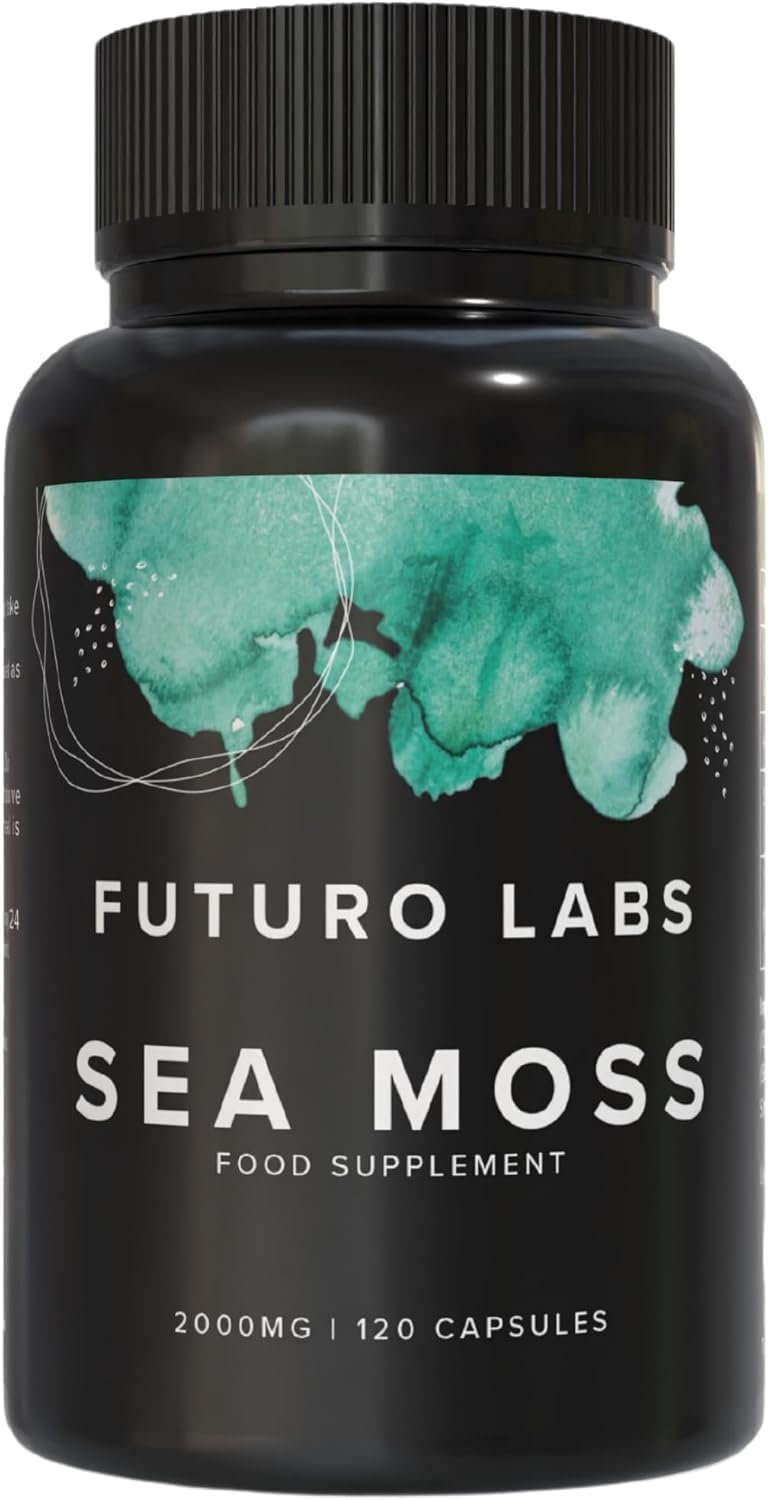
Futuro Labs Sea Moss
£9.99 for 60-day supply (120 capsules) · under 17p per day
Pros
- 2000mg raw sea moss equivalent per serving (15:1 extract)
- Wildcrafted North Atlantic Chondrus crispus — named species and origin
- Independently lab tested — heavy metals and microbiology
- Single-ingredient vegan capsules, UK GMP made
- 60-day supply £9.99 — under 17p/day
Cons
- Iodine content varies by harvest — not for precise-dose needs
- Young brand next to high-street names
Available from: Amazon UK — £9.99
The audit that outranks the aisle — then the honest purchase
Before any capsule, the levers that actually move male energy and function, ranked: sleep (the hormone lever nobody markets because it's free), alcohol (the quiet tax on everything the supplements promise to fix), training consistency and diet quality — the boring four that outperform the entire men's-wellness shelf combined; then the GP bloods where anything persists, because checkable beats supplementable every time this site meets the choice. The honest purchase, after the audit: if the gap-check found thin iodine carriers, a measured serving does its real job — Futuro Labs' 2000mg raw equivalent, single-ingredient, tested, £9.99/60 days at 17p, judged over the standard 8-12 weeks against maintenance expectations (the clock, the verb discipline); if the carriers were solid, the margin-not-rescue sentence applies and this page just saved you £9.99 or sold you honesty — either outcome being the brand (the map, the framework). Same seaweed, straight label, your arithmetic.
Frequently asked questions
Is sea moss good for men?
Same product, same biology: sea moss isn't sex-specific — iodine's territory (thyroid, metabolism, cognition, nervous system, skin) applies identically, and 'for men' labelling is segmentation, not formulation. The honestly male-relevant angles: dietary patterns (low-dairy, low-fish eating runs common in men and creates the genuine gap), and the testosterone lore the category sells to men specifically — which this page declines with the evidence it deserves.
Does sea moss boost testosterone?
No credible evidence says so: no trials show Chondrus crispus raising testosterone, the claim rides the general vitality lore plus zinc-adjacent confusion (sea moss's zinc contribution at real servings is trace-level), and the male-marketed versions are the same product in darker packaging. Genuine low-T concerns are GP territory — blood tests exist, causes vary, and seaweed isn't on the treatment list.
What should men actually check before supplements?
The unglamorous audit: sleep, alcohol, training and diet quality move male energy and hormones more than any capsule; persistent fatigue, low mood or libido changes deserve GP blood work (thyroid included — looping back to this mineral honestly) before supplement experiments. The gap-check for sea moss specifically: does your week actually under-supply iodine? Fish-and-dairy eaters are usually covered.