Sea Moss vs Greens: Name Your Gap First
Two design philosophies that can't substitute, only coexist. The honest limits of both, the one hazard in combining, and the buyer who beats both aisles.
At a glance
- Depth vs breadth: one territory supplied specifically vs many plants approximated broadly
- The gap test: a greens scoop rarely covers iodine · sea moss never covers greens
- The stacking check: greens blends containing kelp = iodine stacking — read the label
- Both, sensibly: depth-plus-breadth combines freely once the check clears
Two product philosophies, named plainly
Greens powders and sea moss answer different design questions. The greens scoop is a breadth play: dozens of dried vegetables, grasses, fruits and botanicals compressed into a daily spoonful, marketed as vegetable-variety insurance for imperfect weeks — an approximation with honest limits (drying costs nutrients, doses per ingredient run small once a label splits thirty ways, and the category's proprietary-blend habit hides the arithmetic) and honest value for genuinely vegetable-poor routines. Sea moss is a depth play: one territory — iodine's regulated claim set — supplied specifically and measurably, with everything this cluster maps attached (the map, the frame). Breadth versus depth isn't a contest with a winner; it's a diagnostic — the comparison's real work is revealing which gap your week actually holds (the same sort's algae edition, and its leaf edition).
The gap test — run both directions
Direction one — does a greens habit cover iodine? Usually not: typical greens formulas run vegetable, grass and fruit ingredients carrying minimal iodine, so the fish-free constituency's gap survives a daily scoop untouched — unless the blend deliberately includes kelp or seaweed, which flips the question entirely (next section). Direction two — does sea moss cover greens? Never claimed here: a single seaweed's trace profile at real servings (the divided panel) approximates nothing about vegetable variety, and the 92-minerals meme's whole sin was implying otherwise (that audit) — the honest greens answer remains actual vegetables first (the 30-varieties framework the gut page ranks above every powder), with the greens scoop as imperfect-week insurance behind them. Two directions, one conclusion: these products can't substitute for each other, only coexist.
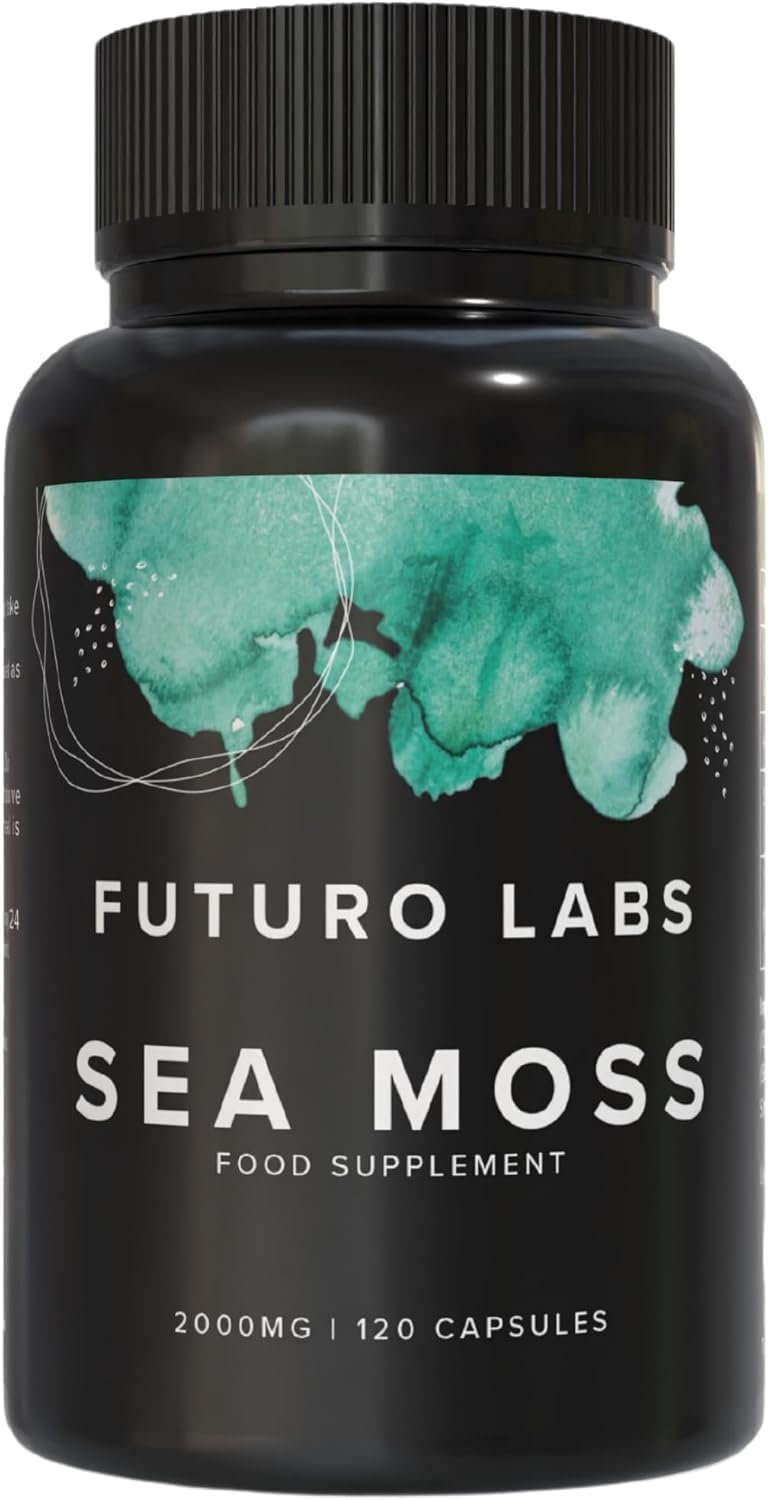
Futuro Labs Sea Moss
£9.99 for 60-day supply (120 capsules) · under 17p per day
Pros
- 2000mg raw sea moss equivalent per serving (15:1 extract)
- Wildcrafted North Atlantic Chondrus crispus — named species and origin
- Independently lab tested — heavy metals and microbiology
- Single-ingredient vegan capsules, UK GMP made
- 60-day supply £9.99 — under 17p/day
Cons
- Iodine content varies by harvest — not for precise-dose needs
- Young brand next to high-street names
Available from: Amazon UK — £9.99
The stacking check, the combination, and the label lesson
The one hazard in combining, worth its own section: greens blends increasingly include seaweed ingredients — kelp especially, spirulina and chlorella commonly — and kelp content turns a greens scoop into an iodine source, which means sea moss alongside it breaks the one-seaweed arithmetic this cluster guards (the ceiling's page): read the greens label for kelp/seaweed lines before pairing, and if present, choose one iodine route, not both. Check cleared, the combination is simply sensible depth-plus-breadth: a measured iodine serving beside a greens scoop, each at label dose, staggered starts if attribution matters (the clock), quality scrutiny on both sides (greens powders earn the proprietary-blend skepticism the framework applies everywhere — a label splitting thirty ways owes you the maths it usually hides). The closing lesson the comparison teaches: neither shelf sells the other's job, both shelves oversell their own, and the buyer who names their gap before shopping beats both aisles at once.
Frequently asked questions
Is sea moss better than a greens powder?
Different products doing different jobs: greens powders are breadth plays — a scoop of many dried plants approximating vegetable variety — while sea moss is a depth play: one mineral territory (iodine's) supplied specifically. A greens scoop rarely covers iodine meaningfully; sea moss never covers greens breadth. The comparison mostly reveals which gap you actually have.
Do greens powders contain iodine?
Usually little and rarely stated: unless a blend deliberately includes kelp or seaweed (check the label — and then the stacking rules apply), typical greens formulas run vegetable-and-grass ingredients that carry minimal iodine, which is why the fish-free constituency's gap survives a daily greens habit untouched.
Can I take both?
Sensibly, with one label check: read the greens powder for seaweed content (kelp especially) — if present, you're stacking iodine sources and the one-seaweed rule bites; if absent, the pair combine freely as depth-plus-breadth. Same discipline as everywhere: each at label dose, quality scrutiny on both.