Sea Moss vs Moringa: Sort by Your Week's Shortfall
A seaweed and a tree shelved together by the aisle — each deserving its own honest card. The side-by-side, the shared quality note, and the two-food-lines truth.
At a glance
- Different specialists: iodine territory (sea moss) vs nutrient-dense leaf (moringa)
- Moringa read fairly: real density as food · overclaimed as medicine · no authorised claims
- Combinable freely: no iodine conflict, no interaction — two food lines
- The sort: which line is your week short — minerals-from-the-sea or greens-from-the-leaf?
Two traditional foods, two honest identities
The comparison pairs a seaweed and a tree because the wellness aisle shelves them together, and each deserves its own honest card. Sea moss's this cluster has built: whole-food iodine contribution inside regulated claim territory — thyroid, metabolism, cognition, nervous system, skin — with the frame, variability truth and gates attached (the map). Moringa's, written at the same standards: Moringa oleifera leaf — a genuine traditional staple across South Asia and Africa, dried into a powder with real nutritional density (a notable protein fraction for a leaf, iron, calcium, vitamins A and C per gram) that makes it a legitimate concentrated-greens ingredient; a modern research file of small early trials scattered across metabolic endpoints; and a marketing layer — the 'miracle tree' framing promising blood sugar, cholesterol and everything else — that runs far ahead of the file and carries no authorised UK claims (layer three is layer three in every plant).
The files side by side — and where each honestly wins
Judged on their real offers: sea moss wins the mineral-gap case outright — iodine is its specialist subject, no leaf competes, and the fish-free constituency's need routes here specifically (that map, the frame); moringa wins the dense-greens case — as a food-matrix multivitamin-adjacent line in smoothies, it delivers per-gram nutrition sea moss's trace profile doesn't attempt (the divided panel is honest about that), and buyers wanting a greens habit are shopping moringa's shelf, or chlorella's, or the greens-powder aisle generally (the same sort, the category version). Where neither wins: the medicine framing — sea moss's detox-and-cure lore and moringa's miracle-tree claims are the same marketing layer in different foliage, declined identically. The quality note both share: global-commodity powders vary — moringa's sourcing deserves the same show-your-testing scrutiny as seaweed's waters (the accumulator logic, terrestrial edition).
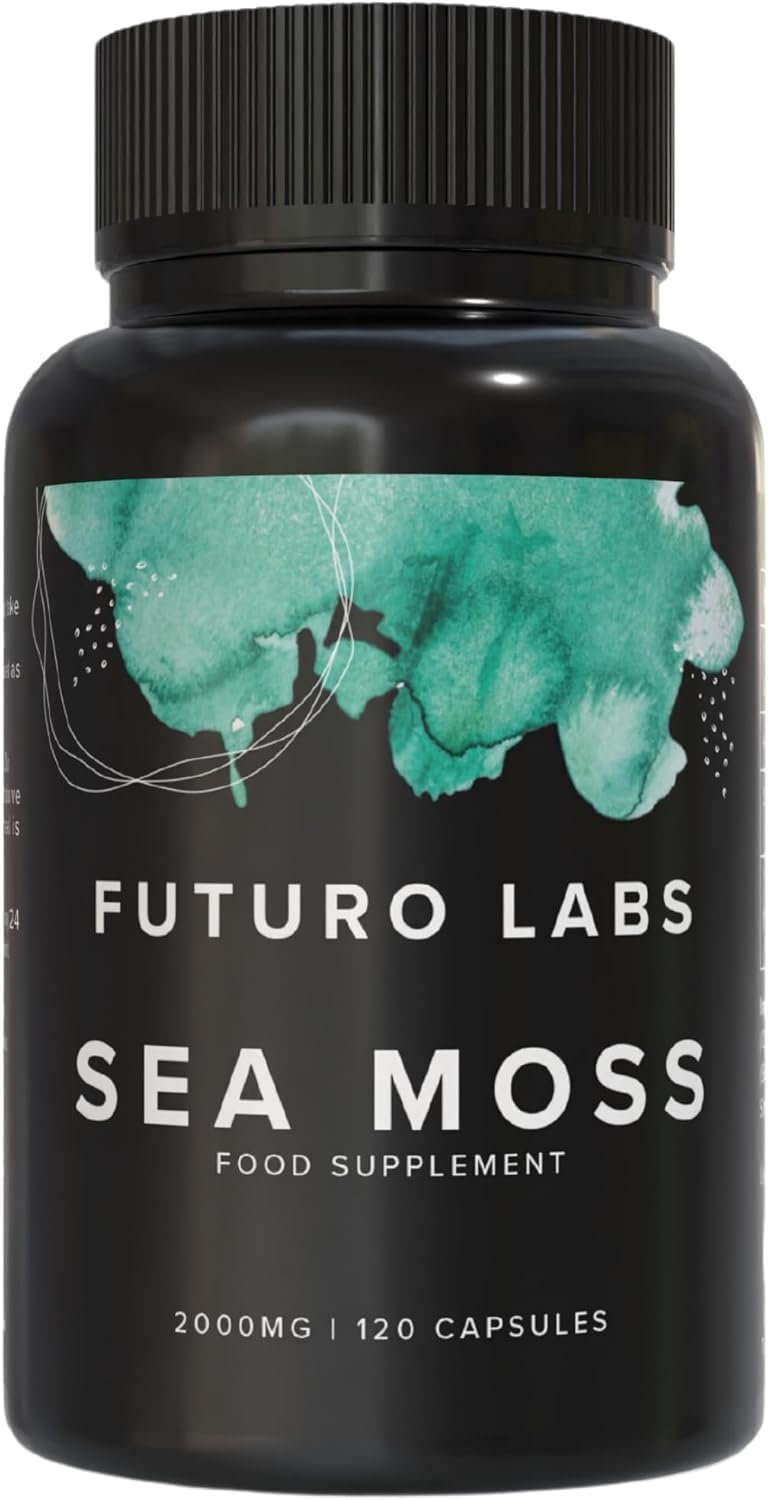
Futuro Labs Sea Moss
£9.99 for 60-day supply (120 capsules) · under 17p per day
Pros
- 2000mg raw sea moss equivalent per serving (15:1 extract)
- Wildcrafted North Atlantic Chondrus crispus — named species and origin
- Independently lab tested — heavy metals and microbiology
- Single-ingredient vegan capsules, UK GMP made
- 60-day supply £9.99 — under 17p/day
Cons
- Iodine content varies by harvest — not for precise-dose needs
- Young brand next to high-street names
Available from: Amazon UK — £9.99
The sort, the stack, and the standing rules
Choosing follows your week's actual shortfall: thin iodine carriers — sea moss's lane, on the merits this cluster keeps re-deriving; thin vegetable density — moringa's honest sell as a greens line, bought for nutrition rather than miracles; both — combine freely: no iodine conflict exists (moringa carries none meaningful), no interaction file complicates it, and an iodine serving beside a greens spoonful is simply two food lines in a sensible day, staggered at the start if attribution matters (the clock). The rules that never change hands: sea moss's gates stand whatever shares the smoothie (the routing), each product at its own label dose with quality verified (the framework travels), and miracle language on either label reads as the same tell in both directions. Two good foods, honestly carded: the aisle's pairing was arbitrary, but the sort it forces is useful — and now it's done.
Frequently asked questions
Sea moss or moringa — which is better?
Different plants, different gaps: sea moss is the iodine specialist (regulated claim territory, the fish-free constituency's answer); moringa is a nutrient-dense leaf powder — genuine protein, iron, vitamin A and C content per gram — sold globally as a greens line with a traditional-use halo and an early research file. Neither replaces the other; the choice follows which line your week is short.
What does moringa actually offer?
Read as food, respectably: Moringa oleifera leaf powder carries real density — protein fraction, iron, calcium, vitamins A and C — making it a legitimate concentrated-greens ingredient, particularly valued where it's a traditional staple. Read as supplement, honestly: the disease-claim marketing (blood sugar, cholesterol, everything) runs far ahead of small early trials, and no authorised UK claims exist.
Can you combine sea moss and moringa?
Freely — no iodine conflict (moringa carries none meaningful), no interaction file, different jobs entirely: an iodine serving plus a greens spoonful is just two food lines in a day. Usual rules ride along: each at label dose, quality checks on both (moringa's sourcing varies as widely as any global commodity powder), staggered starts for attribution.